
Bela M. Hughes
American lawyer, businessman and politician
About Bela M. Hughes
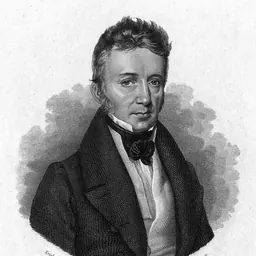
Lived 1817 – 1902 (aged 85). Bela M. Hughes was an American politician, lawyer and businessperson.
Bela Metcalfe Hughes (April 6, 1817 – October 3, 1902) was an American lawyer, businessman and politician. Hughes played an important role in connecting the American West to the rest of the country with stagecoach lines, as well as in the early legal development of Colorado.
Early life and education Bela Metcalfe Hughes was born on April 6, 1817, in Carlisle, Kentucky. This small town in Eastern Kentucky had been founded just one year before his birth, when John Kincart donated land to facilitate the relocation of the county seat from Ellisville, to the north. He was born to Rhoda Dent Hughes and her husband Andrew S. Hughes.
Bela Hughes lived the first twelve years of his life in Carlisle, where he was educated in public schools. On January 28, 1845, two months into his term, he resigned in a letter to Governor John Cummins Edwards. The Missouri Legislature incorporated the Missouri Historical and Philosophical Society on February 27, 1845, with Bela Hughes as one of its inaugural members.
Hughes resigned his seat in the state legislature in order to take office as Receiver of Public Moneys at the United States Land Office at Plattsburg, Missouri. He had been appointed by President John Tyler in January 1845. Hughes replaced E. M. Samuel on March 4, 1845.
At the time, Receivers of Public Moneys were officers of the federal government that collected money across the United States. In 1845, a Receiver was compensated with base salary of $500 and a commission of one cent per Dollar accounted for. The commission could not exceed $2,500 .
Hughes' term as receiver was supposed to end on January 13, 1849, and he was re-nominated in a letter to the United States Senate by President James K. Polk on January 3, 1849. Hughes' party, the Democrats, had just lost the 1848 United States presidential election to Whig nominee Zachary Taylor. The Democrats tried to re-install their officeholder in the Senate's lame duck period before Taylor would be sworn-in as president in March 1849. Hughes chose to resign instead stating that he "would not hold an office, which under the customs of parties, belonged to some Whig".
Business career Developer In 1838, Bela Hughes bought swaths of land in Weston, Missouri, which had been founded just one year prior. He developed city streets and land plots and was successful in marketing the land to pioneers. Within one year the town's population grew to 300 and it became a significant transportation hub on the Missouri River. The town shipped more hemp than any other place in Missouri. In 1840, Hughes' cousin Ben Holladay joined him in Weston, where Holladay started his first businesses. Hughes and Holladay were important figures in Weston's early history and shaped the development of the town. Hughes sold his interest and left Weston in 1845, when he was appointed to office in Plattsburg.
In 1855, he was involved in a land development and banking firm in the Kansas Territory with Alexander William Doniphan, who was also a law graduate from Augusta College.
Attorney In 1841, Bela Hughes was admitted to the Missouri Bar. After resigning as Receiver at Plattsburg in 1849, Hughes moved to St. Joseph, Missouri to practice law there.
Hughes and Woodson were alleged to be involved in electoral irregularities in the Kansas Territory at the beginning of the violent civil confrontations called Bleeding Kansas. In May 1854, the Kansas-Nebraska Act had organised the Kansas and Nebraska Territories in the lands west of the Mississippi River. Congressional proponents of the act had assumed that Kansas would permit slavery while Nebraska would prohibit it and therefore preserve the balance between slave and free states. Immediately, immigrants supporting both sides of the slavery question arrived in the Kansas Territory to establish residency and gain the right to vote. In November 1854, thousands of armed pro-slavery men known as "Border Ruffians", mostly from Missouri, poured into the Kansas Territory and swayed the vote in the election for a non-voting delegate to Congress in favour of pro-slavery Democratic candidate John Wilkins Whitfield.
On March 30, 1855, the Kansas Territory held the election for its first territorial legislature. Crucially, this legislature would decide whether the territory would allow slavery. Just as had happened in the election of November 1854, "Border Ruffians" from Missouri again streamed into the territory to vote, and pro-slavery delegates were elected to 37 of the 39 seats. Hughes personal stance on slavery is unclear. Silas Woodson, on the other hand, was actually well known as an abolitionist. At the 1849 Kentucky Constitutional Convention, Woodson was the only member to introduce language for the gradual emancipation of the state's slaves. During the Civil War, both Hughes and Woodson were Unionists.
Overland Stage Line On April 26, 1861, Bela Hughes was chosen as president and general counsel of the Central Overland California and Pikes Peak Express Company. He was at the time still a resident of St. Joseph, which was the eastern terminus of the company's Pony Express stagecoach line. Hughes was then appointed general counsel of the Overland Stage Company.
Business career
Railways
Denver Pacific Railway In 1862, Congress had passed the Transcontinental Railroad Act, which among other things, authorized Union Pacific Railroad to lay tracks westward from Omaha, Nebraska. In a major setback for Colorado, Union Pacific Chief Engineer Grenville M. Dodge recommended to build the Transcontinental Railroad further north through Wyoming. Julesburg was the only town in the territory included in the plan. In Colorado, reactions varied from disappointment to anger. Colorado territorial Governor John Evans declared that "Colorado without railroads is comparatively worthless."
In Denver, a town of around 5,000 people at the time, local merchants and businessmen were especially afraid of being left out of and decided to cooperate with the Kansas Pacific Railroad to assure a direct connection to the East of the country, while at the time building a branch line to the Transcontinental Railroad in Cheyenne. Denver's leading citizens, among them Governor John Evans, David Moffat, Walter Cheesman and Bela Hughes raised $300,000 capital in one week. On November 29, 1867, the Denver Pacific Railway and Telegraph Company was incorporated under the general laws of the Territory of Colorado. Bela Hughes was chosen as the president of the new company. Two months later, in August 1870, the Kansas Pacific completed its line to Denver and the first train arrived from Kansas. Hughes served as general counsel of the new company.
Attorney Bela Hughes was an important attorney in the early days of Colorado, when he was mostly involved in criminal and corporate law. In November 1867, he defended Paul Coburn against the charge of murdering J. W. Hammar in Pueblo, Colorado. The defence also included Samuel E. Browne, a former U.S. Attorney in Colorado. Hughes and Browne were successful in their defence as Coburn was acquitted by the jury after one hour of deliberation. In 1872, he served as the president of the Denver Bar Association.
In 1884, Hughes successfully defended the City of Colorado Springs in U.S. District Court for the District of Colorado in the case of Ephraim Clark v. the City of Colorado Springs. He argued that the bonds the city had issued to build a school building were valueless because the school did not constitute a "town purpose" under the laws of 1868. The plaintiff, Ephraim Clark, had come into the possession of $2,000 of those bonds and had demanded payment.
Political career Bela Hughes started to be involved in the Colorado Democratic Party immediately after he moved to Denver in 1866. On November 30, 1868, the Democratic Territorial Convention was set to discuss "The State Question" in order to decide whether the Democrats should endorse statehood for the Colorado Territory at the time. Hughes addressed the convention in a short note, that was published in the Rocky Mountain News on the same day:
The advocacy of Hughes and others was unsuccessful in 1868. At the time, the Democratic convention voted down a resolution endorsing statehood by an overwhelming margin.
In 1873, Bela Hughes was considered by the Rocky Mountain News as a worthy candidate for the office of Mayor of Denver. However, Hughes did not run for that office and Francis M. Case was elected instead. On July 24, 1874, Hughes was a candidate for non-voting Delegate to the United States House of Representatives on seventh and eighth ballot at the Democratic Territorial Convention in Colorado Springs. Hughes send a note to the Rocky Mountain News stating that the "use of his name before the Democratic convention, at Colorado Springs, was wholly unauthorized by him, and against his expressed wishes." Thomas M. Patterson won the Democratic nomination and was in November 1874 elected to serve as a Delegate in the 44th Congress (1875–76). Patterson defeated Republican Henry P. H. Bromwell by a vote of 9,255 to 7,170.
Territorial legislature In 1875, Bela Hughes ran as a Democrat in 1st District (Arapahoe County) of the Territorial Council, the upper house of the Colorado Territorial Legislature. At the Democratic County Convention on 16 August, Hughes and W. M. Clayton were chosen as the Democratic nominees for the two seats in the 1st District. They won on the first ballot, by a vote of 56 for Hughes, 35 for Clayton, and 27 for incumbent Councillor R. G. Buckingham.
In the campaign, Hughes was attacked as an unpatriotic Democrat during the Civil War. The Rocky Mountain News defended him against this accusation and criticized the tone of the campaign. While explicitly not endorsing his candidacy, he News noted that Hughes had been a War Democrat, "in favor of all measures to preserve and restore the union."
In the 3 September election, Hughes won the most votes in the district with 1,905, while Republican former Mayor of Denver Baxter B. Stiles was second with 1,882. The Democrats had an 8–4 majority (with one independent) in the Council and were choese the president of the chamber. The Colorado Transcript saw Hughes as a contender for that office, pointing out his eloquence, brightness, and "liberal sentiments". In the end, Adair Wilson was unanimously elected as President of the Council.
During the 11th Session of the Territorial Council, Hughes chaired the Council's Judiciary Committee. He introduced Council Bill 48 (CB 48) concerning the organization of the Supreme Court, and Council Bill 62 (CB 62) concerning secure liens to mechanics. CB 48 and CB 62 both passed the council by a 11–0 margin. In the House of Representatives, CB 48 was passed by a 16–4 margin and CB 62 passed by a 19–0 margin.
1876 Colorado gubernatorial election A political cartoon by the Denver Mirror, ridiculing territorial Governor John Routt. In February 1876, Bela Hughes was already rumored in an article of the Colorado Weekly Chieftain to be the likely Democratic nominee in the first Gubernatorial election in the state of Colorado. On August 29, 1876, the Democratic convention met in Manitou Springs in order to nominate candidates for the first state elections on October 3, 1876. At the convention, Bela Hughes was nominated for the 1876 Colorado Gubernatorial election per acclamation. A political cartoon by the Denver Mirror, encouraging its readers to support Bela M. Hughes for Governor. Hughes is the second from the right, his opponent Gov. Routt is on the right between the fences. During the campaign, Hughes hold many speeches presenting his platform. In the first three weeks of September 1876 alone, he travelled for campaign events to 15 different Colorado cities, speaking up to six nights per week. The Republican newspaper Golden Weekly Globe, published an extensive report on Hughes's speech in Golden. In their report, the newspaper alleged that Democratic presidential nominee Samuel J. Tilden had committed perjury and criticized Hughes for his defense and support of Tilden. The editorial also criticized Hughes' language, as he used phrases like "damned lie" and "the government is going to hell", despite the fact that there were around twenty women in the audience.
On the other hand, Democratic newspapers enthusiastically supported Hughes' candidacy. This was especially the case with the Denver Mirror, a small newspaper that was published by Stanley G. Fowler. Hughes' opponent, Territorial Governor John Routt, did not make any public speeches during the campaign.
Nevertheless, Routt was able to secure another term in office as Republicans managed to sweep all statewide offices and both chambers of the Colorado General Assembly. Hughes focused on his law practice in which he was in 1888 joined by his relative Charles J. Hughes Jr., who went on to represent Colorado as a Democratic member in the United States Senate. Bela Hughes retired from his profession as a lawyer in 1893.
On October 1, 1902, different Colorado newspaper reported that Bela Hughes was on his deathbed in his Denver home. He died on October 3, 1902, at around 4 am due to a pneumonia attack. In October 1903, a bust of Bela Hughes was placed in the library of the Colorado Supreme Court commemorating his legacy. The bust was made in Florence based on pictures of Hughes.
Personal life Bela Hughes' first wife Catherina Neal died childless on September 6, 1844, after six years of marriage. In 1849, Hughes converted to Catholicism and remained a Catholic his whole life. He married his second wife, Laura Louisa Allen, on June 5, 1849. Laura Hughes gave birth to six children. She died in 1900.
Don’t just read it —
keep it.
Full-length biographies made to live with: read them, listen on the way to work, watch them tonight.
- E-book
- Audio
- Video
Instant download · yours to keep · every purchase keeps this site free
Important facts
People in Bela M. Hughes's life
Named in this biography and alive at the same time


Related people
Same field, nearest in time




Contemporaries
People whose lives overlapped Bela M. Hughes's




Frequently asked questions
Who was Bela M. Hughes?
American lawyer, businessman and politician
When was Bela M. Hughes born?
Bela M. Hughes was born on 6 April 1817 in Carlisle.
When did Bela M. Hughes die?
Bela M. Hughes died on 3 October 1902 in Denver.
What was Bela M. Hughes's occupation?
Bela M. Hughes was a politician, lawyer and businessperson.
What nationality was Bela M. Hughes?
Bela M. Hughes was American.
Sources & further reading
Cite this page
APA: Biography.guide. (2026). Bela M. Hughes. https://biography.guide/bela-m-hughes/
MLA: "Bela M. Hughes." Biography.guide, https://biography.guide/bela-m-hughes/.
Chicago: "Bela M. Hughes." Biography.guide. https://biography.guide/bela-m-hughes/.
Data last updated: 2026-09-20 · Spot an error? Report a correction.
Page generated 2026-09-27 05:30 UTC