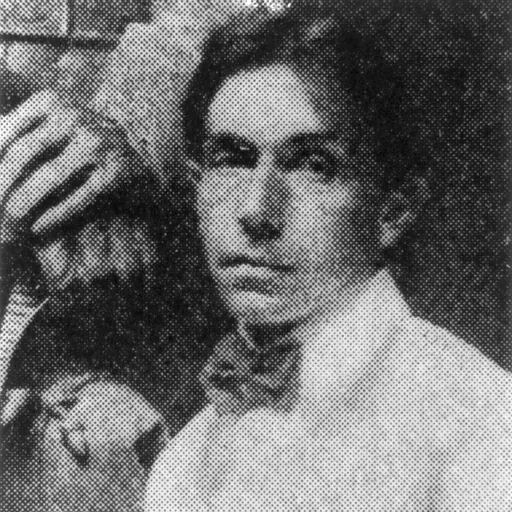
About Bela Lyon Pratt
Lived 1867 – 1917 (aged 49). Bela Lyon Pratt was an American sculptor and sculpture.
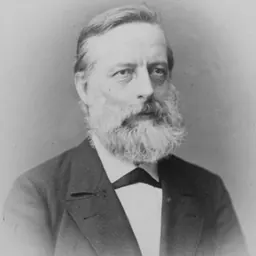
Bela Lyon Pratt (December 11, 1867 – May 18, 1917) was an American sculptor from Connecticut.
Life Pratt was born in Norwich, Connecticut, to Sarah (Whittlesey) and George Pratt, a Yale-educated lawyer. His maternal grandfather, Oramel Whittlesey, was a pianoforte maker and founder in 1835 of Music Vale Seminary in Salem, Connecticut, the first music school in the country authorized to confer degrees to teach music. At 16, Pratt began studying at the Yale University School of Fine Arts, where his teachers included John Henry Niemeyer (1839–1932) and John Ferguson Weir (1841–1926).
After graduating from Yale, he enrolled at the Art Students League of New York where he took classes from William Merritt Chase (1849–1916), Kenyon Cox (1859–1919), Francis Edwin Elwell (1858–1922), and most important, Augustus Saint-Gaudens (1848–1907), who became his mentor. After a short stint in Saint-Gaudens' private studio, Pratt traveled to Paris, where he trained with sculptors Henri-Michel-Antoine Chapu (1833–1891) and Alexandre Falguière (1831–1900) at the École des Beaux-Arts.
In 1892, he returned to the United States to create two large sculptural groups representing The Genius of Navigation for the World's Columbian Exposition in Chicago. He also produced sculptures for the Pan-American Exposition at Buffalo in 1901. In 1893, he began a 25-year career as an influential teacher of modeling in the School of the Museum of Fine Arts, Boston. One of Pratt's most famous students at the School was John A. Wilson. During this time, Pratt sculpted a series of busts of Boston's intellectual community, including Episcopal minister Phillips Brooks (1899, Brooks House, Harvard University), Colonel Henry Lee (1902, Memorial Hall, Harvard University), and Boston Symphony Orchestra founder Henry Lee Higginson (1909, Symphony Hall, Boston). He became an associate of the National Academy in 1900.(1)
When Saint-Gaudens' uncompleted group for the entrance to the Boston Central Library was rejected, Pratt was awarded a commission for personifications of Art and Science. Pratt continued Saint-Gaudens' influence in coin design after 1907. His gold Indian Head half ($5) and quarter ($2.50) eagle gold U.S. coins are known as the "Pratt coins" and feature an unusual intaglio Indian head, the U.S. mint's only recessed design in circulation. A memorial exhibition of 125 of his sculptures was held at the Museum of Fine Arts, Boston in the spring of 1918.
From1898-1917 Pratt ran the sculpture department at the Massachusetts Normal School, which eventually became the School of the Museum of Fine Arts) along with Cyrus Dallin. Pratt's students included Frederick Warren Allen, Hazel Brill Jackson, Daisy Blanche King, Bashka Paeff, and Richard Henry Recchia, as well as his son Dudley Pratt.
Selected works
1892 The Genius of Navigation – World's Columbian Exposition 1892 The Genius of Discovery – World's Columbian Exposition 1893 Clara and Lizzie, Daughters of Frederick and Elizabeth Shattuck (plaque) – National Gallery of Art 1895 Literature, Science, Art (Spandrel figures) Thomas Jefferson Building, Library of Congress, Washington, DC 1896 The Four Seasons (plaques) – 2nd floor pavilions, Thomas Jefferson Building, Library of Congress 1896 Figure of Victory - #1 turret U.S.S. Massachusetts, (Sculpture now housed at the US Naval Academy in Annapolis, Maryland). 1897 Dr. Henry Augustus Coit – St. Paul's School, Concord, New Hampshire 1902 General Benjamin Franklin Butler Monument - Hildreth Cemetery, Lowell, Massachusetts 1902 Colonel Henry Lee - Memorial Hall, Harvard University, Cambridge, Massachusetts 1906 Young Soldier – St. Paul's School, Concord, New Hampshire 1907 Andersonville Boy – State Capitol Grounds, Hartford, Connecticut 1908 Abraham Lincoln Monument – Lowell, Massachusetts 1910 Soldiers' and Sailors' Monument, Bell Rock Memorial Park, Malden, Massachusetts 1910 Nathaniel Hawthorne – Salem, Massachusetts 1910 Art w/palette right, Science w/sphere left, Boston Central Library, Boston, Massachusetts 1911 Army Nurses Memorial, Massachusetts State House, Boston 1913 The Whaleman – New Bedford, Massachusetts 1913 Edward Everett Hale – Boston Public Garden, Boston, Massachusetts 1913 Schoolboy of 1850 – Ashburnham, Massachusetts 1914 Grieving Mother - Washington Memorial Chapel, Valley Forge National Historical Park, Pennsylvania 1914 Nathan Hale – Yale University Cast at the Central Intelligence Agency, Quantico, Virginia Cast at the Department of Justice Building, Washington, D.C. Cast at the Chicago Tribune, Chicago, Illinois Cast at Fort Nathan Hale, New Haven, Connecticut 1916 Reverend Phillips Brooks, Old Common, North Andover, Massachusetts
Gallery
Don’t just read it —
keep it.
Full-length biographies made to live with: read them, listen on the way to work, watch them tonight.
- E-book
- Audio
- Video
Instant download · yours to keep · every purchase keeps this site free
Important facts
People in Bela Lyon Pratt's life
Named in this biography and alive at the same time






Related people
Same field, nearest in time

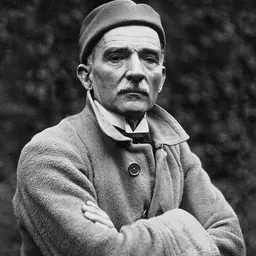
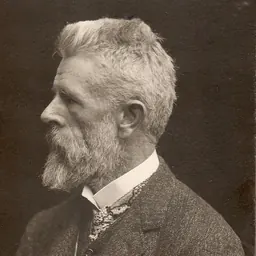

Contemporaries
People whose lives overlapped Bela Lyon Pratt's
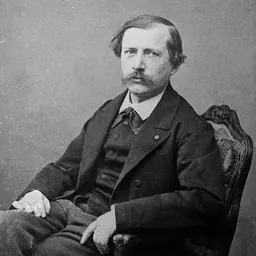


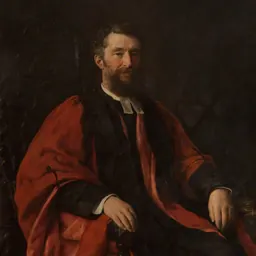
Frequently asked questions
Who was Bela Lyon Pratt?
American artist (1867–1917)
When was Bela Lyon Pratt born?
Bela Lyon Pratt was born on 11 December 1867 in Norwich.
When did Bela Lyon Pratt die?
Bela Lyon Pratt died on 18 May 1917 in Los Angeles.
What was Bela Lyon Pratt's occupation?
Bela Lyon Pratt was a sculptor and sculpture.
What nationality was Bela Lyon Pratt?
Bela Lyon Pratt was American.
Sources & further reading
Cite this page
APA: Biography.guide. (2026). Bela Lyon Pratt. https://biography.guide/bela-lyon-pratt/
MLA: "Bela Lyon Pratt." Biography.guide, https://biography.guide/bela-lyon-pratt/.
Chicago: "Bela Lyon Pratt." Biography.guide. https://biography.guide/bela-lyon-pratt/.
Data last updated: 2026-09-23 · Spot an error? Report a correction.
Portrait: Wikimedia Commons · author & licence
Page generated 2026-09-27 05:07 UTC