
Phillips Brooks
American clergyman and author, hymnwriter
About Phillips Brooks
Lived 1835 – 1893 (aged 57). Phillips Brooks was an American writer, hymnwriter, anglican priest, theologian, bishop and librettist.
Phillips Brooks (December 13, 1835 – January 23, 1893) was an American Episcopal clergyman and author, long the rector of Boston's Trinity Church and briefly Bishop of Massachusetts. One of the most popular preachers of the Gilded Age, he worked to make the Christian Church more relevant to contemporaries. Among his other accomplishments, he wrote the lyrics of the Christmas hymn "O Little Town of Bethlehem".
He is honored on the Episcopal Church liturgical calendar on January 23. In addition to his moral stature, he was a man of great physical height, standing tall.
Background
Early life and education Brooks was born on December 13, 1835, in Boston to William Gray Brooks and Mary Ann Phillips Brooks. His father, a Unitarian from a solid, middle-class background, started his career as a hardware and dry goods merchant. His mother was from an orthodox Congregational family. Her father was John Phillips (1776–1820), one of the founders of Andover Theological Seminary.
Brooks chose to enter the ministry. In 1856, he began to study for ordination in the Episcopal Church in the Virginia Theological Seminary at Alexandria, Virginia. He struggled with what he perceived as anti-intellectualism of his fellow students but managed to complete his training. preacher, and patriot.
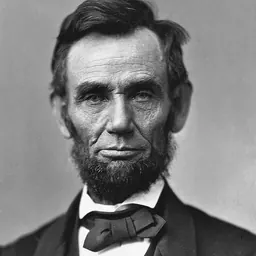
During the American Civil War he upheld the cause of the North and opposed slavery, and his sermon on the death of Abraham Lincoln was an eloquent expression of the character of both men. His sermon at Harvard's commemoration of the Civil War dead in 1865 likewise attracted attention nationwide.
Such was the magnificence of Trinity Church that historian Douglass Shand-Tucci called it "an American Hagia Sophia."
Preaching P. Brooks, ca. 1875–1920. Cabinet Card Collection, Boston Public LibraryBrooks was a gifted preacher with broad appeal. His sermons drew crowds of people, some of whom had never been in an Episcopal Church before. He had no sensational manner, according to listeners, but simply presented the Gospel in his natural style. "There is nothing in his voice, bearing, or look," wrote one frustrated observer, "which can explain his almost unexampled popularity. For popular he is almost beyond precedent."
Somewhat more critically, Harvard professor Charles Eliot Norton noted that Brooks seldom appeared to be troubled by religious doubt or concern about the declining influence of the clergy. "He was quite sincere, for religion was a matter of sentiment not of intelligence with him. His strong sense of right & wrong prevented his optimism from sapping his moral integrity, and from doing much harm to the easygoing public whom he served and pleased. The eulogies of him are sadly extravagant."
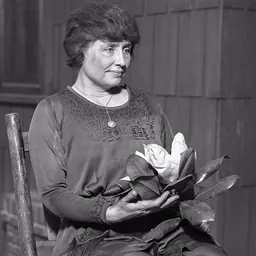
Influence Brooks did not marry or have children of his own, but he had great love for children. He met an eleven-year-old Helen Keller when she was at the Perkins Institute for the Blind. It is said that "she sat on Phillips Brooks' knee and learned that God is love."
Awards and Monuments
Within his lifetime, Brooks received honorary degrees from Harvard (1877) and Columbia (1887), and the Doctor of Divinity degree by the University of Oxford, England (1885).
His close ties with Harvard University led to the creation of Phillips Brooks House in Harvard Yard, built seven years after his death. On January 23, 1900, it was dedicated to serve "the ideal of piety, charity, and hospitality". The Phillips Brooks House originally housed a Social Service Committee, which became the Phillips Brooks House Association in 1904. It ceased formal religious affiliation in the 1920s, but remains in operation as a student-run group of volunteer organizations. Brooks' theological alma mater, Virginia Theological Seminary, honors him with a statue outside its library.
A statue of Phillips Brooks stands on the North Andover, Massachusetts, Town Common, facing North Parish Church.
A private elementary school in Menlo Park, CaliforniaPhillips Brooks Schoolis named for him, as is Brooks School in his hometown of North Andover, Massachusetts, the latter founded by Endicott Peabody, who also founded the Groton School. The Brooks family founded a Brooks Memorial School in Cleveland, Ohio, in 1874 in memory of Phillips' brother, the Rev. Frederic Brooks, who died in an accident in Cambridge. That school was sponsored in part by John D. Rockefeller and operated under the Brooks name until 1891; it currently operates under the name of the Hathaway Brown School. John S. White, first headmaster of the school in Cleveland, also founded a Phillips Brooks School in Philadelphia in 1904 that operated there until 1919.
The Episcopal Church remembers Phillips Brooks annually on January 23, the anniversary of his death.
Don’t just read it —
keep it.
Full-length biographies made to live with: read them, listen on the way to work, watch them tonight.
- E-book
- Audio
- Video
Instant download · yours to keep · every purchase keeps this site free
Important facts
People in Phillips Brooks's life
Named in this biography and alive at the same time


Related people
Same field, nearest in time

Contemporaries
People whose lives overlapped Phillips Brooks's




Frequently asked questions
Who was Phillips Brooks?
American clergyman and author, hymnwriter (1835–1893)
When was Phillips Brooks born?
Phillips Brooks was born on 13 December 1835 in Boston.
When did Phillips Brooks die?
Phillips Brooks died on 23 January 1893 in Boston.
What was Phillips Brooks's occupation?
Phillips Brooks was a writer, hymnwriter, anglican priest, theologian, bishop and librettist.
What nationality was Phillips Brooks?
Phillips Brooks was American.
Sources & further reading
Cite this page
APA: Biography.guide. (2026). Phillips Brooks. https://biography.guide/phillips-brooks/
MLA: "Phillips Brooks." Biography.guide, https://biography.guide/phillips-brooks/.
Chicago: "Phillips Brooks." Biography.guide. https://biography.guide/phillips-brooks/.
Data last updated: 2026-09-20 · Spot an error? Report a correction.
Page generated 2026-09-27 05:19 UTC