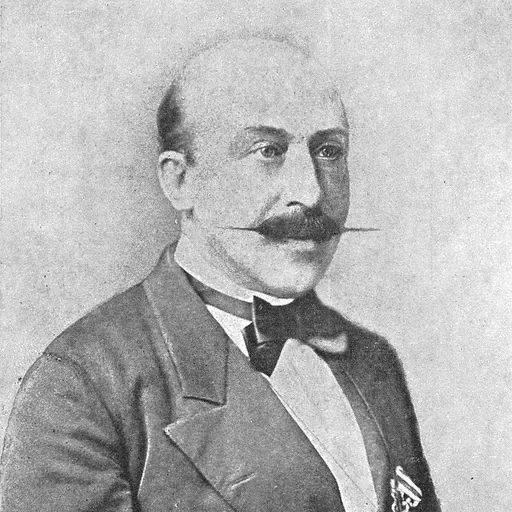
Béla Kéler
Composer and conductor from the Kingdom of Hungary
About Béla Kéler
Lived 1820 – 1882 (aged 62). Béla Kéler was a Hungarian conductor, composer, music educator, classical violinist and chapelmaster.
Béla Kéler (13 February 182020 November 1882) was a Hungarian composer of romantic music period and orchestral conductor. Béla Kéler was born as Albert Paul Keler (Adalbert Paul von Keler). He is also known in Hungarian as Kéler Béla. He was born Bártfa, Sáros County, Kingdom of Hungary, Austrian Empire (present-day Bardejov, Slovakia), and died in Wiesbaden, German Empire. He was active in Hungary, Austria and Germany.
Family Béla Kéler was born in 1820 in Bártfa (, present-day ), Kingdom of Hungary, as Albert Paul Keler, but German and Austrian sources also give Adalbert Paul Keler. He descended from an ethnic German family on his father's side, but was ethnic Hungarian on his mother's side.
His father Stefan Kéler (17811849) was a principal magistrate of Bártfa, from an old Bártfa burgher's family. His mother Anna Bóth (17931848) was from the Hungarian Both de Botfalva noble family. They raised 13 children. Albert's siblings were Frederika, Stefan, Emilia, Antonia, Matilda, Augusta, Apollonia, Ferdinand, Viktor, Josefina, and Amalia. The household was German speaking; the majority of residents of Bártfa that time were Carpathian Germans.
Youth Kéler's musical education starts with Franz Schiffer a choirmaster at the Bardejov Basilica of St. Giles, who taught him the basics of the violin and piano. Children from evangelical families in Bardejov, to which Kéler belonged, went to a German school by the evangelical church. Kéler completes his basic education in 1834. In the same year he was confirmed. He continued his studies at the Lutheran lyceum in Levoča (1834–1835) and following this, at the Evangelical College in Prešov and the Debrecen Reformed College (1836–1840).
While studying law and philosophy in Prešov, Béla Kéler led the school orchestra and wrote smaller compositions, however his parents preferred that he would continue in the family legal profession tradition.
The difference between the vision of Béla Kéler and that of his parents led to a situation where, at their wish, he started, on July 1, 1840, one year of practical training in agriculture at the estate of the Counts Schönborn-Buchheim in Mukačevo. Even while performing hard physical labour, Kéler did not cease to strive for an artistic future. After the end of his one-year engagement in Mukačevo, Kéler left to work at the farms of his brother-in-law Ferdinand Medwey, the husband of his sister Amalia, in Galicia in Beskids. As a result of natural disasters and fires, his brother-in-law Ferdinand lost his property so Kéler lost employment and returned to Bardejov. He spent the summer of 1844 with his parents at their villa in Bardejovské Kúpele. Kéler offered several of his waltzes to the conductor of the local spa orchestra who included them in the colonnade concert program. During the autumn of that year, Kéler moved to Prešov where he was soon able to teach music and perform in the local theater orchestra.
Career 1845–1860 Violinist at the Theater an der Wien (1845–1854) After less than a year of engagement in Prešov, Kéler moved to Vienna where the owner-director of the Theater an der Wien, Franz Pokorny (1797–1850), engaged him from August 28, 1845, in the position of a violinist in his orchestra. The still existing theatre got its name from the river Wien which runs underground beside the building. Besides performing as an orchestral violinist, Kéler studied for two years harmony and composition with the Theater an der Wien violoncellist Carl Schlesinger and in 1851–1853, harmony and counterpoint with the pedagogue at the Vienna Conservatory Simon Sechter (1788–1867), among whose students were the composers Franz Schubert and Anton Bruckner. Kéler's nine-year long engagement with the Theater an der Wien orchestra officially ended on May 7, 1854. During this period, his first ten opus numbers were published. The first of these is the composition "Three Hungarian", Op. 1, published by the Vienna publisher Tobias Haslinger in 1846. The pivotal composition for Kéler's further career, especially conducting, became the waltz "The Stars of Hope", Op. 17. Johann Benedict Sommer asked Kéler to send him this waltz for an orchestral performance at Sommer's salons in Berlin. Kéler sent him the waltz in July 1853. Anton Bruckner copied the instrumentation and form (but not the harmony) of Kéler's "Mazzuchelli-Marsch" (also called "Apollo-Marsch") exactly for his own March in E-flat major. (The "Apollo Marsch" was later mistaken for a work of Bruckner's).
Kéler was very popular as a composer of orchestral and dance music, and was looked upon as one of the best of writers of violin solos. His overtures and compositions for small orchestra were long popular in the United States and England.
The Carpathians (1854) is the most serious and at the same time the most extensive work by Béla Kéler. Although the title of the almost an hour-long composition refers to the Carpathian Mountains, the composer was exclusively inspired by the surroundings of the High Tatras, which is near his birthplace. Parts include "Overture", "Introduction", and five musical pictures, in the order "The Lomnica Peak" (Lomnický štít), "The Poprad Lake" (Popradské pleso), "The Iron Hammers", "The Hunt", "The Arrival" and "Life in the Carpathian Spa". It turns out that idyllic music pictures the Carpathians is the first work of program music to be inspired to Slovak natural beauties and everyday life in their surroundings. The digital transcription of the work, in the Petrucci Music Library, was supported using public funding by Slovak Arts Council.
Heritage Béla Kéler donated all of his works to the city of Bártfa. After the founding of the Šariš Museum in Bártfa in 1903 this collection became part of the permanent exhibition of the museum.
Today, Béla Kéler has his own exhibition screen near the entrance in the City Hall Museum in Bardejov, which is a part of the Šariš Museum. His personal correspondence, manuscripts and printed works, portraits and his memorial tablet are kept and displayed there.
Don’t just read it —
keep it.
Full-length biographies made to live with: read them, listen on the way to work, watch them tonight.
- E-book
- Audio
- Video
Instant download · yours to keep · every purchase keeps this site free
Important facts
People in Béla Kéler's life
Named in this biography and alive at the same time


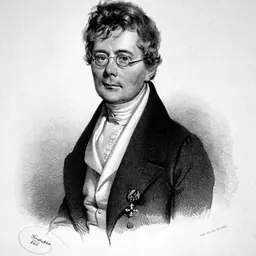


Related people
Same field, nearest in time

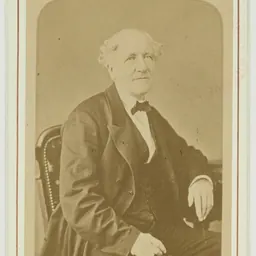

Contemporaries
People whose lives overlapped Béla Kéler's



Frequently asked questions
Who was Béla Kéler?
composer and conductor from the Kingdom of Hungary (1820-1882)
When was Béla Kéler born?
Béla Kéler was born on 13 February 1820 in Bardejov.
When did Béla Kéler die?
Béla Kéler died on 20 November 1882 in Wiesbaden.
What was Béla Kéler's occupation?
Béla Kéler was a conductor, composer, music educator, classical violinist and chapelmaster.
What nationality was Béla Kéler?
Béla Kéler was Hungarian.
Sources & further reading
Cite this page
APA: Biography.guide. (2026). Béla Kéler. https://biography.guide/bela-keler/
MLA: "Béla Kéler." Biography.guide, https://biography.guide/bela-keler/.
Chicago: "Béla Kéler." Biography.guide. https://biography.guide/bela-keler/.
Data last updated: 2026-09-20 · Spot an error? Report a correction.
Page generated 2026-09-27 05:09 UTC