
About Beatrice Helen Worsley
Lived 1921 – 1972 (aged 50). Beatrice Helen Worsley was a Canadian computer scientist, known for EDSAC.
Beatrice Helen Worsley (18 October 1921 – 8 May 1972), better known as "Trixie" Worsely, was a Canadian computer scientist, the first woman in the country to work in that profession. She received her Ph.D. from the University of Cambridge with Douglas Hartree as adviser, also with advice from Alan Turing, This was printed in the conference proceedings, and was picked up years later by Brian Randell for his 1973 book, The Origins of Digital Computers. This made Worsley well-known in the computing field long after the events.
Worsley then began her PhD at Newnham College. While working at the Lab, she attended courses on quantum physics with Paul Dirac, John Lennard-Jones and Nicholas Kemmer, number theory with Albert Ingham, and perhaps most importantly, numerical analysis with Douglas Hartree. She began writing her dissertation under Hartree, who coincidentally also supervised another Canadian woman, Charlotte Fischer.
In the midst of this work, for unknown reasons, Worsley returned to Toronto and continued her dissertation under U of T maths professor Byron Griffith. Shortly thereafter, she was rehired by the Computation Centre in July 1951. Hartree approved the dissertation and Worsley received her doctorate in 1952.
Her paper, Serial Programming for Real and Idealized Digital Calculating Machines, is considered to be the first PhD dissertation written about modern computers. It included a number of discussions about numerical calculations on Turing machines as well as real-world examples, notably EDSAC. It then went on to describe methods for recognizing which machine instructions were required, and which could be accomplished by combinations of other instructions. Both Turing and Claude Shannon had discussed idealized versions of this concept, but Worsley's contribution was to demonstrate the most efficient way to do this, not a single generalized solution as in Shannon's case.
FERUT and Transcode During the summer of 1948, the Computing Centre approached the NRC with plans to build a copy of Bell Labs' Mark 6 relay-based digital computer. Given a tentative go-ahead, they approached Northern Electric to obtain blueprints for the design, and were told there would be a license fee of $25,000 . They returned to the NRC in March 1949 for an additional $50,000 for the license and construction costs, but the NRC wisely told them to drop these plans and build an electronic version instead.
Together, the university and NRC planned an ambitious program to build a first-rate computer to be used by NRC, the Defense Research Board, and industry. Known as UTEC, construction began in 1951 but quickly ran into serious problems due to the unreliability of their Williams tube memory systems. It was not until late that year that the system was finally reliable enough to be used. At this point, the Centre approached the NRC for funding to complete the system with a parallel math unit.
AECL had been growing increasingly frustrated with the lack of a usable machine, and when they heard NRC had been approached to continue UTEC development, they suggested the funds would be better spent buying a complete machine. Bennett Lewis of AECL was aware that Ferranti had built a complete Ferranti Mark 1 machine for AECL's counterpart in the UK, the United Kingdom Atomic Energy Authority, only to be left holding it when the incoming government cancelled its funding. This was available for only $30,000 , about the same as the first round of funding required for the expanded UTEC.
The machine was purchased in early 1952 and arrived in early 1952, before Worsley rejoined the centre. She was aware of the machine's arrival and christened it FERUT for "Ferranti Electronic computer at the University of Toronto". The machine was operational by the summer, providing U of T with one of the most powerful computers in the world.
In the fall of 1953, Worsley and Patterson Hume began development of a new computer language for the machine, known as Transcode. This was similar to Autocode being developed by Alick Glennie at the University of Manchester for the same machine, but took advantage of several design notes of the Mark I to produce a faster and somewhat easier to use language. One major advantage was the conversion from decimal to binary and back, which allowed programmers to enter numbers in decimal form.
Queen's University In spite of impressive credentials from Cambridge, a series of well-respected papers, and several firsts in the industry, Worsley was repeatedly passed over for promotion within the University of Toronto. It was not until 1960 that she was promoted from a staff member to an assistant professor, and not until 1964 that she was promoted to assistant professor of physics and computer science. In comparison to the other members of the early days of the Computation Center, she received far less recognition.
In 1965, Worsley was offered a job at Queen's University, launching their new Computer Centre based on an IBM 1620. At Queen's her duties turned more to teaching, and took up most of her time by 1971. In September of that year, after 20 years in the field, she took a sabbatical at the Department of Applied Analysis and Computer Science at the University of Waterloo. On 8 May 1972, in Waterloo, Worsley suffered a fatal heart attack.
Awards In 2014, Worsley was posthumously awarded the Lifetime Achievement Award in Computer Science by the Canadian Association of Computer Science.
Don’t just read it —
keep it.
Full-length biographies made to live with: read them, listen on the way to work, watch them tonight.
- E-book
- Audio
- Video
Instant download · yours to keep · every purchase keeps this site free
Important facts
People in Beatrice Helen Worsley's life
Named in this biography and alive at the same time


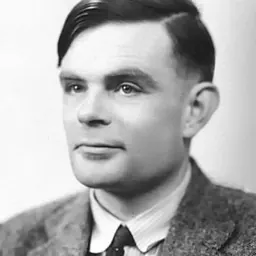
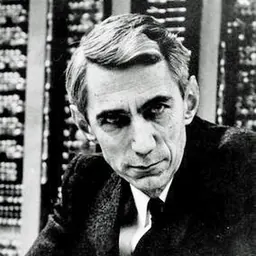
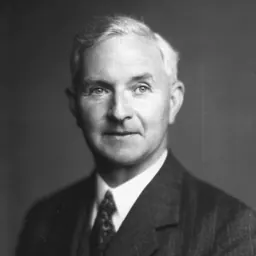



Related people
Same field, nearest in time


Contemporaries
People whose lives overlapped Beatrice Helen Worsley's




Frequently asked questions
Who was Beatrice Helen Worsley?
first female computer scientist in Canada (1922-1972)
When was Beatrice Helen Worsley born?
Beatrice Helen Worsley was born on 18 October 1921 in Queretaro Municipality.
When did Beatrice Helen Worsley die?
Beatrice Helen Worsley died on 8 May 1972 in Waterloo.
What was Beatrice Helen Worsley's occupation?
Beatrice Helen Worsley was a computer scientist.
What was Beatrice Helen Worsley known for?
Beatrice Helen Worsley was known for EDSAC.
What nationality was Beatrice Helen Worsley?
Beatrice Helen Worsley was Canadian.
Sources & further reading
· Wikipedia: Beatrice Helen Worsley
Cite this page
APA: Biography.guide. (2026). Beatrice Helen Worsley. https://biography.guide/beatrice-helen-worsley/
MLA: "Beatrice Helen Worsley." Biography.guide, https://biography.guide/beatrice-helen-worsley/.
Chicago: "Beatrice Helen Worsley." Biography.guide. https://biography.guide/beatrice-helen-worsley/.
Data last updated: 2026-09-20 · Spot an error? Report a correction.
Page generated 2026-09-27 04:59 UTC