
About Baudonivia
Lived 550 – 601 (aged 50–51). Baudonivia was a christian nun, hagiographer and nun.
Baudonivia (fl. c. 600) was a nun and hagiographer at the convent of Holy Cross of Poitiers. Very little is known about her. She wrote a biography of Radegund, Queen, founder of Holy Cross, and saint. Scholars have noticed a marked difference in perspective between an earlier life of Radegund composed by Venantius Fortunatus, written from a close friend's perspective, and Baudonivia's, written from the perspective of a nun of Radegund's own convent.
History Baudonivia wrote her Vita Radegundis, a biography of the Frankish queen Radegund, founder of the Holy Cross abbey, at the request of the other nuns at Holy Cross.
Baudonivia wrote her life of Radegund sometime between 599 and 614 at Chelles Abbey, using a previous vita by Venantius Fortunatus and her own recollections of Radegund from her youth. She regarded her work as similar to half of a diptych. Baudonivia created a portrait of a devout yet politically shrewd woman who used her worldly power to sustain the monastery. Her work has been characterized as faithful to the picture painted by Venantius Fortunatus, but more significantly influenced by the ideology of Caesarius of Arles's Regula Virginum with the clear purpose of providing a model of sanctity for the nuns of her generation. The work is focused on the later stages of Radegund's life, when Radegund lived in a cell near Poitiers. The book also includes miracles attributed to Radegund's intercession.
Commentary Scholars have noted the thematic differences between the respective biographies of Venantius Fortunatus and Baudonivia. According to Professor Lynda L. Coon, Fortunatus's depiction of Radegund emphasizes her asceticism, while Baudonivia stresses her role as astute politician, her administrative achievements, and her traveling to collect relics and, most importantly, her efforts to gain a fragment of the True Cross from Byzantine Emperor Justin II.
Fortunatus wrote his part as someone who knew Radegund on a personal level, whereas Baudonivia presented Radegund as a role model.
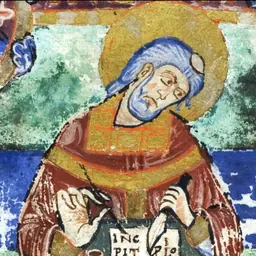
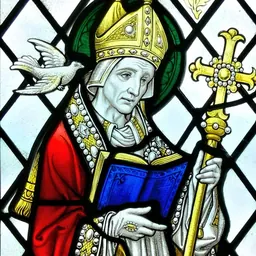
In the eleventh century, the abbesses of the Holy Cross convent were called to renegotiate their power. To maintain their challenged authority, they employed symbols of Radegund, based on the words of Baudonivia. Baudonivia herself inspired the artists creating stained-glass windows and manuscripts which decorated the abbey. .
Don’t just read it —
keep it.
Full-length biographies made to live with: read them, listen on the way to work, watch them tonight.
- E-book
- Audio
- Video
Instant download · yours to keep · every purchase keeps this site free
Important facts
People in Baudonivia's life
Named in this biography and alive at the same time

Related people
Same field, nearest in time



Contemporaries
People whose lives overlapped Baudonivia's


Frequently asked questions
Who was Baudonivia?
nun
When was Baudonivia born?
Baudonivia was born in 550.
When did Baudonivia die?
Baudonivia died in 601.
What was Baudonivia's occupation?
Baudonivia was a christian nun, hagiographer and nun.
What nationality was Baudonivia?
Baudonivia's recorded nationality: Francia.
Sources & further reading
Cite this page
APA: Biography.guide. (2026). Baudonivia. https://biography.guide/baudonivia/
MLA: "Baudonivia." Biography.guide, https://biography.guide/baudonivia/.
Chicago: "Baudonivia." Biography.guide. https://biography.guide/baudonivia/.
Data last updated: 2026-09-20 · Spot an error? Report a correction.
Page generated 2026-09-27 05:28 UTC