
Basil of Seleucia
5th century Roman bishop and ecclesiastical writer
About Basil of Seleucia
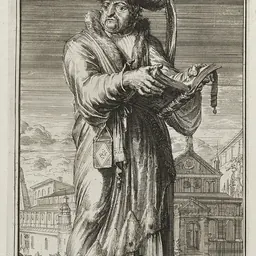
Lived 435 – 468 (aged 32–33). Basil of Seleucia was an archbishop, writer, theologian and bishop.
Basil of Seleucia was a Roman Bishop and ecclesiastical writer. He was archbishop of Seleucia ad Calycadnum by 448. He condemned Eutyches in the year 448, "acquiesced" while "rehabilitating" at the Latrocinium in 449, "but recanted and signed" the Tome of Leo in 450.
Biography His date of birth is uncertain but probably around the turn of the 5th century; he was consecrated bishop by 448, a position he held for at least a decade. Basil was a notable figure during the period when the Eastern Church was convulsed by the Eutychian controversy, and was necessarily obliged to take sides in all the attendant disputes. Those of his writings which have come down to us, though perhaps too rhetorical and involved, suggest that he was a man of great literary ability.
Like many who had submitted to Dioscurus at Ephesus, he went on to accept the condemnation of both Eutyches and Dioscurus at Chalcedon. Throughout the turmoil, however, his personal confession remained consistent: the one Christ is fully human and fully divine, and either 'one nature' or 'two nature' language is orthodox if rightly understood. He is particularly notable for originating the qualified Dyophysite formula promulgated in the Chalcedonian definition: 'made known in two natures'. After Chalcedon, he seems to have continued a zealous opponent of the Miaphysite party, and in the year 458 he joined with his fellow-bishops of Isauria, in an appeal to the Emperor Leo I, requesting him to use his influence in forwarding the Decrees of Chalcedon, and in securing the deposition of Timotheus Aelurus, who had intruded himself in 457 into the Patriarchate of Alexandria. This is the last reference we find to Basil and it is commonly supposed that he died shortly afterwards, probably between 458 and 460, although Oxford cites his death at after 468.
Mariology In the well-known homily On the Annunciation now generally recognised as authentic (for discussion of which, see 'Writings' below), Basil bears witness to a highly developed Marian theology. Written in the highly-charged theological climate after the Council of Ephesus, the homiletic hymn is of a devotional nature, bearing witness to the blossoming of Mariologial thought. True to form with his Christological convictions, he affirms the divine maternity and title of Theotokos, intertwined with the mystery of the incarnation. O'Carroll notes that "he cannot praise the Theotokos fittingly", declaring that she is the temple truly worthy of God, and "shines above all the martyrs as the sun outshines the stars", language consistent with earlier contemporaries like Proclus and Cyril. Likewise, Basil makes use of salutatory invocations beginning with Χαῖρε ("Hail") which would become a mainstay of Marian devotion in subsequent centuries.
O'Carroll additionally observes that Basil "marks an advance" over previous theologians in his teachings on Marian intercession, wherein the bishop sets forth a clear understanding of the Virgin's mediatorial capacity, and strongly links it with her divine motherhood. In so doing, he applies Christo-centric theological language to the Virgin in a secondary manner. Basil acclaims her "set as Mediatress of God and men that the dividing element of hatred might be taken away and heavenly and earthly [things] be made one." This helped standardise language and concepts for the medieval Marian doctrine of intercession grounded in her role as Mother of God. Her mediatorial role in Basil's theology, Reynolds says, is intrinsically linked to the incarnation and is not explicitly said to involve ongoing mediation. At the same time, his direct invocation of the Theotokos with royal appellations and a plethora of praises of her exalted status suggests a developing understanding of such a capacity on the Virgin's part. Reynolds identifies him as the first person known to have used the term Mediatrix, a short while before Antipater of Bostra. For Basil, Mary is the one "through whom the angels are rightly glorified," the one "[through whom] the rule of death is destroyed", among many other appellations. Limberis observes that Basil's hymnic oration "reflect the growth of the cult of the Theotokos, sanctioned by the bishops, incorporated into the liturgical cycle of the year." where is also his history of the protomartyr Thecla and of the miracles wrought at her grave. Most of these sermons may be regarded as genuine, though some of them are now generally assigned to Nestorius. Nevertheless, in his extensive assessment of the arguments, R Caro accepts the work as authentic and O'Carroll assigns its precise provenance to Constantinople in 449. Likewise, Tevel affirms its authenticity. Peltomaa is unconvinced of any attribution but agrees with a date preceding the Council of Chalcedon, and uses the text in her argument for a 5th century dating of the Akathist hymn; she cites the work of de Matons who argued that the hymn was dependent both on Romanos the Melodist and his sources, including Basil. Cunningham concedes that the majority of scholars are in agreement on a mid-5th century date.
According to Photius, Basil also dealt in verse with the life and miracles of Saint Thecla. This, however, was a poem and is not the same as the prose Life and Miracles of Saint Thecla. on the basis of the lack of theological content to indicate a late date,
Don’t just read it —
keep it.
Full-length biographies made to live with: read them, listen on the way to work, watch them tonight.
- E-book
- Audio
- Video
Instant download · yours to keep · every purchase keeps this site free
Important facts
People in Basil of Seleucia's life
Named in this biography and alive at the same time



Related people
Same field, nearest in time





Contemporaries
People whose lives overlapped Basil of Seleucia's

Frequently asked questions
Who was Basil of Seleucia?
5th century Roman bishop and ecclesiastical writer
When was Basil of Seleucia born?
Basil of Seleucia was born in 435.
When did Basil of Seleucia die?
Basil of Seleucia died in 468.
What was Basil of Seleucia's occupation?
Basil of Seleucia was an archbishop, writer, theologian and bishop.
Sources & further reading
· Wikipedia: Basil of Seleucia
Cite this page
APA: Biography.guide. (2026). Basil of Seleucia. https://biography.guide/basil-of-seleucia/
MLA: "Basil of Seleucia." Biography.guide, https://biography.guide/basil-of-seleucia/.
Chicago: "Basil of Seleucia." Biography.guide. https://biography.guide/basil-of-seleucia/.
Data last updated: 2026-09-20 · Spot an error? Report a correction.
Page generated 2026-09-27 05:10 UTC