
About Baruch Charney Vladeck
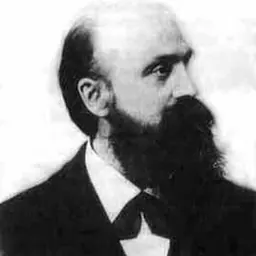
Lived 1886 – 1938 (aged 52). Baruch Charney Vladeck was a politician, poet, prose writer, literary scholar and journalist.
Baruch Charney Vladeck (Yiddish: ברוך טשאַרני וולאַדעק; born Baruch Nachman Charney; January 13, 1886 – October 30, 1938) was a Belarusian-born Jewish American labor leader, journalist and politician who was general manager of The Jewish Daily Forward from 1918 until his death in 1938. He was a member of the New York City Board of Aldermen and later the New York City Council, serving as the first majority leader of that body from January to September 1938. He was also a co-founder of the American Labor Party, serving as its leader on the City Council during his tenure.
Life in the Russian Empire The Charney brothers in Minsk 1900.(L-R): Mendel, Daniel, Shmuel, Zolke and Baruch. Baruch Charney was born January 13, 1886, in Dukor, a small village near Minsk, in what is now Belarus. His parents were Zev Volf and Brokhe Tsharni (née Hurwitz). His father, a fervent Lubavitcher Hasid, died in 1889, leaving his mother a widow with five sons (he was the fourth) and a daughter. Two of his brothers also achieved renown: literary critic Shmuel Niger and Yiddish poet Daniel Charney. Baruch was self-taught, preparing for his gymnasium exams on his own. He studied Jewish and secular sciences.
Baruch Charney was first drawn to the revolutionary movement for the overthrow of the Tsarist autocracy in the early 1900s. After the Kishinev pogrom in 1903, he joined Poale Zion, a Marxist–Zionist group, and began teaching in one of their schools. He was arrested in January 1904 for conducting a radical study circle for young workers, although according to his children his offense was merely recommending Tolstoy to someone at the library. He spent eight months in jail, during which he met older, more radical socialists belonging to the General Jewish Labour Bund, and was converted to their cause. After the Bund posted his bail in September, he formally joined the group and became an organizer. During the Congress, he met Vladimir Lenin, who deeply impressed him. Vladeck would be the only Bundist to support Lenin on policy and in his bid for the Central Committee.
The reforms brought about by the 1905 Revolution did not last, and by 1907 the Bund faced pogroms and repression. Seeing further arrest as inevitable, Vladeck decided that emigration to the United States was his most realistic option. In 1908 he left Europe for North America, landing at Ellis Island on Thanksgiving Day, soon after which he began to immerse himself in the study of American history and culture. During this time, Vladeck's idealistic perception of America would be tempered by encounters with Jim Crow racism in the South and violent strikebreaking in Philadelphia.
Vladeck joined the staff of The Forward in 1912 as manager of its Philadelphia branch, while also studying at the Teachers' College of the University of Pennsylvania.
In 1916, Forward editor Abraham Cahan invited Vladeck to New York to become city manager of the paper. By this point, he was an active member of the Socialist Party and its Yiddish-language affiliate, the Jewish Socialist Federation. During that year's elections, he became an important ally of Meyer London, a fellow Jewish emigrant from the Russian Empire, and aided him in his re-election campaign. Vladeck himself ran for State Senate, coming in third place with 20 percent of the vote. When the Russian Revolution broke out a few months later, he celebrated the downfall of the Tsardom with the rest of the Forward staff, but decided that America had become his home and chose not to return. That year, the Socialist Party of New York fielded a full ticket for the State Senate, State Assembly, and Board of Aldermen, with Vladeck chosen to run in the Board's 56th district representing the Williamsburg neighborhood of Brooklyn.
The Socialists elected seven alderman to the 70-member board, and as a result most of their measures aimed at government reform, municipal ownership, and workers' rights were defeated by the Tammany majority. They were also subjected to vitriol and even threats of lynching for their opposition to the war and the Espionage Act. Vladeck, meanwhile, had been an anti-Zionist since his days in the Bund. He met the 1917 Balfour Declaration with indifference; while he had no issue with giving Jews and Arabs equal rights in Palestine, he opposed any special status or privileges for Jews over Arabs. When Cahan began to lobby for a Jewish state, Vladeck rebuked him as follows:
Zionists and Communists have one thing in common—both are extremist fanatics to the point of madness. Like all those whose ideology is based on belief, they consider any opponent a mortal enemy. Nevertheless, let me say that not only do I not believe in the practicality of Zionism, even if it were possible to realize Zionism it would be a catastrophe. When I observe what is taking place in Lithuania, Latvia, Estonia, Romania, Poland, Bulgaria I thank God that we do not have a state of our own. A Jewish kingdom led by Jewish politicians (leaders of states are always politicians and not idealists) within a large Arab population defended by British rifles. . . . Just as I am unwilling to accept the position of the Yiddishists that the sole basis for the continued protection of Jewish identity is the Yiddish language, or the position of the Orthodox that this basis consists of the Jewish religion, so am I unwilling to accept that the only basis for the continued existence of Jewish identity is a Jewish country.
Organizing the Jewish Labor Committee
Throughout his life Vladeck was dedicated to improving the lives of Jewish refugees around the world, and by the 1930s he had established himself as a leading humanitarian. He belonged to a number of like-minded groups, such as the Joint Distribution Committee (and one of its predecessors, the People's Relief Committee), the Hebrew Immigrant Aid Society, and the American ORT Federation (of which he served as president from 1932). He was also involved in several domestic Jewish organizations, including the Workmen's Circle, the Jewish Socialist Verband (which had split off from the Jewish Socialist Federation), the American Jewish Committee, and the Yiddish Scientific Institute. When Adolf Hitler came to power in Germany in 1933, Vladeck saw him as a threat both to Jews and labor, and resolved to use his standing to organize American resistance to the Nazi regime.
Vladeck laid the groundwork for the Jewish Labor Committee in 1933, bringing together Jewish trade unionists (especially the garment trades), socialists, and kindred groups and individuals opposed to the Nazis. Together, they successfully convinced the American Federation of Labor to support a national boycott of German goods at the federation's 1933 convention.
A JLC delegation, led by Vladeck, meets with New York City mayor Fiorello La Guardia 1938.(L-R): S. Rifkin, J. Weinberg, H. Kreuzeich, R. Guskin, I. Minkoff, M. Feinstone, Mayor La Guardia, B. C. Vladeck, Louis Hollander, Isidore Nagler, B. Gebiener, and N. Chanin
The JLC had its founding convention the following February, in New York's Lower East Side, attracting one thousand delegates representing 400,000 members; Vladeck was elected the organization's first president, serving from the convention until his death. The JLC's stated purpose was to "give aid to Jewish and non-Jewish labor institutions overseas; to assist the democratic labor movement in Europe; provide succor to victims of oppression and persecution; and to combat anti-Semitism and racial and religious intolerance abroad and in the United States."
Vladeck and the JLC returned to the AFL's 1934 convention and convinced the federation to establish the Chest for Liberation of Workers in Europe, which set aside $250,000 for assisting the labor movement in fascist countries. The JLC also raised $150,000 of their own to help labor leaders in Europe flee fascist prosecution. The following February, the New York City Housing Authority was established to carry out "the clearance, replanning, and reconstruction of the areas in which unsanitary or substandard housing conditions exist." Charged with appointing all five of its members, La Guardia chose Vladeck, now a housing expert and co-director of the Amalgamated Housing Cooperative, to be one of them. Their budget, secured by La Guardia from Public Works Administration head Harold Ickes, was $25 million, a fourth of the PWA's entire housing budget.
American Labor Party and return to elected office
Vladeck alongside other labor leaders at an American Labor Party rally 1936.Seated (L-R): Sidney Hillman, John L. Lewis, David Dubinsky, unknown, and Baruch Charney Vladeck. Even before he left the Socialist Party, Vladeck had for years been a proponent of electoral cooperation with progressives. In 1924 he (along with the rest of the party) endorsed Progressive Senator Robert M. La Follette's presidential candidacy, and a decade later he was one of the most vocal "eastern" supporters of Socialist-Progressive fusion in Wisconsin. It was no surprise then that he emerged as one of the leaders in the movement to form a pro-labor third party in the state of New York. Founded in 1936 with the purpose of securing president Franklin D. Roosevelt's re-election, the American Labor Party brought together New York's Socialist and garment trades leaders in a bid to attract pro-New Deal, anti-Tammany votes.
Although Vladeck had originally been wary of Roosevelt (he called the New Deal "half despairing capitalism, half pushcart socialism" in 1934), by 1936 he had come to admire the president and his reformist approach to politics. nearly 275,000 of which came on the ALP ballot line. Yet even after Roosevelt's victory, Vladeck and many others saw the potential of the ALP as a permanent, independent third party, and ensured its continuation. Elections to the newly-formed New York City Council were held the same year under a new charter approved by voters the previous year; the new Council comprised 26 members elected via proportional representation by borough, in contrast to the 65-member Board of Aldermen elected by district. Vladeck ran for City Council on the ALP ticket in Manhattan and won with the support of the entire coalition. Among those who endorsed him were mayor La Guardia, civic leader Samuel Untermyer, NYCHA chairman Langdon W. Post, city chamberlain Adolf A. Berle, reformer John Dewey, and city parks commissioner Robert Moses.
The elections resulted in La Guardia's re-election, with over 480,000 votes on the ALP line securing his victory. His coalition did well too; out of 26 council members elected, 13 were Tammany Democrats and 13 were anti-Tammany (five Laborites, three Republicans, three Fusionists, and two insurgent Democrats). Vladeck, Morris, and La Guardia would form a sort of "troika" that had breakfast together every morning before Council sessions to plan the legislative work of the day.
Vladeck held the office of majority leader for the next eight months, during which he developed a reputation as a calm but firm parliamentarian, only occasionally rising to challenge the bigotry of his fellow politicians.
Death and legacy Vladeck's casket is carried out of The Jewish Daily Forward Building in Manhattan, November 2, 1938. Vladeck died at his home in 2 Horatio Street on October 30, 1938, at the age of 52 from a coronary thrombosis. His funeral procession through the Lower East Side and ending outside the Forward building drew 500,000 mourners, New York City's second-largest funeral to date. Among the speakers at the service were Governor Herbert Lehman, Mayor Fiorello La Guardia, Senator Robert F. Wagner and Socialist leader Norman Thomas.
Today the Vladeck Houses in Manhattan's Lower East Side, completed by the NYCHA in 1940, bear his name, as does nearby "Vladeck Park". The Amalgamated Housing Cooperative in the Bronx contains a lecture hall named Vladeck Hall. A liberty ship, B. Charney Vladeck, was named for Vladeck and launched in 1944. Vladeck's papers are housed at Tamiment Library at New York University.
One of Vladeck's sons was civil rights lawyer Stephen C. Vladeck (1920–1979) and his daughter-in-law was renowned labor lawyer Judith Vladeck. They were both active in the Liberal Party of New York, running unsuccessfully for Congress and State Assembly, respectively. Their son David served as the director of the Bureau of Consumer Protection during the Obama Administration. Another grandson of Vladeck's is singer-songwriter David Bromberg. His great-grandson is Steve Vladeck, a professor at the Georgetown University Law Center and a regular contributor to CNN.
Works Books פֿון דער טיעפֿעניש פֿון האַרץ: אַ בוך פֿון ליידען און קאַמפֿן (From Heart's Depth: A Book of Suffering and Struggle). Ed. with help from K. Tepper and Leon Savage. New York: Miller & Hillman, 1917. אין לעבען און שאַפען (In Life and Creation). Ed. Ephraim Jeshurin. New York: Forverts, 1936.
Articles "Against the Third International." New York: Labor Age, 1921. "The Largest Labor Paper in the World." New York: Labor Age, 1922. "Lincoln, Leader of Humanity." Cleveland: Locomotive Engineers Journal, 1923. "Premium Values Fade Out in Long Run." New York: The Fourth Estate, 1923. "Shall We Forsake European Jewry?" With other contributors. New York: The Jewish Tribune and Hebrew Standard, 1924. "The Rallying Point of Our Movement." New York: The New Leader, 1925. "Not Much to Be Proud Of." New York: The New Leader, 1925. "Leading Jewish Writers of Europe and America Debate the Palestine Question." With other contributors. New York: Forverts, 1926. "A Voice In The Wilderness Or A Bugle Call?" New York: The New Leader, 1927. "Largest Industries are Challenge to A. F. of L." New York: Labor Age, 1930. "Milwaukee and Socialism." New York: The World Tomorrow, 1931. "The Architect in the Body Social." New York: The Professional Architectural Monthly, 1934. "The Architect and His Job." Washington, D.C.: Architecture: The AIA Journal, 1935. "World Labor Backs Sanctions As 51 Nations Begin Action." New York: The New Leader, 1935. "Travel Notes of an Amateur Houser." New York: The Professional Architectural Monthly, 1936.
Reviews "A Gift to America." New York: The Nation, 1923. "The Rebel Jews." New York: The New Leader, 1926. "Five Friendly Studies of Russia." New York: The New Leader, 1928. "The Complete Cycle of a Life." New York: The Bookman, 1928. "Americans and Russia." New York: The Bookman, 1929.
Plays משה רבינו (Our Lord Moses). New York: Di Tsukunft, 1920.
Don’t just read it —
keep it.
Full-length biographies made to live with: read them, listen on the way to work, watch them tonight.
- E-book
- Audio
- Video
Instant download · yours to keep · every purchase keeps this site free
Important facts
more
Borech Vladek, Borech Vladeck, Borekh Tsharni, B. Vladek, ב. װלאַדעקPeople in Baruch Charney Vladeck's life
Named in this biography and alive at the same time



Related people
Same field, nearest in time





Contemporaries
People whose lives overlapped Baruch Charney Vladeck's


Frequently asked questions
Who was Baruch Charney Vladeck?
American politician
When was Baruch Charney Vladeck born?
Baruch Charney Vladeck was born on 13 January 1886 in Dukora.
When did Baruch Charney Vladeck die?
Baruch Charney Vladeck died on 31 October 1938 in New York City.
What was Baruch Charney Vladeck's occupation?
Baruch Charney Vladeck was a politician, poet, prose writer, literary scholar and journalist.
Sources & further reading
· Wikipedia: Baruch Charney Vladeck
· DBpedia: Baruch Charney Vladeck
Cite this page
APA: Biography.guide. (2026). Baruch Charney Vladeck. https://biography.guide/baruch-charney-vladeck/
MLA: "Baruch Charney Vladeck." Biography.guide, https://biography.guide/baruch-charney-vladeck/.
Chicago: "Baruch Charney Vladeck." Biography.guide. https://biography.guide/baruch-charney-vladeck/.
Data last updated: 2026-09-26 · Spot an error? Report a correction.
Page generated 2026-09-27 05:16 UTC