
About Barry Foster
Lived 1927 – 2002 (aged 74). Barry Foster was a British stage actor, film actor, television actor and actor.
John Barry Foster (21 August 1927 – 11 February 2002) was an English actor who had an extensive career in film, radio, stage and television over almost 50 years. He was best known for portraying the title character in the British crime series Van der Valk (1972–1973, 1977, 1991–1992) and Bob Rusk in Alfred Hitchcock's Frenzy.
Early life Foster was born on 21 August 1927 in Beeston, Nottinghamshire, the son of a toolsetter. His family moved to Hayes, Middlesex when he was a few months old. He received his formal education at Southall County School.
After leaving school, Foster trained as a plastics organic chemist at the local EMI Central Research Laboratories, while unsuccessfully submitting ideas to advertising agencies.
He subsequently trained as an actor, having won a scholarship to train at the Central School of Speech and Drama in London. Foster appeared on stage in three of Pinter's plays: The Basement, The Tea Party and A Slight Ache, in 1987.
Career Foster's professional stage debut came in 1952 as Lorenzo in The Merchant of Venice in County Cork. In 1955, he made his London stage debut as the Electrician in The Night of the Ball at the New Theatre (now the Noël Coward Theatre). His first film role was in The Battle of the River Plate (1956), as part of the crew of HMS Exeter, in which he played Able Seaman Roper. Over the next decade and a half, he performed in Joseph Losey's King and Country (1964), The Family Way (1966), Robbery (1967), Inspector Clouseau (1968) and Battle of Britain (1969). He had a regular role on the TV series The Troubleshooters (1965). In 1970, he played a Fenian paramilitary leader in David Lean's epic film Ryan's Daughter.
In 1972 Foster played two roles, on opposite sides of the law. The first was the cynical Dutch detective Van der Valk, a role he played, on and off, until 1992. The second was a serial murderer in Alfred Hitchcock's film Frenzy. Frenzy was Hitchcock's next-to-last film, made towards the end of an acclaimed and commercially highly successful career, and caused controversy for the scene in which Foster was required to simulate a rape and a murder, reportedly driven by Hitchcock's desire to prove that he was still relevant as a director in a more permissive age. Michael Caine had previously rejected the role and criticised the nature of the film.
Shortly after the third series of Van der Valk, Foster took on the role of Sherlock Holmes in a series of BBC radio plays in 1978. He recorded 13 episodes of the Holmes canon, with David Buck as Dr Watson. Also on BBC Radio, he later voiced other detectives such as Sergeant Cribb and Maigret. Foster was seen on BBC television in Fall of Eagles (1974, in the role of Kaiser Wilhelm II) and as the condescending chief of British Intelligence in the adaptation of the John le Carré novel Smiley's People (1982). During this time, Foster appeared in the films Sweeney! (1977), spun off from the TV series; The Wild Geese (1978); Merchant Ivory's Heat and Dust (1983); The Whistle Blower (1986); and Maurice (1987).
From the 1990s, Foster mainly performed on stage. He took on the role of Inspector Goole in J.B. Priestley's An Inspector Calls in a production directed by Stephen Daldry. In 2000, he starred as Prospero in The Tempest, directed by Julia Stafford Northcote at Stafford Castle. From 2001 to 2002, he performed in a run of Yasmina Reza's stage play 'Art' in the West End of London. Foster was a talented amateur pianist, with a penchant for jazz music.
Death Foster became ill while appearing in a play in the West End on 8 February 2002 and was taken to hospital. He died of a heart attack aged 74 on 11 February 2002 at the Royal Surrey County Hospital in Guildford, Surrey, not far from where he lived.
A funeral service was held for him on 21 February 2002 at St Stephen's Church at the village of Shottermill, near Haslemere. His body was cremated at Guildford Crematorium, and his ashes divided, part being interred at St Stephen's and the remainder being interred in France.
Filmography
Television
Radio The Quarry (1965) – Douglas Shemley in BBC Radio drama World from Rough Stones trilogy (1974) - Lord John, with Nerys Hughes as Nora, Hugh Ross as Walter and Carole Boyd as Arabella, in BBC Radio 4 Drama production of novels by Malcolm Macdonald Sherlock Holmes (1978) – Sherlock Holmes, with David Buck as Dr. Watson The George Cragge series (1995-1999) – DCI Frank Jefferson A Fall of Moondust (1981) – Chief Engineer Jim Lawrence Space Force (1984–85) – Saxon Berry Swing Swing Together (1987) – Sergeant Cribb in BBC Radio 4 Saturday Night Theatre dramatisation of novel by Peter Lovesey
Don’t just read it —
keep it.
Full-length biographies made to live with: read them, listen on the way to work, watch them tonight.
- E-book
- Audio
- Video
Instant download · yours to keep · every purchase keeps this site free
Important facts
Family & relationships
People in Barry Foster's life
Named in this biography and alive at the same time



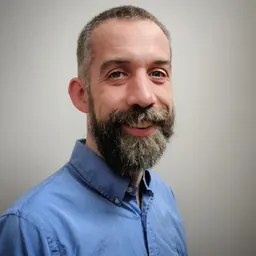
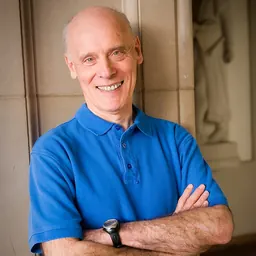

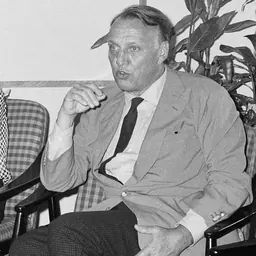

Related people
Same field, nearest in time




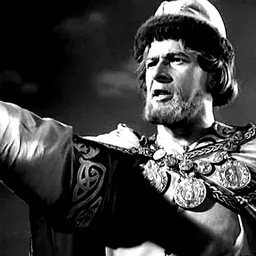
Contemporaries
People whose lives overlapped Barry Foster's


Frequently asked questions
Who was Barry Foster?
British film and television actor (1927–2002)
When was Barry Foster born?
Barry Foster was born on 21 August 1927 in Beeston.
When did Barry Foster die?
Barry Foster died on 11 February 2002 in Guildford.
What was Barry Foster's occupation?
Barry Foster was a stage actor, film actor, television actor and actor.
What nationality was Barry Foster?
Barry Foster was British.
Sources & further reading
· DBpedia: Barry Foster (actor)
Cite this page
APA: Biography.guide. (2026). Barry Foster. https://biography.guide/barry-foster/
MLA: "Barry Foster." Biography.guide, https://biography.guide/barry-foster/.
Chicago: "Barry Foster." Biography.guide. https://biography.guide/barry-foster/.
Data last updated: 2026-09-22 · Spot an error? Report a correction.
Page generated 2026-09-27 05:33 UTC