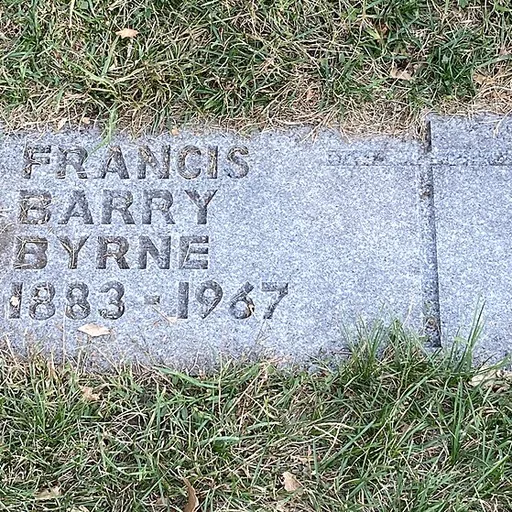
About Barry Byrne
Lived 1883 – 1967 (aged 83). Barry Byrne was an American architect.
Francis Barry Byrne (December 19, 1883 – December 18, 1967) was a member of the group of architects known as the Prairie School. After the demise of the Prairie School, about 1914 to 1916, Byrne continued as a successful architect by developing his own style.
Biography Byrne was born and raised in Chicago. After seeing a Chicago Architectural Club exhibit in 1902, he sought employment with Frank Lloyd Wright and secured an apprentice position although he was untrained in architecture. As Wright's son, John, relates:
After working for Wright in his Oak Park, Illinois studio between 1902 and 1907, Byrne worked briefly at other Chicago firms. He moved to Seattle in winter 1908 to 1909 to join Andrew Willatzen who had been a fellow employee at Wright's office. They formed the firm Willatzen & Byrne and, over the next several years, produced a series of residential designs in the Prairie School style.
After the Willatzen & Byrne partnership dissolved in 1913, Willatzen remained in Seattle but Byrne moved to southern California where he lived briefly with Wright's sons Lloyd Wright and John Lloyd Wright. In 1914, he returned to Chicago at first to manage, then, take over the practice of Walter Burley Griffin who had moved to Australia to develop plans for its new capital city, Canberra.
By 1917, Byrne was practicing under his own name. He briefly served in World War I, then returned to Chicago. Byrne's style developed independently of Wright and the Prairie School as he moved toward greater simplification of form. Annette Cremin became Byrne's wife in 1926, and they had three children: Ann, Cathleen and Patrick. As an artist, Annette influenced his work, drawing renderings of his architectural designs, and on occasion, contributing interior color patterns and decoration for his buildings and churches. During the depression when there was no demand for his services, she supported the family.
During the 1920s, some of Byrne's work contained elements of Expressionism. He became successful as a designer of ecclesiastical and educational buildings for the Roman Catholic Church, for whom he later created three of his most important works: Church of Christ the King in Turners Cross, Cork, Ireland (1931), Church of St. Francis Xavier in Kansas City, Missouri (1949), and St. Benedict's Abbey in Atchison, Kansas (1951–1957).
In the 1930s, Byrne moved to New York, but after 1945 returned to Chicago. Byrne partially retired about 1953, but continued to accept commissions until his death.
He died on the eve of his 84th birthday after being struck crossing the street to attend Mass with his wife by an automobile driven by retired president of the American League Will Harridge. He is buried at Calvary Cemetery in Evanston, Illinois. Annette Cremin Byrne died in 1990, aged 92.
Archival materials are held by the Ryerson & Burnham Libraries in the Art Institute of Chicago.
Selected works St. Patrick's Roman Catholic Church, Racine, Wisconsin (1924) Nelson, Tagholm and Jensen Building, Seattle, Washington (1909) with Andrew Willatzen Charles H. Clarke House, Seattle, Washington (1909) with Andrew Willatzen Frederick Handschy House Seattle, Washington (1910) with Andrew Willatzen Our Lady of Good Help Catholic Church, Hoquiam, Washington (1910) with Andrew Willatzen George Matzen House, Seattle, Washington (1910), with Andrew Willatzen Oscar E. Maurer House, Seattle, Washington (1910) with Andrew Willatzen Andrew S. Kerry House, Seattle, Washington (1910–11) with Andrew Willatzen George E. Felmlay House, Seattle, Washington (1911) with Andrew Willatzen John T. McVay House, Seattle, Washington (1911) with Andrew Willatzen Carleton Huiscamp House, Seattle, Washington (1912) with Andrew Willatzen George Bellman House, Seattle, Washington (1912) with Andrew Willatzen L. George Hagar House, Seattle, Washington (1913) with Andrew Willatzen Sam Schneider House, Mason City, Iowa (1914), attributed (original commission to Walter Burley Griffin) J.B. Franke House, Fort Wayne, Indiana (1914) Hugh Gilmore House, Mason City, Iowa (1915) Dr. James Frederic Clarke House, Fairfield, Iowa (1915) John Travis Kenna Apartments, Chicago, Illinois (1916) C.M. Rich House, Keokuk, Iowa (1916) Saint Francis Xavier School, Wilmette, Illinois (1916) Old Chemistry Hall, University of New Mexico, Albuquerque, New Mexico (1916) John Valentine House (now Sigma Tau Gamma fraternity house, Ball State University), Muncie, Indiana (1917) William F. Temple House remodeling, Kenilworth, Illinois (1917), with Alfonso Iannelli Immaculata High School and Convent Buildings, Chicago (1922), historic landmark St. Francis Xavier High School, Wilmette, Illinois (1922) Church of St. Thomas the Apostle, Chicago, Illinois (1922) All Saints Cemetery, Des Plaines, Illinois (1923) St. Catherine's High School, Racine, Wisconsin (1923) St. Patrick's Roman Catholic Church, Racine, Wisconsin (1924) Church of Christ the King, Tulsa, Oklahoma (1926) Church of Christ the King, Parish of Turners Cross, Cork, Ireland (1931), sculpture by John Storrs Church of SS. Peter & Paul, Pierre, South Dakota (1941) Church of St. Francis Xavier, Kansas City, Missouri (1949), with Joseph B Shaughnessy Sr. sculptures by Alfonso Iannelli St. Columba Church, St. Paul, Minnesota (1949) St. Benedict's Abbey Church, Atchison, Kansas (1951–1957) Church of St. Patrick, London, Ontario (1952) Holy Redeemer College (now Académie Sainte-Cécile), Windsor, Ontario (1957) St. Procopius College (now Benedictine University), Lisle, Illinois (1962)
Don’t just read it —
keep it.
Full-length biographies made to live with: read them, listen on the way to work, watch them tonight.
- E-book
- Audio
- Video
Instant download · yours to keep · every purchase keeps this site free
Important facts
People in Barry Byrne's life
Named in this biography and alive at the same time




Related people
Same field, nearest in time


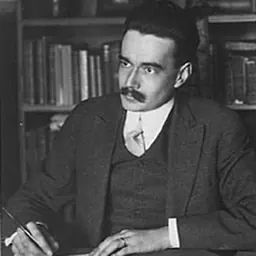
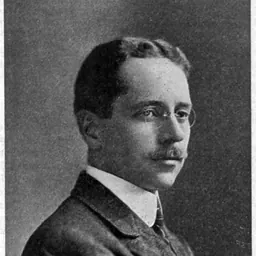

Contemporaries
People whose lives overlapped Barry Byrne's

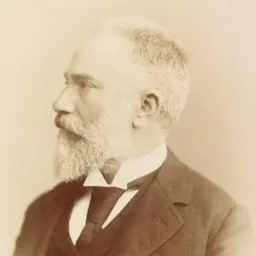

Frequently asked questions
Who was Barry Byrne?
American architect (1883–1967)
When was Barry Byrne born?
Barry Byrne was born on 19 December 1883 in Chicago.
When did Barry Byrne die?
Barry Byrne died on 18 December 1967 in Chicago.
What was Barry Byrne's occupation?
Barry Byrne was an architect.
What nationality was Barry Byrne?
Barry Byrne was American.
Sources & further reading
Cite this page
APA: Biography.guide. (2026). Barry Byrne. https://biography.guide/barry-byrne/
MLA: "Barry Byrne." Biography.guide, https://biography.guide/barry-byrne/.
Chicago: "Barry Byrne." Biography.guide. https://biography.guide/barry-byrne/.
Data last updated: 2026-09-22 · Spot an error? Report a correction.
Portrait: Wikimedia Commons · author & licence
Page generated 2026-09-27 05:04 UTC