
About Baro Tumsa
Lived 1938 – 1978 (aged 39–40). Baro Tumsa was an Ethiopian lawyer.
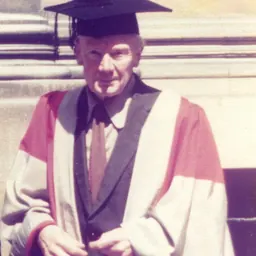
Baro Tumsa (1938–1978) was an Oromo pharmacist, lawyer and Oromo nationalist and political activist, who was instrumental for the creation of the Oromo Liberation Front (OLF). [Baro Tumsa: The Principal Architect of the Oromo Liberation Front (book by Asafa Jalata) Palgrave Macmillan Publication, 2024].
Early life Baro Tumsa was born in 1938 in Bodji Karkaro, Wallaga, Oromia. His father, Tumsa Silga, and his mother, Nasise Chiracho, died while he was very young and so he was raised by his elder brother, Gudina Tumsa. He had one sister, Rahel, and two brothers, Gudina and Nagassa.
Education and political activism
Education Tumsa completed primary education and part of his secondary education in the town of Nekemte, Wallaga, and later in Bishoftu, East Shewa. Subsequently, he joined the then Haile Selassie I University in Addis Ababa (Finfinne) and graduated with BSc in Pharmacy, in 1966.
Tumsa was mentored and encouraged to study Law by the likes of Dhinsa Lepisa, and Baqala Nadhi (both lawyers) from the Macha and Tulama Self-help Association and, he re-joined Haile Selassie I University Law School, where he completed his legal education. His LLM thesis entitled "Decentralisation and Nation Building" remains a seminal piece on the issue of national question in the Ethiopian Empire. (now Addis Ababa University).
Ideologue and Founder of the Oromo Liberation Front
Tumsa was instrumental in the formation of the Oromo Liberation Front. It was he who organized a secret conference in Addis Ababa in December 1973. Among the participants, Hussein Sura (Sheik Hussen), the leader of Beirut-based organization, Elemo Qilixxu, the leader of Aden-based Oromo National Liberation, and Baker Yusuf, came from the Middle East. Several individuals from different regions of Oromia also participated in that conference, out of which the OLF was formed in early 1974. According to Olana Zoga, the author of History of Macha and Tulama Association, under the leadership of Tumsa, underground members of the Association which gave rise to the OLF took advantage of the February 1974 Revolution and contributed to the overthrow of Haile Sellassie's regime in four ways:
First, its members effectively used the limited freedom of the press, which flourished in Ethiopia from March to June 1974 for the purpose of exposing Oromo colonial experience.
Second, its parliamentary members regularly challenged many of the regime's policies.
Third, its members conducted agitation among the university and high school students.
Fourth and most important, the underground members of the military police forces were instrumental in organizing the committee of the men in uniform (Derg or Dergue in Amharic) that overthrew the Emperor in September 1974 Zoga 1993: 301- 302).
From this aspect it is very clear that the OLF grew out of the underground Macha and Tulama Association, and it is firmly rooted in Oromo national consciousness and it bases its ideological fire on Oromo nationalism. Consequently, it can be said that the emergence of a national movement indicates that a population or social group has reached a new stage on the road to nationhood: the transition to political action. The nation, or the sections of a population that consider themselves to be a nation, attempt to create their own state (Alter 1989: 22-23).
Freedom Fighter in the Mountains of Gara Mulata
Tumsa left behind the comfort of his privileged life in Finfinne to join the nascent guerrilla force of the OLF in the eastern command in 1978 and sacrificed his life for the freedom of the Oromo nation. By then he was married and a father of three children. He comes from an unprivileged background and established himself as a member of the urban elite educated and well connected middle class. However, he swapped these luxuries for the hardships in the mountains of Oromia for the sake of the freedom of his people whom he loved with all his heart and mind. The circumstances of his death remains unclear to this day.
Don’t just read it —
keep it.
Full-length biographies made to live with: read them, listen on the way to work, watch them tonight.
- E-book
- Audio
- Video
Instant download · yours to keep · every purchase keeps this site free
Important facts
People in Baro Tumsa's life
Named in this biography and alive at the same time

Related people
Same field, nearest in time



Contemporaries
People whose lives overlapped Baro Tumsa's



Frequently asked questions
Who was Baro Tumsa?
Ethiopian activist
When was Baro Tumsa born?
Baro Tumsa was born in 1938.
When did Baro Tumsa die?
Baro Tumsa died in 1978 in Harerge.
What was Baro Tumsa's occupation?
Baro Tumsa was a lawyer.
What nationality was Baro Tumsa?
Baro Tumsa was Ethiopian.
Sources & further reading
Cite this page
APA: Biography.guide. (2026). Baro Tumsa. https://biography.guide/baro-tumsa/
MLA: "Baro Tumsa." Biography.guide, https://biography.guide/baro-tumsa/.
Chicago: "Baro Tumsa." Biography.guide. https://biography.guide/baro-tumsa/.
Data last updated: 2026-09-20 · Spot an error? Report a correction.
Page generated 2026-09-27 05:32 UTC