
Barney Bigard
American jazz clarinetist, jazz musician
About Barney Bigard
Lived 1906 – 1980 (aged 74). Barney Bigard was an American jazz clarinetist, saxophonist, conductor, composer, clarinetist and jazz musician.
Albany Leon "Barney" Bigard (March 3, 1906 – June 27, 1980) was an American jazz clarinetist known for his 15-year tenure with Duke Ellington. He also played the tenor saxophone.
Biography Bigard was born in New Orleans to Creole parents, Alexander and Emanuella Bigard. He had two brothers: Alexander Jr. and Sidney. His uncle, Emile Bigard, was a jazz violinist. He attended local schools and studied music and clarinet with Lorenzo Tio.
After leaving Ellington's orchestra, Bigard moved to Los Angeles. He did soundtrack work for Hollywood film studios and had an onscreen featured role with an all-star band led by Louis Armstrong in the film New Orleans (1947). He began working with trombonist Kid Ory's group during the late 1940s. He later worked with Armstrong's touring band, the All Stars, and others.
In 1951, Bigard appeared in The Strip with Armstrong, Jack Teagarden, and Earl "Fatha" Hines (all playing themselves). He again appeared and played in the movie St. Louis Blues (1958), with Nat King Cole, Ella Fitzgerald, Pearl Bailey, and Eartha Kitt.
Bigard wrote an autobiography entitled With Louis and the Duke. He is credited as composer or co-composer on several numbers, including the Ellington standard "Mood Indigo".
Bigard and His Jazzopaters
The first version of the song "Caravan" (composed by Juan Tizol and later rearranged by Duke Ellington) was recorded in Hollywood, on December 18, 1936, and performed as an instrumental by Barney Bigard and His Jazzopaters. Two takes were recorded and issued, although L-0373-2 is by far the more commonly found take. As of 2024, "Caravan" is the most covered song in history with over 500 versions published.
The band members were Cootie Williams (trumpet), Juan Tizol (trombone), Barney Bigard (clarinet), Harry Carney (baritone saxophone), Duke Ellington (piano), Billy Taylor (bass), and Sonny Greer (drums). All were members of the Duke Ellington Orchestra, which was often drawn upon to record small-group sides. Although Ellington was present at the recording date, the session leader was Bigard.
In keeping with Ellington's formation of small groups featuring his primary soloists, Bigard continued to be featured under his own name on Variety and subsequently Vocalion Records and OKeh through 1940. When Ellington signed with Victor in 1940, Bigard (and other Ellingtonians) recorded for Bluebird under his own name. He sat in with the Glenn Miller Orchestra for some of their biggest hits, such as "Moonlight Serenade", "Little Brown Jug", and "Tuxedo Junction". Bigard was also a member of Louis Armstrong's All Stars before and after Edmond Hall joined. Bigard can be seen with the All Stars in the movie The Glenn Miller Story (1954).
Bigard performed with Louis Armstrong and his All Stars with Velma Middleton singing vocals for the ninth Cavalcade of Jazz concert held at Wrigley Field in Los Angeles. The concert was produced by Leon Hefflin Sr. on June 7, 1953. Also featured that day were Roy Brown and His Orchestra, Don Tosti and His Mexican Jazzmen, Earl Bostic, Nat "King" Cole, and Shorty Rogers and his Orchestra.
After World War II, Bigard recorded under his own name for, among others, Signature Records, Rex Records, Black & White Records, and Keynote Records in 1944–45. He recorded an album for Liberty in 1957 and an album for French Vogue Records billed as the "Barney Bigard–Claude Luter Quintet" in 1966. In 1968, Delmark Records invited him to Chicago, where he recorded Bucket's Got a Hole in It with Art Hodes.
Death Bigard died on June 27, 1980, aged 74, in Culver City, California, and was interred there in Holy Cross Cemetery.
Discography
With Art Tatum, Joe Thomas, Georgie Auld, Vic Dickenson, Red Callender, Willie Smith, Zutty Singleton, Johnny Guarnieri, and others
Barney Bigard 1944–1945 (Classics Records, 1997)
With Art Hodes
Bucket's Got a Hole in It (Delmark, recorded 1968 in Chicago)
With Benny Carter and Ben Webster BBB & Co. (Swingville, 1962)
Don’t just read it —
keep it.
Full-length biographies made to live with: read them, listen on the way to work, watch them tonight.
- E-book
- Audio
- Video
Instant download · yours to keep · every purchase keeps this site free
Important facts
People in Barney Bigard's life
Named in this biography and alive at the same time


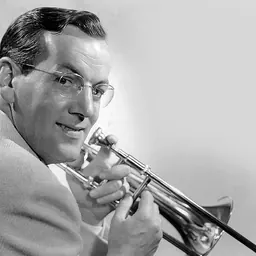
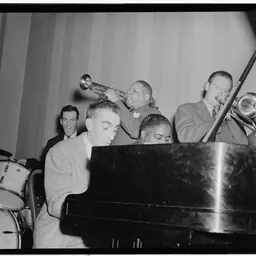



Related people
Same field, nearest in time
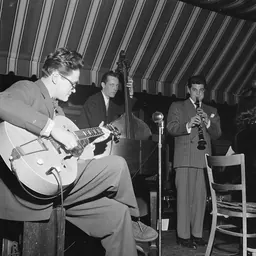



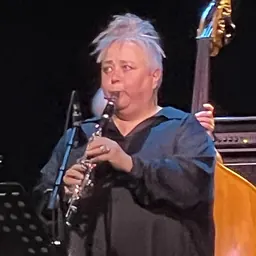

Contemporaries
People whose lives overlapped Barney Bigard's
Frequently asked questions
Who was Barney Bigard?
American jazz clarinetist, jazz musician (1906-1980)
When was Barney Bigard born?
Barney Bigard was born on 3 March 1906 in New Orleans.
When did Barney Bigard die?
Barney Bigard died on 27 June 1980 in Culver City.
What was Barney Bigard's occupation?
Barney Bigard was a jazz clarinetist, saxophonist, conductor, composer, clarinetist and jazz musician.
What nationality was Barney Bigard?
Barney Bigard was American.
Sources & further reading
Cite this page
APA: Biography.guide. (2026). Barney Bigard. https://biography.guide/barney-bigard/
MLA: "Barney Bigard." Biography.guide, https://biography.guide/barney-bigard/.
Chicago: "Barney Bigard." Biography.guide. https://biography.guide/barney-bigard/.
Data last updated: 2026-09-20 · Spot an error? Report a correction.
Page generated 2026-09-27 05:18 UTC