
About Barnett Freedman
Lived 1901 – 1958 (aged 56). Barnett Freedman was a British lithographer, painter, illustrator, designer and artist.
Barnett Freedman (19 May 1901 – 4 January 1958) was a British painter, commercial designer, book illustrator, typographer, and lithographer.
Biography Early life and education Barnett Freedman was born in Stepney, in the east end of London, the son of Louis Freedman, a journeyman tailor, and Reiza Ruk, Jewish immigrants from Russia. Freedman's only formal education was at an elementary school, and from the age of nine to 13 he was a bedridden patient in the London Hospital. There he learnt to read and write and was taught to play the violin. Freedman's first solo exhibition was in 1927 at the Bloomsbury Bookshop in central London.
Faber gave Freedman his first major commission, an assignment to design and illustrate Siegfried Sassoon's Memoirs of an Infantry Officer. - and the subsequent printing of the stamps was the subject of The King's Stamp, a documentary film by the GPO Film Unit. Freedman also designed Jubilee postal orders, in various values from sixpence to £1. Freedman was now recognised as a force in autolithographic printmaking, and his down-to-earth attitude and lack of pretension made him welcome among the craftsmen at the Curwen Press, the Baynard Press and Chromoworks, the leading firms in the industry. For the Baynard Press, he also designed the Baynard Claudia typeface, which he named after his wife, Beatrice Claudia Guercio. Guercio was also an artist of some repute and had herself been commissioned to design a new GPO greetings telegram to commemorate the 1937 Coronation of George VI.
In 1936 Freedman illustrated George Borrow's Lavengro for the Limited Editions Club of New York. By this time Freedman's lithography had entered a new phase, where the unique qualities of the medium were taken into a new dimension with the artist's rainbow palette. He developed a technique whereby the black and white illustrations printed by line block simulated lithography, bringing a unity to the book. Although Lavengro was poorly subscribed, George Macy, owner of the book club, admired Freedman's work to such an extent that he was subsequently commissioned to illustrate Henry IV Part One, for the Limited Editions Club multi-volume Shakespeare. Tolstoy's War and Peace (1938) and Anna Karenina (1951) are recognised as two of the finest examples of twentieth century book design and have ensured Freedman a place in the history of book production. For Macy's less exclusive Heritage Press, Freedman illustrated Dickens's Oliver Twist (1939), Emily Brontë's Wuthering Heights (1941) and Charlotte Brontë's Jane Eyre (1942). The Bronte novels are challenging for the illustrator, and Freedman's interpretations were regarded as among the best. Other book jackets designed by Freedman during this period included those for Dance of the Quick and the Dead by Sacheverell Sitwell and Inhale and Exhale by William Saroyan, both of which were published in 1936 by Faber.
World War II
At the outbreak of the Second World War, Freedman was appointed as a full-time salaried war artist by the War Artists' Advisory Committee and sent to France in April 1940 to record the work of the British Expeditionary Force. He painted a number of works there but was frustrated by a perceived lack of support, particularly transport provision. He was evacuated to England in May 1940 and worked on coastal defence subjects in Sheerness and the Isle of Sheppey. In June 1944 Freedman went to Portsmouth, before travelling to France after the D-Day landings. There he recorded scenes around the landing beaches and at the invasion headquarters, but in July was taken ill and sent to hospital in Liverpool.
Later life
In post-war years, as a teacher at the Royal College of Art and the Ruskin School of Art, he was regarded by many of his students as an inspiring, if unpredictable, mentor who had little regard for time-wasters.
Honours 1947 – Commander of the Order of the British Empire 1949 – Royal Designer for Industry 1956 – Honorary Fellow of the Royal College of Art 1956 – Fellow of the Royal Society of Arts
Don’t just read it —
keep it.
Full-length biographies made to live with: read them, listen on the way to work, watch them tonight.
- E-book
- Audio
- Video
Instant download · yours to keep · every purchase keeps this site free
Important facts
People in Barnett Freedman's life
Named in this biography and alive at the same time
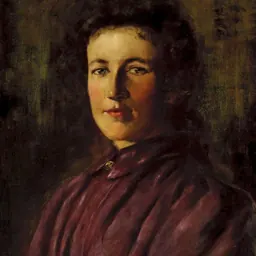
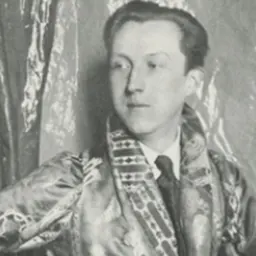
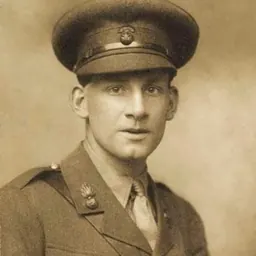
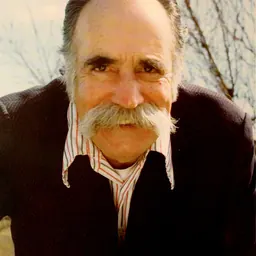


Related people
Same field, nearest in time
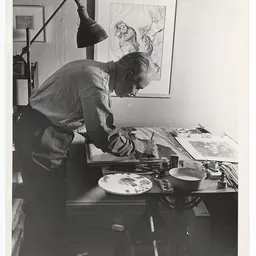

Contemporaries
People whose lives overlapped Barnett Freedman's



Frequently asked questions
Who was Barnett Freedman?
artist, illustrator (1901-1958)
When was Barnett Freedman born?
Barnett Freedman was born on 19 May 1901 in London.
When did Barnett Freedman die?
Barnett Freedman died on 4 January 1958 in London.
What was Barnett Freedman's occupation?
Barnett Freedman was a lithographer, painter, illustrator, designer and artist.
What nationality was Barnett Freedman?
Barnett Freedman was British.
Sources & further reading
Cite this page
APA: Biography.guide. (2026). Barnett Freedman. https://biography.guide/barnett-freedman/
MLA: "Barnett Freedman." Biography.guide, https://biography.guide/barnett-freedman/.
Chicago: "Barnett Freedman." Biography.guide. https://biography.guide/barnett-freedman/.
Data last updated: 2026-09-20 · Spot an error? Report a correction.
Page generated 2026-09-27 05:22 UTC