
William Saroyan
Armenian-American novelist, playwright, and short story writer
About William Saroyan
Lived 1908 – 1981 (aged 72). William Saroyan was an American writer, playwright, screenwriter, novelist, poet and songwriter.
William Saroyan (; August 31, 1908 – May 18, 1981) was an American novelist, playwright, and short story writer of Armenian descent. He was awarded the Pulitzer Prize for Drama in 1940, and in 1943 won the Academy Award for Best Story for the film The Human Comedy. When the studio rejected his original 240-page treatment, he turned it into a novel, The Human Comedy.
Saroyan wrote extensively about the Armenian immigrant life in California. Many of his stories and plays are set in his native Fresno. Some of his best-known works are The Time of Your Life, My Name Is Aram and My Heart's in the Highlands. His two collections of short stories from the 1930s, Inhale Exhale (1936) and The Daring Young Man on the Flying Trapeze (1934), are regarded as among his major achievements and essential documents of the cultural history of the period on the West Coast of the United States.
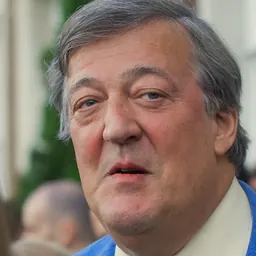
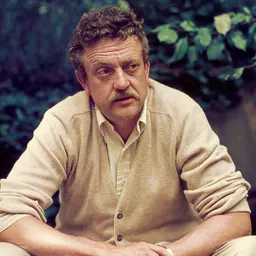
He has been described in a Dickinson College news release as "one of the most prominent literary figures of the mid-20th century" and by Stephen Fry as "one of the most underrated writers of the [20th] century." Fry suggests that "he takes his place naturally alongside Hemingway, Steinbeck and Faulkner". Kurt Vonnegut has said that Saroyan was "the first and still the greatest of all the American minimalists."
Biography
Early years William Saroyan was born on August 31, 1908, in Fresno, California, to Armenak and Takuhi Saroyan, Armenian immigrants from Bitlis, Ottoman Empire. His father came to New York in 1905 and started preaching in Armenian Apostolic churches. His cousin was musician Ross Bagdasarian.
At the age of three, after his father's death, Saroyan, along with his brother and sister, was placed in an orphanage in Oakland, California. He later went on to describe his experience in the orphanage in his writings. He narrowly avoided a court martial when his novel, The Adventures of Wesley Jackson, was seen as advocating pacifism. Interest in Saroyan's novels declined after the war, when he was criticized for sentimentality. Freedom, brotherly love, and universal benevolence were for him basic values, but critics considered his idealism as out of step with the times which, in their view, were properly described as devoted to division, ethnic and ideological hatred, and universal predation. He still wrote prolifically, so that one of his readers could ask "How could you write so much good stuff and still write such bad stuff?" In the novellas The Assyrian and other stories (1950) and in The Laughing Matter (1953), Saroyan mixed allegorical elements within a realistic novel. The plays Sam Ego's House (1949) and The Slaughter of the Innocents (1958) were not as successful as his prewar plays. Many of Saroyan's later plays, such as The Paris Comedy (1960), The London Comedy (1960), and Settled Out of Court (1960), premiered in Europe. Manuscripts of a number of unperformed plays are now at Stanford University with his other papers.
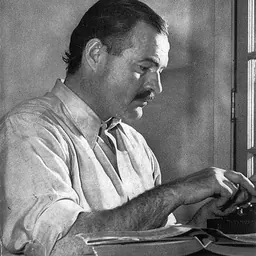
When Ernest Hemingway learned that Saroyan had made fun of the controversial non-fiction work Death in the Afternoon, Hemingway responded: "We've seen them come and go — good ones too, better ones than you, Mr. Saroyan."
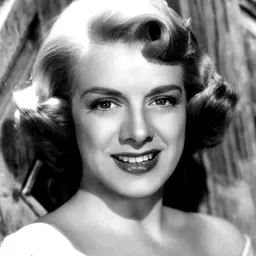
One of Saroyan's most financially successful ventures was perhaps his most unlikely: the song "Come On-a My House," which became a huge hit in 1951 for singer Rosemary Clooney. Saroyan wrote the song in 1939 with his cousin Ross Bagdasarian (who later became famous as "David Seville," the impresario behind Alvin and the Chipmunks), adapting the music from an Armenian folk song.
Saroyan also painted. He said: "I made drawings before I learned how to write. The impulse to do so seems basic — it is both the invention and the use of language." His abstract expressionist works were exhibited by the Anita Shapolsky Gallery in New York City. From 1958 on, William Saroyan mainly resided in a Paris apartment. In the late 1960s and 1970s, Saroyan earned more money and finally got out of debt. In 1979, he was inducted into the American Theater Hall of Fame. The Indian educational board CBSE has added a chapter of his in the grade 11 English book Snapshots named "The Summer of the Beautiful White Horse" in his honour.
Personal life Saroyan had a correspondence with writer Sanora Babb that began in 1932 and ended in 1941, that grew into an unrequited love affair on Saroyan's part.
In 1943, Saroyan married actress Carol Grace (1924–2003; also known as Carol Marcus), with whom he had two children: Aram, who became an author and published a book about his father, and Lucy, who became an actress. By the late 1940s, Saroyan's drinking and gambling took a toll on his marriage, and in 1949, upon returning from an extended European trip, he filed for divorce. They remarried in 1951 and divorced again in 1952 with Marcus later claiming in her autobiography, Among the Porcupines: A Memoir, that Saroyan was abusive. After her divorce from Saroyan, Carol Grace (Marcus) married actor Walter Matthau in 1959, and they remained married until his death in 2000.
Death William Saroyan burial at Ararat Cemetery in Fresno, California. Saroyan died in Fresno, of prostate cancer at the age of 72.
Commemoration
In 2008, a monument was erected in honor of Saroyan in Mashtots Avenue in Yerevan (sculptor David Yerevantsi, architects Ruben Asratyan and Levon Igityan).
In 2014, the city council of Bitlis approved the renaming of five streets in the historical part of the city in Southeast Turkey. One of the 5 streets was renamed to “William Saroyan Street”. In 2015 several libraries were opened in honor of William Saroyan in the city of Bitlis, Turkey.
On August 31, 2018, the William Saroyan House Museum was opened in the house where Saroyan lived for the last 17 years of his life, in the city of Fresno. The house presents photographs from different periods of his life, drawings, and covers of his books. The museum has a separate room which features a hologram of the writer.
In 1991, the United States and the Soviet Union (series "Joint issue of USSR and USA. William Saroyan") issued stamps depicting William Saroyan.
The Central Bank of Armenia issued a 10,000 Dram coin (100th Birth anniversary of novelist William Saroyan) in 2008 and a 5,000 Dram banknote in 2018.
In October 1988, a small alley in San Francisco across from City Lights Bookstore named Adler Place, was renamed William Saroyan Place in Saroyan's honor. Championed by City Lights owner Lawrence Ferlinghetti, the naming (along with the renaming of its twin alley across the street to "Jack Kerouac Alley") was commemorated with a gala.
In Los Angeles, there are a series of stairs in the Hollywoodland neighborhood, one of which is named the Saroyan Stairs. Saroyan used to live in the nearby Villa Carlotta.
Awards In 1940, William Saroyan was awarded the Pulitzer Prize for his play The Time of Your Life, but he refused the award.
In 1943, William Saroyan received the Academy Award for his screenplay for The Human Comedy, a screenplay he adapted into a novel that was published just prior to the release of the film.
The 2013 Parajanov-Vartanov Institute Award posthumously honored Saroyan for the play The Time of Your Life and the novel Human Comedy. It was presented to his granddaughter by Academy Award-winning Hollywood actor Jon Voight.
Don’t just read it —
keep it.
Full-length biographies made to live with: read them, listen on the way to work, watch them tonight.
- E-book
- Audio
- Video
Instant download · yours to keep · every purchase keeps this site free
Important facts
Family & relationships
People in William Saroyan's life
Named in this biography and alive at the same time



Related people
Same field, nearest in time

Contemporaries
People whose lives overlapped William Saroyan's


Frequently asked questions
Who was William Saroyan?
Armenian-American novelist, playwright, and short story writer (1908-1981)
When was William Saroyan born?
William Saroyan was born on 31 August 1908 in Fresno.
When did William Saroyan die?
William Saroyan died on 18 May 1981 in Fresno.
What was William Saroyan's occupation?
William Saroyan was a writer, playwright, screenwriter, novelist, poet and songwriter.
What nationality was William Saroyan?
William Saroyan was American.
Sources & further reading
Cite this page
APA: Biography.guide. (2026). William Saroyan. https://biography.guide/william-saroyan/
MLA: "William Saroyan." Biography.guide, https://biography.guide/william-saroyan/.
Chicago: "William Saroyan." Biography.guide. https://biography.guide/william-saroyan/.
Data last updated: 2026-09-26 · Spot an error? Report a correction.
Page generated 2026-09-27 05:15 UTC