
About Barbara Zakrzewska-Nikiporczyk
Lived 1946 – 2023 (aged 76–77). Barbara Zakrzewska-Nikiporczyk was a Polish composer and musicologist.
Barbara Maria Zakrzewska-Nikiporczyk (Poznań, 1 January 1946 – Poznań, 30 November 2023) was a Polish composer and musicologist. She studied composition with Florian Dąbrowski at the Poznań Academy of Music, graduating in 1969. She finished her postgraduate studies in library and information science in 1974; two years later she received a doctorate at the Institute of History, Adam Mickiewicz University in Poznań. She studied electronic music for three months in Utrecht, Netherlands, in 1981, and in Oxford, England.
Life and career Zakrzewska-Nikiporczyk began working in the music collection of the Poznań University Library in 1972. From 1982 through 1998 she was the chair of the Polish national committee of the Répertoire International de Littérature Musicale (RILM) in New York, and through this time she prepared over 800 abstracts of Polish music books and articles. In 1996 she began working as a bibliographer for another database project, the Retrospective Index to Music Periodicals (Répertoire International de la Presse Musicale; RIPM), and by 2000 she fully indexed five Polish music periodicals published during the 19th century (Echo Muzyczne, 1879-1882; Ruch Muzyczny, 1857-1862; Tygodnik Muzyczny, 1820-1821; Pamiętnik Muzyczny Warszawski, 1835-1836; and Gazeta Muzyczna i Teatralna, 1865-1866). Zakrzewska-Nikiporczyk became the librarian at the University of Southern California's Polish Music Center in 1998, where she catalogued the collections as a Kościuszko Foundation Fellow.
As a musicologist and librarian, Zakrzewska-Nikiporczyk has published 5 books and 68 articles, including her doctoral dissertation about music in Poland from 1870 to 1918. She has lectured in Poland, Germany, Italy and Sweden. Zakrzewska-Nikiporczyk received an award at the Young Polish Composers Competition in 1970 for her vocal work A Ave.
Works Her other compositions include: S.O.S. (flute, saxophone, four temple blocks and violin; 1978) Space Walks (unspecified instrumental ensemble; 1983) Time (flute, 2 trumpets, 2 trombones, harp and tympani; 1976) To the Light (horn, violin and harp; 1975) Up and down (saxophone; 1993)
Electronic music Arteries (synthesizer music on tape; 1991) Manhattan (synthesizer, computer, tape, saxophone and percussion; 1990) Spectrum (computer; 1986) Waving (computer music on tape; 1996)
Keyboard Children’s World (piano; 1980) Deus Meus (organ; 1980) Magnificat (organ; 1989) Prelude (organ; 1987) Repetition (harpsichord; 1979) Sonatina (piano; 1965) Three Piano Pieces - 1983 Variations (piano; 1964)
Orchestra Arrampicata – 1977 Les Carillons (piano and orchestra; 1980) Miazga - 1983 Orazione – 1981 Pulp - 1983 Star Dust (violin concerto; 1978) Tetragonos tri fatos - 1968/1969
Theatre Joan and Dragon Thomas (cartoons; 1978) Object’s Animation (cello; 1985) Snow White (ballet; women's choir and orchestra; 1976)
Voice A ave (narrator, soprano, men's choir and chamber ensemble; 1970) Buffo (text by Wisława Szymborska; voice and piano; 1985) Christmas Tree in the Forest (text by Ewa Szelburg; 1978) Clown (voice and piano; 1985) Contrary Music (men’s choir and orchestra; 1978) Eternity (soprano and percussion; 1966) Fortepian (soprano, marimba and bells; 1968) Four Songs for Children (text by Józef Ratajczak; 1980) Generation (soprano, trumpet, double-bass and cymbals; 1969) Give Us Peace, Lord (voice and piano;1983) Hail to the Light (a cappella men's choir; 1978) Hallucinations (soprano, mixed choir and chamber ensemble; 1967) High Trees (mixed choir; 1975) Hymn (text by Ryszard Danecki; mixed choir; 1978) Magnificat (mixed choir; 1985) Mother (soprano and string orchestra; 1974) Silence and Darkness (text by Wanda Bacewicz; mixed choir; 1984) Skrzypce (soprano, harpsichord and tamburino; 1968) The Saw Has Danced with the Axe (text by Stanisław Karaszewski; voice and piano; 1985) Two Religious Songs (text by Antoni Kucharczyk and Maria Bartusówna; 1981) Warmio moja (cantata for soprano, mixed choir, flute and string orchestra; 1985) Welcome Brilliance (text by Ryszard Danecki; men's choir; 1978)
Don’t just read it —
keep it.
Full-length biographies made to live with: read them, listen on the way to work, watch them tonight.
- E-book
- Audio
- Video
Instant download · yours to keep · every purchase keeps this site free
Important facts
People in Barbara Zakrzewska-Nikiporczyk's life
Named in this biography and alive at the same time

Related people
Same field, nearest in time


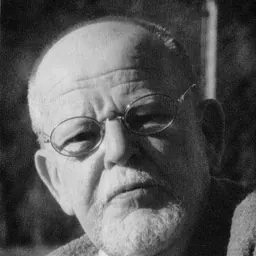
Contemporaries
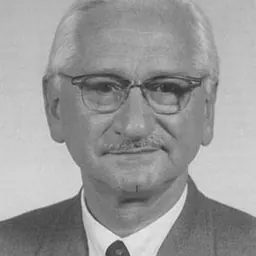
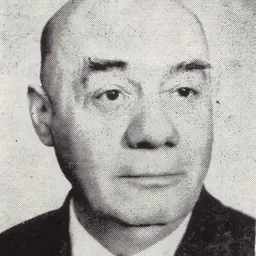
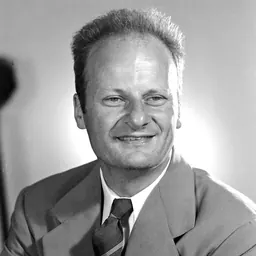
People whose lives overlapped Barbara Zakrzewska-Nikiporczyk's


Frequently asked questions
Who was Barbara Zakrzewska-Nikiporczyk?
Polish composer (1946–2023)
When was Barbara Zakrzewska-Nikiporczyk born?
Barbara Zakrzewska-Nikiporczyk was born in 1946 in Poznań.
When did Barbara Zakrzewska-Nikiporczyk die?
Barbara Zakrzewska-Nikiporczyk died on 30 November 2023 in Poznań.
What was Barbara Zakrzewska-Nikiporczyk's occupation?
Barbara Zakrzewska-Nikiporczyk was a composer and musicologist.
What nationality was Barbara Zakrzewska-Nikiporczyk?
Barbara Zakrzewska-Nikiporczyk was Polish.
Sources & further reading
· Wikipedia: Barbara Zakrzewska-Nikiporczyk
· DBpedia: Barbara Maria Zakrzewska-Nikiporczyk
Cite this page
APA: Biography.guide. (2026). Barbara Zakrzewska-Nikiporczyk. https://biography.guide/barbara-zakrzewska-nikiporczyk/
MLA: "Barbara Zakrzewska-Nikiporczyk." Biography.guide, https://biography.guide/barbara-zakrzewska-nikiporczyk/.
Chicago: "Barbara Zakrzewska-Nikiporczyk." Biography.guide. https://biography.guide/barbara-zakrzewska-nikiporczyk/.
Data last updated: 2026-09-20 · Spot an error? Report a correction.
Page generated 2026-09-27 05:09 UTC