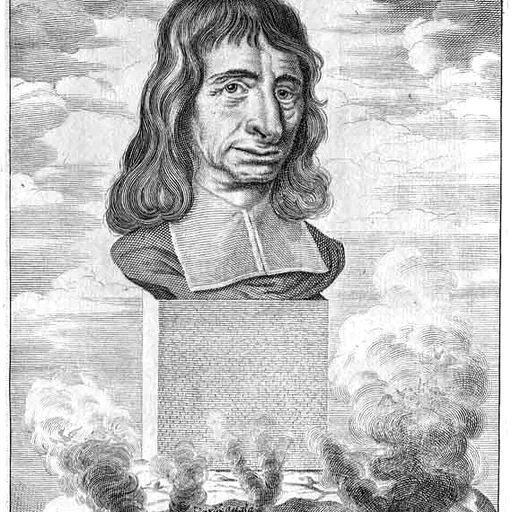
About Balthasar Bekker
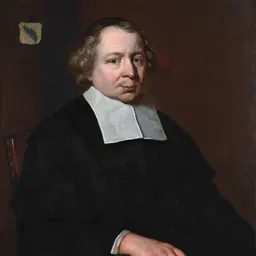
Lived 1634 – 1698 (aged 64). Balthasar Bekker was a Dutch theologian, philosopher, writer, head teacher and christian minister.
Balthasar Bekker (20 March 1634 – 11 June 1698) was a Dutch minister and author of philosophical and theological works. Opposing superstition, he was a key figure in the end of the witchcraft persecutions in early modern Europe. His best-known work is De Betoverde Weereld, or The World Bewitched (1695). He was also known for his travels to England and France
Life Bekker was born in Metslawier (Dongeradeel) as the son of a German pastor from Bielefeld. He was educated at Groningen, under Jacob Alting, and at Franeker. Becoming the rector of the local Latin school, he was appointed to his satisfaction in 1657 as a pastor in Oosterlittens (Littenseradiel), and started as one of the first to preach on Sunday afternoon.
From 1679, he worked in Amsterdam, after being driven from Friesland. In 1683, he traveled to England and France. In two months, Bekker visited London, Cambridge, Oxford, Paris, and Leuven, with a great interest in the art of fortification.
Works An enthusiastic disciple of Descartes, he wrote several works on philosophy and theology, which by their freedom of thought aroused considerable hostility. In his book De Philosophia Cartesiana Bekker argued that theology and philosophy each had their separate terrain and that Nature can no more be explained through Scripture than can theological truth be deduced from Nature. Cover of De betoverde weereld His application of Cartesian metaphysics and reproach of Biblical literalism put him at odds with the Dutch Reformed Church.
His best known work was De Betoverde Weereld (1691), or The World Bewitched (1695), in which he examined critically the phenomena generally ascribed to spiritual agency. He attacked the belief in sorcery and "possession" by the devil. Indeed, he questioned the devil's very existence. He applied the doctrine of accommodation to account for the biblical passages traditionally cited on the issue. Bekker argued that practices decried as witchcraft were little more than fatuous but harmless superstitions. The book had a sensational effect and was one of the key works of the Early Enlightenment in Europe. It was almost certainly the most controversial.
The publication of the book led to Bekker's deposition from the ministry. The orthodox among Dutch theologians saw his views as placing him among notorious atheists: Thomas Hobbes, Adriaan Koerbagh, Lodewijk Meyer and Baruch Spinoza. Eric Walten came to his defence, attacking his opponents in extreme terms. Bekker was tried for blasphemy, maligning the public Church, and spreading atheistic ideas about Scripture. Some towns banned the book, but Amsterdam and the States of Holland never did, continuing his salary, without formally stripping him of his post.
The World Bewitched is now considered interesting as an early study in comparative religion.
Margaret Jacob coined the term "Radical Enlightment" with regards to Bekker, the brothers Johan and Pieter de la Court, and Baruch de Spinoza, that affirmed the equality of all men based on their common reason. The definition was subsequently popularized by Jonathan Israel. Jacob defined them as "pantheist, freemasons and repubblicana" characterized by a Radical criticism of religion that "anticipated Dutch 'Patriots' and Enlightment philosophers in the late eighteenth century "
Later life In July 1698 he was elected a Fellow of the Royal Society of London. He died in Amsterdam.
Selected publications
De philosophia Cartesiana admonitio candida & sincera. Bekker, Balth. / Vesaliae / 1668 The world bewitch'd; or, An examination of the common opinions concerning spirits: their nature, power, administration, and operations. As also, the effects men are able to produce by their communication. Divided into IV parts; Bekker, Balthasar / Translated from a French copy, approved of and subscribed by the author's own hand / printed for R. Baldwin in Warwick-lane / 1695
Don’t just read it —
keep it.
Full-length biographies made to live with: read them, listen on the way to work, watch them tonight.
- E-book
- Audio
- Video
Instant download · yours to keep · every purchase keeps this site free
Important facts
People in Balthasar Bekker's life
Named in this biography and alive at the same time


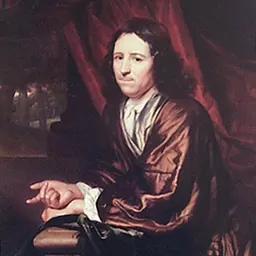


Related people
Same field, nearest in time
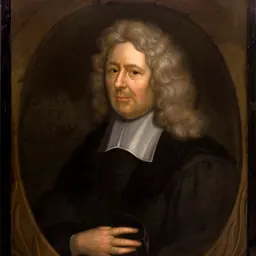

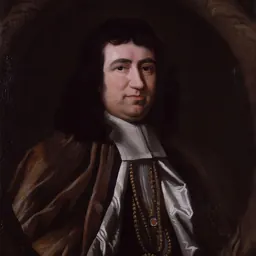
Contemporaries
People whose lives overlapped Balthasar Bekker's




Frequently asked questions
Who was Balthasar Bekker?
Dutch minister and author
When was Balthasar Bekker born?
Balthasar Bekker was born on 20 March 1634 in Mitselwier.
When did Balthasar Bekker die?
Balthasar Bekker died on 11 June 1698 in Amsterdam.
What was Balthasar Bekker's occupation?
Balthasar Bekker was a theologian, philosopher, writer, head teacher and christian minister.
What nationality was Balthasar Bekker?
Balthasar Bekker was Dutch.
Sources & further reading
Cite this page
APA: Biography.guide. (2026). Balthasar Bekker. https://biography.guide/balthasar-bekker/
MLA: "Balthasar Bekker." Biography.guide, https://biography.guide/balthasar-bekker/.
Chicago: "Balthasar Bekker." Biography.guide. https://biography.guide/balthasar-bekker/.
Data last updated: 2026-09-23 · Spot an error? Report a correction.
Portrait: Wikimedia Commons · author & licence
Page generated 2026-09-27 05:06 UTC