
About Baldassarre Bonifacio
Lived 1585 – 1659 (aged 74). Baldassarre Bonifacio was a German writer, poet, archivist, catholic bishop, jurist and bishop.
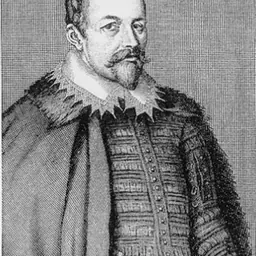
Baldassarre Bonifacio (5 January 1585 – 17 November 1659) was an Italian Catholic bishop, theologian, scholar, and historian, known for his work, the first known treatise on the management of archives.
Biography Baldassare Bonifacio was born at Crema, in the Republic of Venice, on January 5, 1586, the son of Bonifacio Bonifacio, celebrated jurist and assessor, and of Paola Corniani, the daughter of Giovanni Francesco Corniani, likewise jurist and assessor. He studied humanities at Rovigo under the supervision of Antonio Riccoboni and graduated in law at the University of Padua at the age of eighteen. About two years later, he was appointed professor of law at the college of Rovigo, where he lectured on the Institutes of Justinian.
Sometime within the next five years, Bonifacio accompanied Count Girolamo di Porzia, bishop of Adria and papal nuncio, to Germany as a private secretary. Upon his return to the Republic of Venice, he was made archpriest of Rovigo. In 1619, Bonifacio was nominated as professor of classics at the University of Padua but turned down the position.
In the next year, the Venetian Senate offered him the position of professor of civil law at the Academy of Nobles in Venice. At the time of his acceptance, he was in Rome. Before his return Pope Urban VIII, upon the recommendation of the Venetian Senate, named him to the bishopric of Hierapetra and Sitia on the Greek island of Crete. Bonifacio declined the post for health and safety concerns. As partial compensation, the pope appointed him archdeacon of Treviso, in which office he served four successive bishops (Francesco Giustiniani, Vincenzo Giustiniani, Silvestro Morosini, and Marco Morosini).
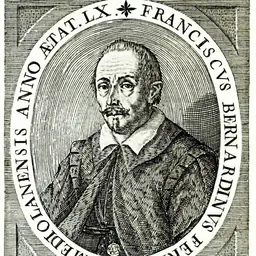
In 1636, the Republic of Venice created a new college for the sons of the nobility at Padua. By public decree, it named Bonifacio dean, at a generous stipend, of the new institution which was formally opened in 1637. He directed the college for only a short time, after which he was succeeded by the Milanese scholar Francesco Bernardino Ferrari. Shortly afterwards, he founded the Accademia dei Solleciti in Treviso.
In 1653, he was appointed bishop of Koper, a position he held until his death. He died on 17 November 1659, aged 75, and was buried in his cathedral church, close by the altar of the Epiphany (which he had privately contributed). Bonifacio was an erudite and prolific author (scribacissimus homo, according to Morhof, Polyhistor, 1732, p. 1070). He is best known by his Historia Ludicra, a collection of miscellaneous notes on a vast variety of subjects originally published in Venice in 1652. The first edition of the work had no index or table, and its contents were consequently almost inaccessible. Jean Mommart supplied this want in his edition of 1656, to which he has prefixed a full table and added a copious index. Bonifacio also published a collection of Latin poems (1619) and an essay on ancient Roman historiography, De Romanæ Historiae Scriptoribus excerpta ex Bodino Vossio et aliis, Venice, 1627. A list of his works is given at the end of the second edition of the Historia Ludrica (Bruxelles, 1656).
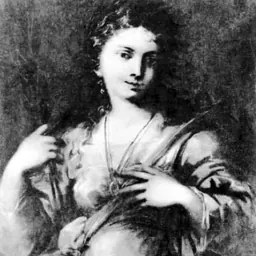
Throughout his life, Bonifacio maintained friendly relationships with numerous intellectuals of his day and was a member of several academies (Umoristi, Incogniti, Olimpici, Filarmonici). He was a close friend of the learned Augustinian monk Angelico Aprosio. Bonifacio was a regular attendee of Sara Copia Sullam's literary salon. Sara answered this attack with a Manifesto published the same year, in which she defended herself from Bonifacio's accusation.
Works
Giovanni Mario Crescimbeni, in his Istoria della volgar poesia (1698), praises this tragedy as one of the best of its day. Caroli Sigonii Iudicium de historicis, qui res romanas scripserunt, ab Vrbe condita ad Caroli Magni imperatoris tempora. Accesserunt de eisdem scriptoribus Excerpta a Balthassare Bonifacio, et Ordo Romanæ historiæ legendæ Adriani Politi, Venice, apud Antonium Pinellum, 1627, 4º; Helmstadt, 1674, 4º; Historia ludicra. Opus ex omni disciplinarum genere, selecta et Jucunda eruditione refertum, Venice, apud Paulum Baleonium, 1652, 4º; Bruxelles, Joan. Mommartius, 1656;
Epistolae duae de majoribus Venetorum comitiis et judiciis capitalibus, altera ad Jo. Franciscum Corneanium altera ad Dominicum Molinum. Published by Pieter Burman in the fifth volume of his Thesaurus Antiquitatum et Historiarum Italiae, Lugduni Batavorum, 1722 (pp. 63–66).
Don’t just read it —
keep it.
Full-length biographies made to live with: read them, listen on the way to work, watch them tonight.
- E-book
- Audio
- Video
Instant download · yours to keep · every purchase keeps this site free
Important facts
People in Baldassarre Bonifacio's life
Named in this biography and alive at the same time


Related people
Same field, nearest in time
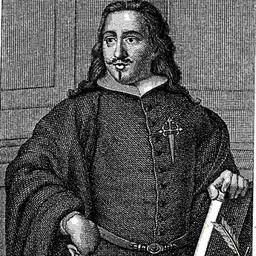
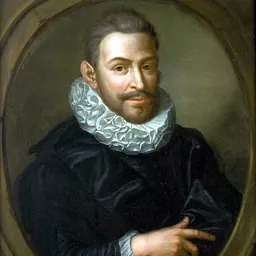
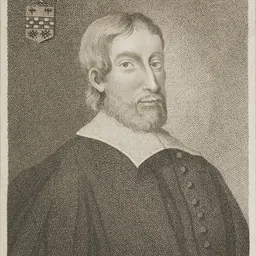

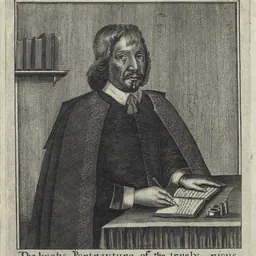
Contemporaries
People whose lives overlapped Baldassarre Bonifacio's




Frequently asked questions
Who was Baldassarre Bonifacio?
Italian writer, poet, catholic bishop and archivist (1585-1659)
When was Baldassarre Bonifacio born?
Baldassarre Bonifacio was born on 5 January 1585 in Crema.
When did Baldassarre Bonifacio die?
Baldassarre Bonifacio died on 17 November 1659 in Koper.
What was Baldassarre Bonifacio's occupation?
Baldassarre Bonifacio was a writer, poet, archivist, catholic bishop, jurist and bishop.
What nationality was Baldassarre Bonifacio?
Baldassarre Bonifacio was German.
Sources & further reading
· Wikipedia: Baldassarre Bonifacio
· DBpedia: Baldassarre Bonifacio
Cite this page
APA: Biography.guide. (2026). Baldassarre Bonifacio. https://biography.guide/baldassarre-bonifacio/
MLA: "Baldassarre Bonifacio." Biography.guide, https://biography.guide/baldassarre-bonifacio/.
Chicago: "Baldassarre Bonifacio." Biography.guide. https://biography.guide/baldassarre-bonifacio/.
Data last updated: 2026-09-20 · Spot an error? Report a correction.
Page generated 2026-09-27 05:32 UTC