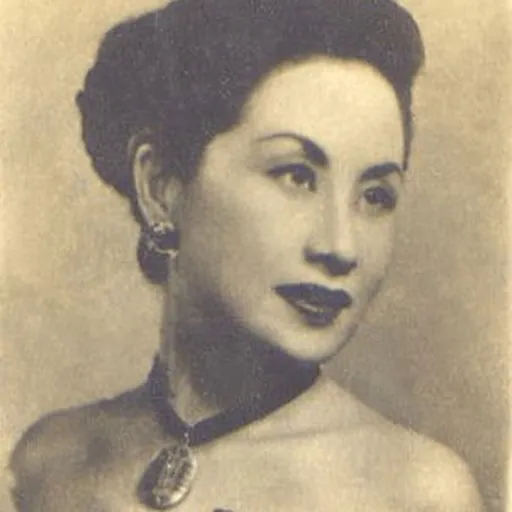
About Bai Guang
Lived 1921 – 1999 (aged 78). Bai Guang was a Chinese actor, singer and film director.
Shi Yongfen (; 27 June 1921 – 27 August 1999), known professionally as Bai Guang (; also credited as Pai Kwong, Bai Kwong and Bai Kwang), was a Chinese actress and singer. By the 1940s, she became one of the Seven Great Singing Stars.
Early life Shi Yongfen was born in 1921 in Zhuozhou, Hebei. Her father was a quartermaster under general Shang Zhen. In her early years, she was a student of the Beiping Salon Theatrical Troupe , and once performed Cao Yu's play Sunrise. In 1937, she studied at the University of Tokyo's music department until World War II in 1942. After drama school, she wanted to be a movie star. As she proclaimed, she wanted to be like the beams of light coming off the movie projectors onto the big screen; hence her stage name.
Career In an age and culture where light, high voices were usually favored, Bai had a slightly deep voice, which helped her become a big star as the "Queen of the Low Voice" . Some of her hits were "Autumn Evening" , "Without You" , "The Pretender" , "Revisiting Old Dreams" , and "Waiting For You" . In 1940, she and Yoshiko Yamaguchi, also among the Seven Great Singing Stars, were recruited to the Three Girls Revitalizing Asia group, where they performed a Japanese-language propaganda song about the union between Japan, China and Manchukuo.
Bai began her film career in 1943. She was known for playing seductive roles due to her flirtatious image on screen and has also played villains at times.
After the war, Bai moved to Hong Kong and joined Great Wall Pictures. In 1949, A Forgotten Woman was shown in Hong Kong, which then-governor Alexander Grantham became fond of. A year later, she quit acting, moved to Japan and successfully opened a nightclub in Tokyo's Ginza district in 1953. She performed to wide acclaim in 1979 in Kaohsiung, Taiwan. Her last public appearance was in 1995 on a Hong Kong television show.
Death The unusual piano tomb, with the inscription of her biography and the musical sheet of her song "Without You" . It is said that the song starts playing when anyone approaches the tomb. Bai Guang died from colon cancer on 27 August 1999, at the age of 78, in her house at Kuala Lumpur's Damansara Heights suburb. She was buried at the Nirvana Memorial Park, Semenyih.
Filmography Love Peas of the South (1943) The Fire of Love (1945) Sinister House 13 (1947) Spy Ring 626 (1948) Blood Stained Begonia (1949) A Forgotten Woman (1949) Songs in the Rainy Nights (1950) A Strange Woman (1950) Hours Passed the Wedding (1950) Smiling Rose (1951) Tears of a Songstress (1953) Fresh Peony (1956)
Don’t just read it —
keep it.
Full-length biographies made to live with: read them, listen on the way to work, watch them tonight.
- E-book
- Audio
- Video
Instant download · yours to keep · every purchase keeps this site free
Important facts
People in Bai Guang's life
Named in this biography and alive at the same time

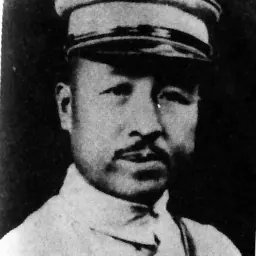
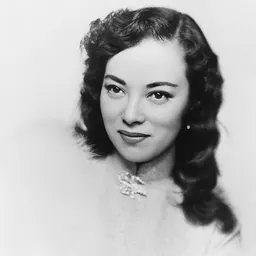

Related people
Same field, nearest in time
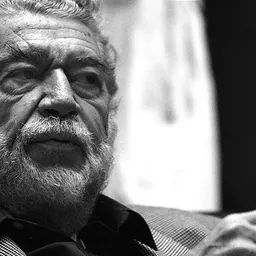


Contemporaries
People whose lives overlapped Bai Guang's

Frequently asked questions
Who was Bai Guang?
Chinese actor and singer (1921-1999)
When was Bai Guang born?
Bai Guang was born on 27 June 1921 in Beijing.
When did Bai Guang die?
Bai Guang died on 27 August 1999 in Kuala Lumpur.
What was Bai Guang's occupation?
Bai Guang was an actor, singer and film director.
What nationality was Bai Guang?
Bai Guang was Chinese.
Sources & further reading
Cite this page
APA: Biography.guide. (2026). Bai Guang. https://biography.guide/bai-guang/
MLA: "Bai Guang." Biography.guide, https://biography.guide/bai-guang/.
Chicago: "Bai Guang." Biography.guide. https://biography.guide/bai-guang/.
Data last updated: 2026-09-22 · Spot an error? Report a correction.
Portrait: Wikimedia Commons · author & licence
Page generated 2026-09-27 04:57 UTC