
About Bahram Aryana
Lived 1906 – 1985 (aged 79). Bahram Aryana was an Iranian philosopher, commanding officer and politician.
Biography He was born on 17 March 1906 in Tehran from a noble Georgian mother, who was the great-granddaughter of King Heraclius II, and from a judge father, Sadr-ed-din.
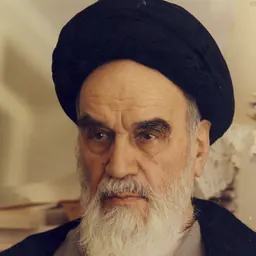
After the Anglo-Soviet invasion of Iran in 1941 during World War II, he went on with armed struggle and resisted the occupation before being arrested by the British forces. He was instrumental in many of the nationalist policies in the 1950–1960s. During the he successfully pacified rebellious tribes in the south of Iran (Fars, Isfahan and Khuzestan) stirred-up by Ayatollah Ruhollah Khomeini. State visit by De Gaulle to Iran. From left to right; Charles de Gaulle, Mohammad Reza Pahlavi, and Bahram Aryana. Following his military success in the south, General Aryana was named Chief of Staff of the Shah's entire Imperial Iranian Armed Forces, a position he maintained from 1965 to 1969.
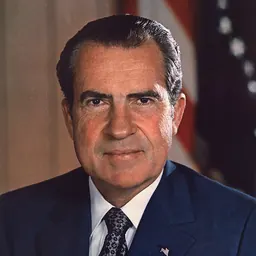
During his posting as Chief of Staff, he met with various head of states including Richard Nixon, who received him at the White House, Yitzhak Rabin (then the Chief of Staff of the Israel Defense Forces), who received him in Israel and Charles de Gaulle, during his visit to Iran.
His archaizing tendencies grew to the extent that he had replaced the Quran with the Shahnameh and in his office and proposed adopting the Latin alphabet for Persian as a means to sever cultural ties with the Arabs. Due to the controversial nature of his views, the SAVAK deemed his ideas "indecent" even for the Shah's modernizing and archaistic theories. As a result, and under the indirect orders of the Shah, he, along with his wife Arianoush Ariana, left the country for Paris in 1969.
Party affiliation Aryana described himself as being an Iranian nationalist and moderate socialist, not a monarchist. Although he received a great deal of support from monarchists who considered him to be a supporter.
He founded the Azadegan Organization, a nationalist opposition group which claimed to have had "developed a full command staff structure and support from all nationalist elements from the moderate left to the monarchists", while in exile in Paris.
Aryana combined his forces with not just Gholam Ali Oveissi but also Shapour Bakhtiar, Ahmad Madani and Ali Amini. Azadegan, meaning Born Free, was an anti-Khomeini movement which claimed as many as 12,000 followers in Iran, many of them in the armed forces. The daring seizing by Azadegan's officers of Tabarzin, an Iranian Navy La Combattante II type fast attack craft just built by France and en route to Iran while in the Mediterranean in August 1981, attracted media attention to Azadegan and its members' armed resistance against the clerical regime of Iran.
Don’t just read it —
keep it.
Full-length biographies made to live with: read them, listen on the way to work, watch them tonight.
- E-book
- Audio
- Video
Instant download · yours to keep · every purchase keeps this site free
Important facts
People in Bahram Aryana's life
Named in this biography and alive at the same time



Related people
Same field, nearest in time


Contemporaries
People whose lives overlapped Bahram Aryana's



Frequently asked questions
Who was Bahram Aryana?
Iranian general
When was Bahram Aryana born?
Bahram Aryana was born on 17 March 1906 in Tehran.
When did Bahram Aryana die?
Bahram Aryana died on 21 June 1985 in Clamart.
What was Bahram Aryana's occupation?
Bahram Aryana was a philosopher, commanding officer and politician.
What nationality was Bahram Aryana?
Bahram Aryana was Iranian.
Sources & further reading
Cite this page
APA: Biography.guide. (2026). Bahram Aryana. https://biography.guide/bahram-aryana/
MLA: "Bahram Aryana." Biography.guide, https://biography.guide/bahram-aryana/.
Chicago: "Bahram Aryana." Biography.guide. https://biography.guide/bahram-aryana/.
Data last updated: 2026-09-22 · Spot an error? Report a correction.
Page generated 2026-09-27 05:18 UTC