
About Badal Gupta
Lived 1912 – 1930 (aged 17–18). Badal Gupta was an Indian revolutionary, known for Writers' Building.
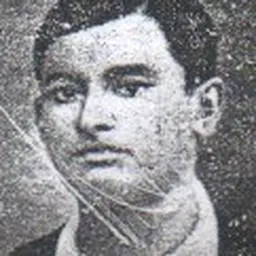
Badal Gupta (; born Sudhir Gupta; 1912 – 8 December 1930) was an Indian revolutionary and anti-colonial figure. He is best known for his participation in the attack on the Secretariat Building - the Writers' Building in the Dalhousie square in Calcutta, along with Benoy Basu and Dinesh Gupta, in December 1930.
Early activities Badal Gupta was born in the village Purba Shimulia (East Shimulia) in the Bikrampur region of Dhaka, now in Munshiganj District, Bangladesh. Badal Gupta was also influenced by the revolutionary activities of his two paternal uncles Late Dharaninath Gupta and Nagendranath Gupta, who were involved in the Alipore Bomb Case and were imprisoned along with Rishi Aurobindo Ghosh.While studying at Banaripara School, Nikunj Sen, a teacher there, inspired Badal to love patriotism Badal Gupta joined the Bengal Volunteers in 1928.
The battle at Writers' Building Bengal Volunteers targeted Lt Col NS Simpson, the Inspector General of Prisons, who was infamous for the oppression of the prisoners in the jails. The revolutionaries decided not only to murder him, but also to strike a terror in the British official circles by launching an attack on the Secretariat Building - the Writers' Building in the Dalhousie square in Kolkata.
On 8 December 1930, Badal along with Dinesh Gupta and Benoy, dressed in European costume, entered the Writers' Building and shot dead Simpson. Police in the building started firing at them in response. What ensued was a brief gunfight between the three young revolutionaries and the police. Some other officers like Twynam, Prentice, and Nelson suffered injuries during the shooting.
Soon police overpowered them. However, the three did not wish to be arrested. Badal took Potassium cyanide, while Benoy and Dinesh shot themselves with their own revolvers. Badal died on the spot. He was only 18 years old when this incident took place.
Significance
After independence, the Dalhousie Square was named B. B. D. Bagh - after the Benoy-Badal-Dinesh trio. In memory of their Writers' Building attack, a plate was engraved in the wall of the Writers' Building, on the first floor.
Don’t just read it —
keep it.
Full-length biographies made to live with: read them, listen on the way to work, watch them tonight.
- E-book
- Audio
- Video
Instant download · yours to keep · every purchase keeps this site free
Important facts
People in Badal Gupta's life
Named in this biography and alive at the same time

Related people
Same field, nearest in time




Frequently asked questions
Who was Badal Gupta?
Bengali revolutionary
When was Badal Gupta born?
Badal Gupta was born in 1912 in Bikrampur, Bengal Presidency.
When did Badal Gupta die?
Badal Gupta died on 8 December 1930 in Kolkata, British Raj.
What was Badal Gupta's occupation?
Badal Gupta was a revolutionary.
What was Badal Gupta known for?
Badal Gupta was known for Writers' Building.
What nationality was Badal Gupta?
Badal Gupta was Indian.
Sources & further reading
Cite this page
APA: Biography.guide. (2026). Badal Gupta. https://biography.guide/badal-gupta/
MLA: "Badal Gupta." Biography.guide, https://biography.guide/badal-gupta/.
Chicago: "Badal Gupta." Biography.guide. https://biography.guide/badal-gupta/.
Data last updated: 2026-09-20 · Spot an error? Report a correction.
Page generated 2026-09-27 05:21 UTC