
About Babytai Kamble
Lived 1929 – 2012 (aged 82–83). Babytai Kamble was an Indian writer.
Baby Kondiba Kamble ( – 21 April 2012), commonly known as Babytai Kamble, was an Indian Dalit activist, feminist, and writer. Born into the Mahar community, the largest Dalit community in Maharashtra, she was influenced by B. R. Ambedkar, a prominent national leader. Her autobiography Jina Amucha is regarded as the first autobiography by a Dalit woman in Marathi, and possibly the first in any Indian language.
Early life Babytai Kamble was born in 1929 in Veergaon village, Purandar taluka, Pune district, Maharashtra, into the Mahar caste. Her father worked as a labour contractor and her maternal grandfather and grand-uncles worked as butlers for the British. Because her father traveled frequently, she spent much of her childhood with her maternal grandparents. Babytai’s grandmother, Sitavahini, had led the revolution against eating dead cattle meat. The couple started a small business selling grapes, later expanding to vegetables and eventually opening a provisions store primarily serving the Mahar community. Their customers were predominantly from the Mahar community. While sitting at the shop counter, Kamble began reading newspapers that were used for packing. It was around this time she began writing her own experiences, inspired by the lack of representation of the marginalized, especially Dalit women in those stories.
Babytai and Kondiba had ten children, three of whom died during childhood.
Writing Babytai kept her writings secret from her family for nearly twenty years.
Jina Amucha Jina Amucha is an autobiography written in Marathi. It was first published as a book in 1986 by Sugawa Prakashan, with parts of the work published previously in the Marathi women's magazine Stree between 1982 and 1984. Considered as the first autobiography by a Dalit woman in Marathi, possibly the first in any Indian language, Kamble writes from an dalit woman's perspective, not deterring from naming patriarchy in the dalit community nor sparing the internalized patriarchy by Dalit women. This honesty and reflexivity has been largely missing in upper caste women's writings. Kamble also underscores how upper caste Hindu women and men treated dalits with contempt, disgust, and hate.
The book was translated into English by Maya Pandit as The Prisons We Broke. and a second edition, including Kamble's prefaces from the Marathi editions, followed in 2018. Tamil (as Suthanthira Kaatru),
Other works Kamble also published collections of poetry in Marathi, including , She attended public meetings organized by Dalit activists and became an active member of the Mahila Mandal (women's group) in Phaltan, which focused on Dalit women's rights to education and employment.
Death and legacy She died on 21 April 2012, aged 82, in Phaltan, Maharashtra. In her community, she came to be admired as a writer and was fondly called as Tai (meaning sister). She is remembered as a pioneering Dalit feminist writer whose work provided a crucial perspective on the intersection of caste and gender oppression in India. She is one of the earliest women writers from the dalit communities whose distinctive reflexive style of feminist writing setting her apart from other Dalit writers and other caste women writers whose gaze was limited and reflexivity incarcerated in caste and masculinity.
Her life and writings continue to inspire discussions on social justice, feminism, and Dalit rights.
Awards and recognition
Matoshree Bhimabai Ambedkar Award (2001)
Don’t just read it —
keep it.
Full-length biographies made to live with: read them, listen on the way to work, watch them tonight.
- E-book
- Audio
- Video
Instant download · yours to keep · every purchase keeps this site free
Important facts
Related people
Same field, nearest in time

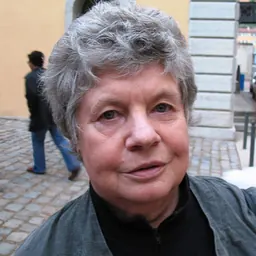


Contemporaries
People whose lives overlapped Babytai Kamble's

Frequently asked questions
Who was Babytai Kamble?
Indian Dalit activist and writer
When was Babytai Kamble born?
Babytai Kamble was born in 1929.
When did Babytai Kamble die?
Babytai Kamble died in 2012.
What was Babytai Kamble's occupation?
Babytai Kamble was a writer.
What nationality was Babytai Kamble?
Babytai Kamble was Indian.
Sources & further reading
Cite this page
APA: Biography.guide. (2026). Babytai Kamble. https://biography.guide/babytai-kamble/
MLA: "Babytai Kamble." Biography.guide, https://biography.guide/babytai-kamble/.
Chicago: "Babytai Kamble." Biography.guide. https://biography.guide/babytai-kamble/.
Data last updated: 2026-09-20 · Spot an error? Report a correction.
Page generated 2026-09-27 04:57 UTC