
B. M. Kutty
Pakistani political worker, human rights activist, former government servant
About B. M. Kutty
Lived 1930 – 2019 (aged 89). B. M. Kutty was a Pakistani politician.
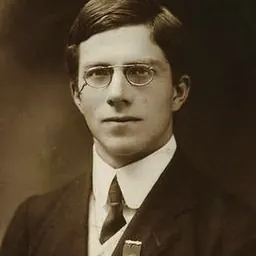
Biyyathil Mohyuddin Kutty (; 15 July 1930 – 25 August 2019; commonly known as B. M. Kutty) was a Pakistani journalist, public servant, politician, peace activist, trade unionist, and liberal intellectual who worked for the betterment of India–Pakistan relations. Born to a family of peasants and landowners in Chilavil–Ponmundam village of Tirur, Malabar District, Madras Presidency, Kutty was influenced by communism at an early age and joined the student faction of the Communist Party of India in the 1940s. He attended Mohammedan College in Madras from 1945 to 1949 to please his father and there he joined the Muslim Students Federation. He left the college right after the final examinations and did not wait to receive his certificates. At the age of 19 he left his family and India for Pakistan, citing his "love for geography" as the motivation behind his move.
Kutty was associated with many left and centre-left parties in Pakistan and served as the political secretary for Ghaus Bakhsh Bizenjo, a prominent Baloch leader and Governor of Balochistan. In 2011, former Indian bureaucrat and Minister of External Affairs Natwar Singh launched Kutty's autobiography Sixty Years in Self-exile: No regrets; a political autobiography.
Early life Kutty was born on 15 July 1930 at Chilavil–Ponmundam village in Tirur, Malabar District, Madras Presidency, British India, to a middle-class Malayali Muslim family of peasants and landowners. He was the eldest of five siblings. However, Kutty described his time at college as not "comfortable" and stayed there for four years only to "satisfy [his] father".
In Karachi, another Malayali man helped Kutty find a job with Larsen & Toubro; after working there for three months, Kutty left for Lahore without telling anyone about his expedition. He did not wait for the confirmation at his company or the increment that was due with it; he collected his salary and bought the railway ticket. Being a Malayali, he was able to work with the beedi workers of Malabar origin in Karachi without difficulty. He worked on behalf of their rights and organised their trade union. Kutty co-established and was the general secretary of the Pakistan Peace Coalition and was associated with the Pakistan–India People's Forum For Peace and Democracy.
Balochistan
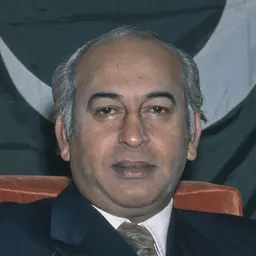
title = PM Bhutto to Kutty Why did you come to Pakistan? Unlike the Biharis and the UP wallahs and the Delhi wallahs, you had no compulsion to leave that paradise called Kerala. It also has the politics of your liking. Then why did you give all that up and come here? — PM Zulfikar Ali Bhutto — 1973
In February 1973, Pakistani forces raided the Iraqi embassy in Pakistan suspecting that Iraq might be colluding with the Soviet Union to arm the Baloch insurgents. Kutty came under suspicion by the Government of Pakistan because of his "unusual" credentials—a communist originally from Kerala working for a Baloch party and its leader and the-then governor. The title of the book was suggested by Deshpande in 2007. The couple had four children. Kutty's wife died in 2010.
In 2015 Kutty suffered a paralytic stroke that forced him to take bed rest for five months and affected his speech. He went to Kerala with the help of his family and friends for Ayurvedic treatment, which lasted over two months and helped him get back his normal speech.
Kutty had deep affection for the Malayalam language. Contrary to popular practice by other Muslim students, he chose to study Malayalam in school as a second language instead of Arabic and studied Malayalam literature in college. He used to obtain and read Malayalam newspapers, Malayala Manorama and Mathrubhumi, as long as they were available in Pakistan. He worked as a journalist for Mathrubhumi and reported from Pakistan for the newspaper.
Death After suffering from a prolonged illness and paralysis, Kutty died on 25 August 2019 at the age of 89. He was buried in Paposh Nagar Graveyard, Karachi; his funeral prayer, Salat al-Janazah, was recited earlier at Abu Hanifa Mosque in Gulshan-i-Iqbal.
Don’t just read it —
keep it.
Full-length biographies made to live with: read them, listen on the way to work, watch them tonight.
- E-book
- Audio
- Video
Instant download · yours to keep · every purchase keeps this site free
Important facts
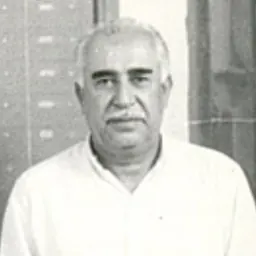
People in B. M. Kutty's life
Named in this biography and alive at the same time
Related people
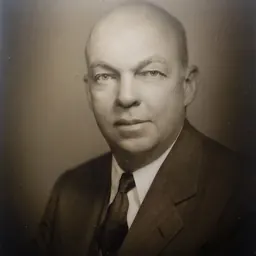
Same field, nearest in time






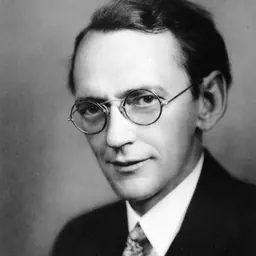
Contemporaries
People whose lives overlapped B. M. Kutty's



Frequently asked questions
Who was B. M. Kutty?
Pakistani political worker, human rights activist, former government servant (1930-2019)
When was B. M. Kutty born?
B. M. Kutty was born on 15 July 1930 in Tirur.
When did B. M. Kutty die?
B. M. Kutty died on 25 August 2019 in Karachi.
What was B. M. Kutty's occupation?
B. M. Kutty was a politician.
What nationality was B. M. Kutty?
B. M. Kutty was Pakistani.
Sources & further reading
Cite this page
APA: Biography.guide. (2026). B. M. Kutty. https://biography.guide/b-m-kutty/
MLA: "B. M. Kutty." Biography.guide, https://biography.guide/b-m-kutty/.
Chicago: "B. M. Kutty." Biography.guide. https://biography.guide/b-m-kutty/.
Data last updated: 2026-09-22 · Spot an error? Report a correction.
Page generated 2026-09-27 05:18 UTC