
About Aziza Jalal
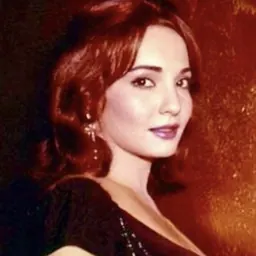
Born 1958. Aziza Jalal is a Moroccan and Saudi singer, actor, musician and actress.
Aziza Jalal (, historically transliterated as Aziza Galal; born 15 December 1958) is a Moroccan Arab pop singer and actress. For details regarding regional spelling variations and registry indexing, see § Name and transliteration.
Career
Aziza Jalal was born in Meknes, Morocco. She later moved to Saudi Arabia and became a Saudi national. Before fame and marriage, the singer dedicated her life to the study of music. In her youth, she studied music in Meknes before participating in a singing competition called Mawahib (Talents) supervised by Moroccan singer Abdelnabi Al Jirari in 1975. During the competition, the singer performed songs of well-known Egyptian and other Arab singers, such as Shadia and Ismahan.
In her singing career that lasted from 1975 to 1985, Jalal became a popular singer across the Arab world before deciding to give up the artistic scene for a life of piety with her Saudi husband. She was known as King Hassan II of Morocco's favourite singer, often appeared on Moroccan television and at state occasions singing nationalistic, pan-Arab, and Islamic-themed music.
The singer had made a name for herself as one of the top Arab singers in the 70s and 80s. Some time laater, her vocals made headlines again as she astonished the world by singing a few verses from her song during a television show. Jalal’s song Mestaniak was covered by Lebanese singer Nancy Ajram. The song’s lyrics come from the repertoire of the great Egyptian musician Mohammed Abdel Wahab. The composer of the song was the renowned musician Baligh Hamdi. left|frameless The song Mestaniak remained on top of the charts at many Arab TV and radio stations for years. It was a commercial success, and sold millions of copies.
Aziza Jalal had several other famous songs, including Min Hakek T’atebny (You have the right to blame me,) and Houa El Hob La'baa (Love is a Game.)
Retired at 26
In 1985, Aziza Jalal chose to leave the stage. She married the Saudi businessman Ali bin Butti al-Ghamdi who gave her the right to decide whether or not she wanted to retire. She didn't think much into it and decided to leave. She stated that it wasn't a decision she regrets. The proposal suddenly ended her career in the music industry, leaving her fans disappointed, knowing that she could have added even more hits to her already impressive list of songs.
Returned to stage 2019 May 22, 2019 marked a surprise for the Arab World. It was the day that Moroccans and fans across the Arab world had the chance to meet again with the prominent Moroccan arabic singer, Aziza Jalal, who was out of the spotlight for 34 years. The singer made her first appearance since 1985 on a television show aired by MBC television channel. The TV show is called “Likaa mina sifr” or “meeting from scratch.”
In the show, the singer also wowed audiences across the world when she performed her legendary song “Mestanyak,” translated as “I am waiting for you” in English, with the same passion and maybe a little bit more.
The interview with Aziza Jalal was also posted by the television show on YouTube. The interview generated more than 1 million views and thousand of comments.
After a 34-year hiatus, Jalal returned to the stage on Thursday 26 December 2019 at Winter at Tantora. Her performance started at 10 p.m. Aziza Jalal, who had kept a low profile for more than 30 years, was well-received by the crowd. She thanked her fans “for coming to see me after a long hiatus. I’ve never been away from you, you have always been in my heart. I'm back today because of your love for me. I decided to come back to participate in these joyful events in our country.”
During the concert, Aziza Jalal performed “Love is not a game” composed by Muhammad Al-Mouji and written by Mamoun Al-Shinawai, and "Waiting for you (Mestaniyak) which the audience enjoyed immensely. She also performed many of her classics. Her message to the youth was: “Hear us out because we are the past, and the past needs the present and the future, hear us out so that we hear you out.”.
Name and transliteration Aziza Jalal (Arabic: عزيزة جلال) has also been credited under the Latin spelling Aziza Galal. The two spellings refer to the same Moroccan singer; the difference reflects the transliteration and pronunciation of her Arabic name into the Latin alphabet. The spelling Jalal is widely used in Moroccan, French-language and international references, while Galal appears prominently in Egyptian music publications, recordings and catalogues.
The spelling Aziza Jalal is used by a number of mainstream and cultural sources. The Moroccan magazine TelQuel, for example, referred to her as "Aziza Jalal" in its coverage of her return to public life. English-language reference material likewise uses Aziza Jalal, including the Routledge Handbook on Women in the Middle East, which identifies her as a Moroccan singer.
The spelling Aziza Galal is also historically documented in Arabic and Egyptian music publications. In Arabies, issues 25–30, page 83, a passage discussing women singers in the Egyptian music scene refers to Aziza Galal by that spelling, describing her success and distinctive voice. This provides a published historical example of the Galal spelling alongside the more widely used Jalal form.
The coexistence of Jalal and Galal is consistent with regional differences in the pronunciation and Latin representation of the Arabic letter ج (jīm). In Egyptian Arabic, ج is commonly pronounced as a voiced velar stop /ɡ/, whereas Moroccan Arabic and other varieties of Arabic have different pronunciations. Linguistic research on Egyptian Arabic documents the historical development and persistence of the /ɡ/ pronunciation in Cairo and Lower Egypt.
In this linguistic context, Galal can reflect the Egyptian pronunciation of the Arabic name جلال, with the initial consonant pronounced /ɡ/, while Jalal represents a Latin spelling commonly encountered in Moroccan and broader international contexts. The two forms therefore correspond to the same Arabic name, عزيزة جلال, rather than indicating two different artistic identities.
The coexistence of the two spellings can also be observed in music catalogues and recordings. Spotify's catalogue includes releases associated with Aziza Jalal in which the artist is identified as Aziza Jalal, while other catalogue entries use Aziza Galal.
The spelling Aziza Galal is likewise preserved in recordings associated with Aziza Jalal's musical repertoire from the 1970s and 1980s. For example, the Mazzika catalogue presents "Aziza Galal – Rouhi Feek" together with the Arabic name عزيزة جلال, providing a direct example of the Latin spelling Galal appearing alongside the Arabic form of the singer's name.
The distinction is therefore one of Latin spelling and regional pronunciation rather than identity. Aziza Jalal remains the principal spelling used for the article title and in many Moroccan and international sources, while Aziza Galal remains a historically documented spelling found in Egyptian music publications, recordings and digital catalogues.
Discography Studio albums The album cover for Mestaniak. (; also transliterated as , , or ) Song الأغاني Halakti Ayouni Hna W Hnak حلقت عيوني هنا وهناك Ahila Al Maghreb عاهل المغرب Batala Al Qodss بطل القدس Ya Laylo Toul ياليـل طول Al Aido Ada العيد عاد Annouro Mawsolo النور موصول Yorani Liarchika يغن لعرشك Min Koli Dakit Alb من كل دقة قلب Sayidi Ya Sid Sadati سيدي ياسيد ساداتي Gazayil Follah غزيل فله Ya Shoue ياشوق هزني هوى الشوق Ella Aweel Matkabilna إلا أول ماتقابلنا Howa El Hobi Liaba هو الحب لعبه Waltakayna والتقينا Zayi Manta زي مانت Minak Wi Eleek منك واليك Mestaniak مستنياك Min Haak Tiatibni من حقك تعاتبني Haramti El Hob حرمت الحب عليه Rouhi Feek روحي فيك Azzamzamiya قصيدة الزمزمية Mawlay مولايGhali Ya Hassan غال ياحسن Inta Omri إنت عمري Arouh Limin أروح لمين Al Atlal الأطلال Layali El Onss ليالي الأنس Youmi El Massira ِمِن يِنسى يوم المسيرة Al Maghreb Aghla Manar المغرب أغلى منار Official song of the Pan Arab Games 1985 1985 الأغنية الرسمية لإفتتاح الألعاب العربية Man Ana من أنا؟ Ash Salman عاش سلمان
RAFRAFA ELGALB رَفرَف القلب
Don’t just read it —
keep it.
Full-length biographies made to live with: read them, listen on the way to work, watch them tonight.
- E-book
- Audio
- Video
Instant download · yours to keep · every purchase keeps this site free
Important facts
People in Aziza Jalal's life
Named in this biography and alive at the same time



Related people
Same field, nearest in time




Contemporaries
People whose lives overlapped Aziza Jalal's





Frequently asked questions
Who is Aziza Jalal?
Moroccan singer
When was Aziza Jalal born?
Aziza Jalal was born on 15 December 1958 in Meknes.
What is Aziza Jalal's occupation?
Aziza Jalal is a singer, actor, musician and actress.
What nationality is Aziza Jalal?
Aziza Jalal is Moroccan and Saudi.
Sources & further reading
Cite this page
APA: Biography.guide. (2026). Aziza Jalal. https://biography.guide/aziza-jalal/
MLA: "Aziza Jalal." Biography.guide, https://biography.guide/aziza-jalal/.
Chicago: "Aziza Jalal." Biography.guide. https://biography.guide/aziza-jalal/.
Data last updated: 2026-09-20 · Spot an error? Report a correction.
Page generated 2026-09-27 05:24 UTC