
About Austin Cuvillier
Lived 1779 – 1849 (aged 69). Austin Cuvillier was a Canadian politician and businessperson.
Austin Cuvillier (August 20, 1779 – July 11, 1849) was a businessman and political figure in Lower Canada and Canada East. He was a successful Canadien businessmen, unusual when most businessmen in Lower Canada were British. He also was a member of the Legislative Assembly of Lower Canada for twenty years, as a member for the Parti canadien, which tended to oppose the policies of the British-appointed governors. As a result, he served as a bridge between the conservative business community, and the more radical Parti canadien, although he finally broke with the Parti canadien (by then called the Parti patriote) prior to the Lower Canada Rebellion of 1837–1838.
After the Rebellion, when the British government united Lower Canada with Upper Canada as the province of Canada, he again played a bridging role as the first Speaker of the Legislative Assembly of the Province of Canada, His fluent bilingualism enabled him to deal with both the English and the French speaking members of the Assembly in their own language, a tradition which carries on with the Speakers of the federal House of Commons. His portrait hangs in the Centre Block of the federal Parliament buildings, along with other former speakers.
Early life and family View of Upper and Lower Quebec from the St. Lawrence River, around 1790
Cuvillier was born Augustin Cuvillier in 1779, in Quebec City, Province of Quebec, son of Augustin Cuvillier and Angélique Miot, dit Girard, the eldest of their seven children. His father was a shop-owner on Rue Sous-le-Fort, beneath Cap Diamant, a street with other small shopkeepers and navigators. Cuvillier's father died in 1789, when Cuvillier was around ten years old, casting responsibility on him at a young age. Prior to his death, his father had arranged for Cuvillier to attend Collège Saint-Raphaël in Montreal. Cuvillier enrolled there in 1794, but does not appear to have completed his studies.
In 1802, he married Marie-Claire Perrault at Notre-Dame cathedral in Montreal. Another daughter, Luce, had a long-standing extra-marital relationship with George-Étienne Cartier, who became a co-premier of the Province of Canada and a Father of Confederation. Two of his sons, Maurice and Austin, had significant business interests in banking, transportation and real estate development, as well as trade with Upper Canada. Joseph Perrault, Marie-Claire’s brother and Cuvillier's brother-in-law, also went on to become a member of the Legislative Assembly, elected in 1820. Even though heavily involved in the affairs of the Legislative Assembly, he continued to develop his businesses until by the 1830s he was Montreal's leading auctioneer, including imported manufactured goods, fish, salt, and liquors, as well as selling the inventories of insolvent businesses. He acted as a financial agent and stockbroker, selling shares of Canadian banks. In 1836, he was named as a Montreal representative on the board of the Bank of British North America, founded in Britain to act as a colonial bank. By 1836, he was president of the city's Committee of Trade, leading the group which secured its incorporation as the Montreal Board of Trade. He was also involved in real estate transactions.
Even though they had been successful on financial issues, Papineau and his supporters were increasingly expressing more radical views, and beginning to call themselves the Parti patriote. They called for major constitutional reforms, such as making the Legislative Council an elected body, rather than appointed by the Governor. Cuvillier and other more moderate members began to distance themselves from the Parti patriote, while Papineau began to see him as a potential political rival. On one issue, however, Cuvillier was the more radical, calling for indemnities to be paid to elected members of the Legislative Assembly, which would open it up beyond the wealthy landholders, professionals and businessmen. Papineau opposed the proposal as too democratic. In the general election of 1830, Cuvillier stood for election in the constituency of Laprairie, which had been split off from Huntingdon in a re-distribution. He was re-elected.
Rebellion in Lower Canada
In 1837, the Lower Canada Rebellion broke out. The Patriotes, led by Louis-Joseph Papineau, began an armed resistance to the British and provincial forces.
Cuvillier rejected the call to arms, and was firmly on the side of the government. He returned to his militia duties. Promoted to the rank of major, Cuvillier was the commander of Montreal’s 5th Militia Battalion. In 1838, he was one of the founders of the Association Loyale Canadienne du District de Montréal, which denounced the rebellion as well as proposals for union of the Canadas, and called for political reform under the 1791 Constitution.
General elections for the Legislative Assembly of the Province of Canada were held in the spring of the year. Cuvillier returned to the political stage. He continued to oppose the union of the two Canadas and stood for election on general opposition to the anticipated policies of Governor-General Lord Sydenham. He was elected to the 1st Parliament of the Province of Canada representing newly constituted district of Huntingdon.
One of the first issues facing the new Assembly was the choice of the Speaker. Cuvillier and Neilson now found themselves amongst the moderates. Louis-Hippolyte LaFontaine had inherited the more radical group, formerly led by Papineau, who now was in exile. Although LaFontaine bore a grudge against Cuvillier for having opposed the Ninety-Two Resolutions, he was also trying to unite the French-speaking members to obtain power in the new government for Lower Canada. Francis Hincks, a Reform member from Upper Canada and one of Papineau's allies, was able to persuade Papineau that Cuvillier was a good choice for Speaker. As a businessman, fluent in English, Cuvillier could appeal to the Tory members in the Assembly. Cuvillier could also appeal to the Canadien members in the Assembly as a francophone himself, opposed to the union and to the bar on using French in the Assembly. Governor General Lord Sydenham, who was initially determined to bring a conciliatory approach to the government, tacitly supported Cuvillier as well. Cuvillier was elected.
During the four years of the first Parliament, Cuvillier developed very coridal relations with the succession of governors, who were engaged with the Assembly over the issue of responsible government. Matters came to a head during the governorship of Sir Charles Metcalfe, who prorogued the Parliament for almost a year rather than accept the demand of LaFontaine and Robert Baldwin that the governor should call on the majority party in the Assembly to form the government. Cuvillier supported Metcalfe in the dispute. When the general election was called in 1844, Cuvillier was defeated in Huntingdon by the Reform candidate. At the age of 61, Cuvillier accepted that his political career was over.
Later life and death Following his political career, Cuvillier returned in full force to his business interests, now operating as Cuvillier & Sons, until his death from typhus in 1849. He was buried at Notre-Dame the day after his death.
Don’t just read it —
keep it.
Full-length biographies made to live with: read them, listen on the way to work, watch them tonight.
- E-book
- Audio
- Video
Instant download · yours to keep · every purchase keeps this site free
Important facts
People in Austin Cuvillier's life
Named in this biography and alive at the same time

Related people
Same field, nearest in time


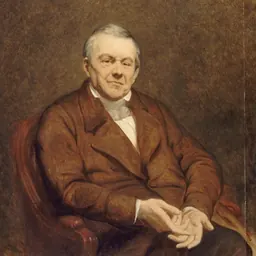

Contemporaries
People whose lives overlapped Austin Cuvillier's

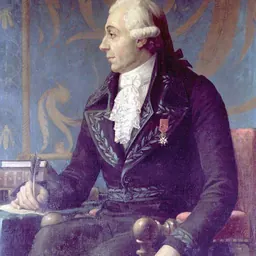
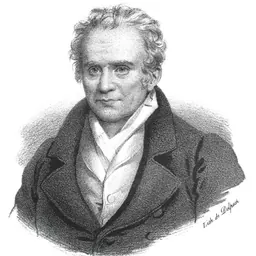
Frequently asked questions
Who was Austin Cuvillier?
Canadian politician
When was Austin Cuvillier born?
Austin Cuvillier was born on 20 August 1779 in Quebec City.
When did Austin Cuvillier die?
Austin Cuvillier died on 11 July 1849 in Montreal.
What was Austin Cuvillier's occupation?
Austin Cuvillier was a politician and businessperson.
What nationality was Austin Cuvillier?
Austin Cuvillier was Canadian.
Sources & further reading
Cite this page
APA: Biography.guide. (2026). Austin Cuvillier. https://biography.guide/austin-cuvillier/
MLA: "Austin Cuvillier." Biography.guide, https://biography.guide/austin-cuvillier/.
Chicago: "Austin Cuvillier." Biography.guide. https://biography.guide/austin-cuvillier/.
Data last updated: 2026-09-26 · Spot an error? Report a correction.
Page generated 2026-09-27 05:14 UTC