
About Augustus FitzGeorge
Lived 1847 – 1933 (aged 86). Augustus FitzGeorge was a British military officer.
Colonel Sir Augustus Charles Frederick FitzGeorge, (12 June 184730 October 1933) was a British Army officer and a relative of the British royal family. FitzGeorge was born in 1847 to Prince George, Duke of Cambridge, and his wife Sarah Fairbrother. His parents' marriage contravened the Royal Marriages Act 1772 and therefore invalid, thus FitzGeorge was ineligible to inherit the Dukedom of Cambridge.
FitzGeorge graduated from the Royal Military College, Sandhurst, in 1864, and served as an officer in the British Army until his retirement in 1900. He served as an aide-de-camp, accompanied Albert Edward, Prince of Wales (later King Edward VII) during his visit to India (1875–1876), and served as private secretary and equerry to his father, who was the Commander-in-Chief of the Forces. In his later years, FitzGeorge served as the chairman of the Cobalt Townsite Silver Mining Company and the Casey Cobalt Mining Company, and as president of the National Health League.
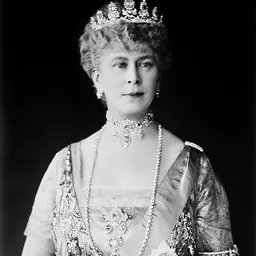
Early life and family FitzGeorge was born on 12 June 1847 at 31 Queen's Gate, South Kensington, London. He was the third and youngest son of Prince George, Duke of Cambridge, a member of the British royal family, by Sarah Fairbrother. FitzGeorge's two older brothers were George FitzGeorge and Adolphus FitzGeorge. This meant the Duke's wife was not titled Duchess of Cambridge or accorded the style Her Royal Highness, while Augustus was, like his older brothers, illegitimate and ineligible to inherit the Dukedom of Cambridge from his father. As a descendant of GeorgeIII, he was a first cousin once-removed of Queen Victoria and a first cousin of Queen Mary, who was the daughter of his paternal aunt, Princess Mary Adelaide of Cambridge.
The three sons were raised by their mother at a house at 6 Queen Street in Mayfair, while their father lived nearby at his official residence, Gloucester House at Piccadilly and Park Lane. FitzGeorge received his early education at private schools in England and Brussels.
Military career
FitzGeorge followed in his father's footsteps by serving in the British Army. While serving in the Rifle Brigade, he was stationed in Montreal with the 1st Battalion for five years, from 1865 to 1870. On 14 July 1869, he was promoted to a lieutenant in the Rifle Brigade.
In 1870, FitzGeorge was appointed aide-de-camp to General Robert Napier, 1st Baron Napier of Magdala, Commander-in-Chief of India and served in this position from 1870 until 1875. He served with the 11th Hussars at Aldershot Garrison, Cavalry Barracks, Hounslow, and Birmingham. He became extra aide-de-camp to Lieutenant-General Sir Archibald Alison, 2nd Baronet, who was in command of troops at Aldershot Garrison on 1 December 1883. The Duke of Cambridge appointed FitzGeorge to serve as his equerry-in-waiting and private secretary on 11 August 1886. his mother lived at nearby 6 Queen Street, which FitzGeorge inherited, along with all of its furniture, following her death in 1890. By 1895, he had moved into Gloucester House to live with his father and manage his affairs. However, he continued to serve as his father's private secretary and equerry. FitzGeorge retired from the military on 1 November 1900. the wedding of his cousin Princess Mary of Teck and Prince George, Duke of York, at Chapel Royal, St James's Palace, on 6 July 1893; the funeral of his aunt, Princess Mary Adelaide, Duchess of Teck, at St George's Chapel, Windsor Castle, on 3 November 1897; and the funeral and funeral procession for his uncle Francis, Duke of Teck, at St George's Chapel, Windsor, on 27 January 1900.
His father served as the head of the British Army as Commander-in-Chief of the Forces from 1856 to 1895, spanning most of FitzGeorge's military career.
Later life The Duke of Cambridge died on 17 March 1904, and FitzGeorge and his brother Adolphus travelled by carriage in his funeral procession. Despite being the sons of the Duke of Cambridge, royal protocol relegated them to the ninth carriage in the procession, following the British royal family, official mourners, and foreign diplomats. The Crown had granted the estate to their father. In 1911, FitzGeorge and his brother served on an honorary committee for the Ancient Art Exhibition at Earls Court in the summer of that year. He and Adolphus also attended the dedication of an extension of the Wimbledon and Putney Commons in July 1911. FitzGeorge and Adolphus continued a longstanding family tradition of distributing gifts of blankets and flannels to the employees of the former Duke of Cambridge's Coombe estate at Christmas. When the FitzGeorge family's Coombe estate was sold in December 1932, it consisted of over between Kingston Hill and New Malden, and included three golf courses: Coombe Hill, Coombe Wood, and Malden. By the company's first annual meeting in December 1907, its mine had already shipped of ore carrying of silver.
In November 1913, the brothers were named as godparents (along with their cousin Queen Mary) to their great-nephew Victor FitzGeorge-Balfour, and attended his christening at Savoy Chapel. FitzGeorge-Balfour was the son of FitzGeorge's niece, Mabel Iris FitzGeorge and her husband Robert Shekelton Balfour. The accident occurred after the driver became ill and lost control of the vehicle, causing it to turn over onto a pavement. The league was organised after ten years of planning, and in July 1933, it took issue publicly with the British Medical Association and with germ theory as the sole cause of disease. He was the last surviving son of the Duke of Cambridge, and the last surviving member of the suite that accompanied King Edward VII (then Prince of Wales) to India. The first part of the funeral service was held at Chapel Royal, St James's Palace, with the permission of King George V. FitzGeorge was interred at Kensal Green Cemetery in Kensal Green, London.
After King Edward VII assumed the British throne in 1901, the Duke of Cambridge requested that FitzGeorge and his brothers be given the rank of a British peer's younger sons.
Ancestry
Don’t just read it —
keep it.
Full-length biographies made to live with: read them, listen on the way to work, watch them tonight.
- E-book
- Audio
- Video
Instant download · yours to keep · every purchase keeps this site free
Important facts
more
Sir Augustus Charles Frederick FitzGeorge, Sir Augustus FitzGeorgePeople in Augustus FitzGeorge's life
Named in this biography and alive at the same time

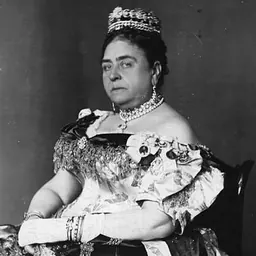


Related people
Same field, nearest in time

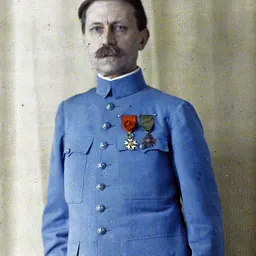




Contemporaries
People whose lives overlapped Augustus FitzGeorge's

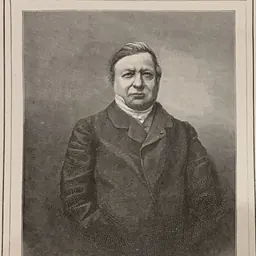



Frequently asked questions
Who was Augustus FitzGeorge?
British Army officer
When was Augustus FitzGeorge born?
Augustus FitzGeorge was born on 12 June 1847.
When did Augustus FitzGeorge die?
Augustus FitzGeorge died on 30 October 1933.
What was Augustus FitzGeorge's occupation?
Augustus FitzGeorge was a military officer.
What nationality was Augustus FitzGeorge?
Augustus FitzGeorge was British.
Sources & further reading
· Wikipedia: Augustus FitzGeorge
· DBpedia: Augustus FitzGeorge
Cite this page
APA: Biography.guide. (2026). Augustus FitzGeorge. https://biography.guide/augustus-fitzgeorge/
MLA: "Augustus FitzGeorge." Biography.guide, https://biography.guide/augustus-fitzgeorge/.
Chicago: "Augustus FitzGeorge." Biography.guide. https://biography.guide/augustus-fitzgeorge/.
Data last updated: 2026-09-20 · Spot an error? Report a correction.
Page generated 2026-09-27 05:26 UTC