
About Augustus E. Willson
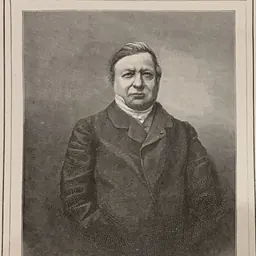
Lived 1846 – 1931 (aged 84). Augustus E. Willson was an American lawyer, politician and governor.
Augustus Everett Willson (October 13, 1846 – August 24, 1931) was an American politician and the 36th governor of Kentucky. Orphaned at the age of twelve, Willson went to live with relatives in New England. This move exposed him to such authors as Ralph Waldo Emerson, Henry Wadsworth Longfellow, Oliver Wendell Holmes, and James Russell Lowell, who were associates of his older brother, poet Forceythe Willson. He was also afforded the opportunity to attend Harvard University, where he earned an A.B. in 1869 and an A.M. in 1872. After graduation, he secured a position at the law firm of future Supreme Court justice John Marshall Harlan. Willson and Harlan became lifelong friends, and Willson's association with Harlan deepened his support of the Republican Party.
A Republican in a primarily Democratic state, Willson suffered several defeats for public office, but was elected governor of Kentucky on his second attempt. Due to his handling of the Black Patch Tobacco Wars and his pardoning of several individuals involved in the assassination of Democratic governor William Goebel, Willson drew the ire of the Democrat-controlled General Assembly. As a result, few of his proposed reforms were considered by the legislature. His term ended in 1911, and in 1914, he made an unsuccessful bid for a seat in the U.S. Senate. Following this defeat, Willson retired to Louisville, where he died in 1931.
Early life Augustus Willson was born on October 13, 1846, in Maysville, Kentucky, the second child of Hiram and Ann Colvin (née Ennis) Willson. A year following his birth, his father moved the family to Covington. In 1852, the family moved again, this time to New Albany, Indiana. In 1856, Willson's mother died. Three years later, his father also died, leaving him an orphan at age twelve. He and his younger sister went to live with their grandmother in Allegany County, New York. Willson then moved to Cambridge, Massachusetts, to live with his brother Forceythe Willson, who had become a poet of some renown. There, he was exposed to men of letters such as Ralph Waldo Emerson, Henry Wadsworth Longfellow, Oliver Wendell Holmes, and James Russell Lowell.
Willson took a preparatory course of study at Alfred Academy in New York. His brother Forceythe became terminally ill during Augustus' sophomore year, and the younger man took a brief hiatus from his studies to care for him. Following Forceythe's death, Willson resumed his studies, and received a Bachelor of Arts degree in 1869. His 1879 loss in an election for a seat in the Kentucky Senate marked the first in a string of political defeats. He failed in bids to represent Kentucky's Fifth District in the U.S. House of Representatives in 1884, 1886, 1888, and 1892. But he continued to be active in the Republican Party and was a delegate to the Republican National Convention in 1884, 1888, 1892, 1904, 1908, and 1916.
Governor of Kentucky In 1907, Willson was chosen by acclamation as the Republican candidate for governor. Willson's opponent had been chosen at a nominating convention two years earlier. Governor Beckham had convinced the Democrats to hold their primary early so he could secure the party's nomination for the 1908 senatorial election while he was still serving as governor. On the other hand, Willson had twice represented the American Tobacco Company as their attorney. Western farmers had resisted their monopoly of tobacco prices and were trying to express their own power through the PPA; but they had begun to use violence against farmers who would not join the association. Democrats made much of this issue, and Willson did little to counter accusations that he was unsympathetic to the plight of the farmers. Hager tried to appeal to both sides of the conflict, but ultimately lost the support of both. (Scattered votes were also cast for minor party candidates.) While the troops were helpful, there were never more than three hundred deployed, and they were not a major factor in ending the violence. Hostile Democrats in the General Assembly formed an investigative committee that found Willson guilty of violating the state's constitution by calling out the militia without a formal request by civil authorities. Willson also sent spies to infiltrate the "Night Riders" – an organization of vigilantes who perpetrated much of the violence – and determine which local officials supported them. Goebel's likeness was also removed from state checks and documents and was replaced by likenesses of either Abraham Lincoln, Henry Clay, or John C. Breckinridge. Its most significant accomplishment was passing legislation establishing high schools in every county of the state. Due to its hostility toward Willson, the Assembly scarcely considered the governor's agenda or other needed legislation such as tax reform and redistricting. The reforms Willson advocated would later pass under a Democratic administration.
Outside the state, Willson enjoyed somewhat higher esteem. In 1908, Harvard University presented him with an honorary Doctor of Laws degree. Willson was elected to chair this meeting, which became known as the National Governors' Conference.
Following his term as governor, Willson returned to his legal practice in Louisville. From 1910 to 1919, he served on the Harvard University Board of Overseers. It was the state's first senatorial election since passage of the Seventeenth Amendment, meaning the seat would be filled by popular vote rather than by a vote of the legislature. The seat had originally belonged to former governor Bradley, who had died in office. Governor McCreary appointed Camden to fill the unexpired term, but Camden had agreed not to seek re-election so that J. C. W. Beckham could run for the seat. In the Republican primary, Willson defeated Richard P. Ernst. In the general election, the unpopularity of Willson's gubernatorial administration combined with the overwhelming popularity of Democratic President Woodrow Wilson, ensured that Beckham won the seat by more than 32,000 votes. This campaign was Willson's last. He died on August 24, 1931, and is buried in the Cave Hill Cemetery in Louisville.
Don’t just read it —
keep it.
Full-length biographies made to live with: read them, listen on the way to work, watch them tonight.
- E-book
- Audio
- Video
Instant download · yours to keep · every purchase keeps this site free
Important facts
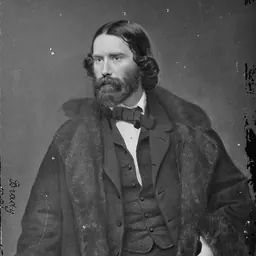
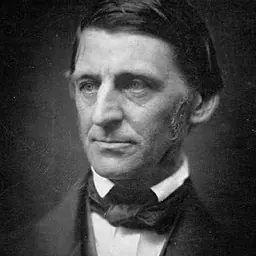
People in Augustus E. Willson's life
Named in this biography and alive at the same time




Related people
Same field, nearest in time


Contemporaries
People whose lives overlapped Augustus E. Willson's




Frequently asked questions
Who was Augustus E. Willson?
American politician (1846-1931)
When was Augustus E. Willson born?
Augustus E. Willson was born on 13 October 1846 in Maysville.
When did Augustus E. Willson die?
Augustus E. Willson died on 24 August 1931 in Louisville.
What was Augustus E. Willson's occupation?
Augustus E. Willson was a lawyer, politician and governor.
What nationality was Augustus E. Willson?
Augustus E. Willson was American.
Sources & further reading
· Wikipedia: Augustus E. Willson
· DBpedia: Augustus E. Willson
Cite this page
APA: Biography.guide. (2026). Augustus E. Willson. https://biography.guide/augustus-e-willson/
MLA: "Augustus E. Willson." Biography.guide, https://biography.guide/augustus-e-willson/.
Chicago: "Augustus E. Willson." Biography.guide. https://biography.guide/augustus-e-willson/.
Data last updated: 2026-09-20 · Spot an error? Report a correction.
Page generated 2026-09-27 05:29 UTC