
About Augustus Barrows
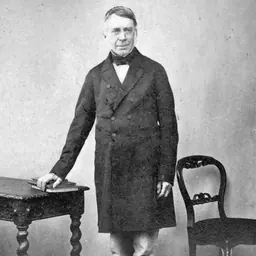
Lived 1838 – 1885 (aged 47). Augustus Barrows was an American politician, businessperson and lumberman.
Augustus R. Barrows (July 30, 1838 – December 20, 1885) was an American lumberman, rancher, and pioneer settler of Minnesota, Wisconsin, and Montana. He served one term in the Wisconsin State Assembly as a member of the Greenback Party. He served as speaker of the Assembly during his term as part of a negotiated coalition with the Democratic caucus. He was the only Greenback legislator to serve as speaker of the Wisconsin State Assembly. He was also the 3rd mayor of Chippewa Falls, Wisconsin. In contemporaneous sources, his name is often abbreviated as
Background Barrows was born in Olean, New York, on July 30, 1838; he studied at an academy (later renamed Chamberlain Institute) in Randolph, New York, where his father was a pioneering lumberman. Augustus assisted his father in his business until on one of their trips to Cincinnati on a raft, his father lost a leg in an accident. He closed out his business in New York and moved with his family to Pleasant Grove, Minnesota, in 1855, and went into farming. Augustus, who had accompanied his family to their new home, "followed various pursuits" for a while. He married Alice B. Duncan in Pleasant Grove on November 16, 1862.
In August 1864, Barrows volunteered for service in the American Civil War and was enrolled as a private in Company H of the 11th Minnesota Infantry Regiment. He was promoted to first sergeant a month later. He mustered out on June 30, 1865, and was granted an honorary commission as second lieutenant after the war.
On mustering out, he relocated to Wisconsin, settling in Chippewa County.
Public office Barrows was elected County Treasurer of Chippewa County in 1869 to fill a vacancy, and re-elected for a full term in 1870; and served one term as mayor of Chippewa Falls. In 1872, he ran for the Assembly as a Democrat, losing to incumbent Republican Albert Pound (who was also a lumberman from Chippewa Falls), with 676 votes to Pound's 1205. In 1876, he ran for the Wisconsin State Senate's Eleventh District (again as a Democrat), losing to incumbent Republican Thomas Scott with 3,700 votes to Scott's 3,925.
He became a vigorous adherent of the Greenback movement, becoming known as "one of its ablest and most logical advocates in the state". In 1877, he ran for Chippewa County's sole Assembly seat as an independent Greenback, unseating Democratic incumbent Louis Vincent, who polled only 496 votes to 886 votes for Barrows and 555 for Republican O. R. Dahl. He was chosen as speaker on January 9, 1878, because the Assembly now consisted of 45 Republicans, 41 Democrats, 13 Greenbacks and a socialist: thus, the Greenbacks and socialist had leverage as tie-breakers, since the two major parties held mere pluralities.
In 1879, rather than run for re-election, he ran for Congress under a fusion ticket as a Greenback/Democrat in the Eighth District, losing with 11,421 votes to 12,795 for Republican incumbent Thaddeus C. Pound (brother and partner of Albert Pound). He was succeeded in the Assembly by Republican former Assemblyman Hector McRae.
Moving to Montana After losing the Congressional election, Barrows (who had suffered financial reverses in the real estate which constituted most of his wealth) organized a group of colonists who arrived in Martinsdale, Montana (a train stop on the main line of the Milwaukee Road), in June 1879. He brought a herd of blooded cattle with him, and went into stockraising, which he pursued for the rest of his life. Soon after his arrival there, he and Edward P. Allis of Milwaukee partnered to build a large sawmill, and began the manufacture of lumber at Sawmill Gulch in what was then Meagher County, Montana. He homesteaded 160 acres in a place he called "Ubet", also known as "U-Bet" or "U-bet", in what was then Fergus County. He built a stage stop hotel, saloon and general store on the stagecoach route, and moved there himself in 1881, becoming (with his family) among the first permanent white settlers of the Judith Basin.
He died on December 20, 1885, in Ubet, John, who became a lawyer in San Diego, California, later wrote a memoir of his family's life there titled U-Bet: A Greenhorn in Old Montana (1934; reprinted in 1990) which was reviewed in The New York Times as "dramatic and colorful."
Don’t just read it —
keep it.
Full-length biographies made to live with: read them, listen on the way to work, watch them tonight.
- E-book
- Audio
- Video
Instant download · yours to keep · every purchase keeps this site free
Important facts
People in Augustus Barrows's life
Named in this biography and alive at the same time

Related people
Same field, nearest in time





Contemporaries
People whose lives overlapped Augustus Barrows's



Frequently asked questions
Who was Augustus Barrows?
American politician
When was Augustus Barrows born?
Augustus Barrows was born on 30 July 1838 in Olean.
When did Augustus Barrows die?
Augustus Barrows died on 20 December 1885 in Montana Territory, Ubet, Montana.
What was Augustus Barrows's occupation?
Augustus Barrows was a politician, businessperson and lumberman.
What nationality was Augustus Barrows?
Augustus Barrows was American.
Sources & further reading
Cite this page
APA: Biography.guide. (2026). Augustus Barrows. https://biography.guide/augustus-barrows/
MLA: "Augustus Barrows." Biography.guide, https://biography.guide/augustus-barrows/.
Chicago: "Augustus Barrows." Biography.guide. https://biography.guide/augustus-barrows/.
Data last updated: 2026-09-20 · Spot an error? Report a correction.
Page generated 2026-09-27 05:04 UTC