
About Augusto Giacometti
Lived 1877 – 1947 (aged 69). Augusto Giacometti was a Swiss painter and designer.
Augusto Giacometti (16 August 1877 – 9 June 1947) was a Swiss painter from Stampa, Grisons, cousin of Giovanni Giacometti who was the father of Alberto, Diego and Bruno Giacometti. He was prominent as a painter in the Art Nouveau and Symbolism movements, one of the first abstract painters, for his work in stained glass, as a proponent of murals and a designer of popular posters.
He finished (among others) stained glass windows in both of the most important churches of Zürich, Grossmünster and Fraumünster, as well as the inner decoration of the so-called Waisenhaus Zürich.
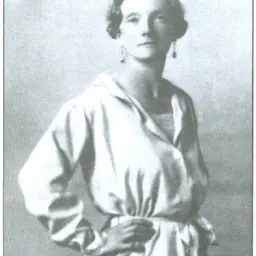
From 1909 to 1913, Augusto Giacometti was a great inspiration for the Czech-born sculptor Helen Zelezny-Scholz.
A two-day hiking trail connects most of the locations of the family in Val Bregaglia.
Life and work Augusto was part of the successful Giacometti dynasty of painters. He grew up near the home and studio of his cousin Giovanni Giacometti, and devoted himself to painting from a young age. After completing his training as an art teacher at the Zurich University of the Arts between 1894 and 1897, he moved to Paris to study under Eugène Grasset from 1897 to 1901. He took part in the 8th Dada-Soirée in the Zurich merchants' hall and became a member of the group of artists "Das Neue Leben" (1918–1920). Known for his decorations in holy arts and his floral subjects, in 1919 Giacometti was initiated to the Swiss Freemasonry at Zürich.
With the realization of his design for the entrance hall (now known as Giacometti-Halle) of the police station at Waisenhaus Zürich between 1923 and 1925, Giacometti accomplished one of his most important works. The great recognition he received for this work paved the way for him to further important commissions.
In 1929, he created the colourful glass windows in the east wall of the Protestant church in Frauenfeld, in 1933 the choral windows of Grossmünster in Zurich, in 1937 the choral windows of the village church of Adelboden, and in 1945 a stained-glass window of Fraumünster.
He was one of the first painters of the 20th century to take steps into non-representational painting; his abstract paintings reflect his exhaustive study of the characteristics and rules of colour. His epitaph reads Qui riposa il maestro dei colori, "here lies the master of colour".
Giacometti influenced the German painter August Babberger greatly in both his style and his choice of subjects.
Exhibitions 2014/2015: Color and I. Augusto Giacometti, Museum of Fine Arts Bern
Don’t just read it —
keep it.
Full-length biographies made to live with: read them, listen on the way to work, watch them tonight.
- E-book
- Audio
- Video
Instant download · yours to keep · every purchase keeps this site free
Important facts
People in Augusto Giacometti's life
Named in this biography and alive at the same time


Related people
Same field, nearest in time



Contemporaries
People whose lives overlapped Augusto Giacometti's




Frequently asked questions
Who was Augusto Giacometti?
Swiss artist (1877-1947)
When was Augusto Giacometti born?
Augusto Giacometti was born on 16 August 1877 in Stampa.
When did Augusto Giacometti die?
Augusto Giacometti died on 9 June 1947 in Zurich.
What was Augusto Giacometti's occupation?
Augusto Giacometti was a painter and designer.
What nationality was Augusto Giacometti?
Augusto Giacometti was Swiss.
Sources & further reading
· Wikipedia: Augusto Giacometti
Cite this page
APA: Biography.guide. (2026). Augusto Giacometti. https://biography.guide/augusto-giacometti/
MLA: "Augusto Giacometti." Biography.guide, https://biography.guide/augusto-giacometti/.
Chicago: "Augusto Giacometti." Biography.guide. https://biography.guide/augusto-giacometti/.
Data last updated: 2026-09-20 · Spot an error? Report a correction.
Page generated 2026-09-27 05:24 UTC