
About Augusto Barros Ferreira
Lived 1929 – 1998 (aged 68). Augusto Barros Ferreira was a Portuguese painter.
Augusto Barros Ferreira, better known as Augusto Barros, and simply Barros, is a Portuguese painter born on August 7, 1929, in Lisbon (Portugal), and dead on February 10, 1998, in Lisbon. Abstractionist painter, and emblematic figure of the Parisian district of Saint-Germain-des-Prés of the 1970s.
Biography
Childhood and beginnings in Portugal Augusto Barros is painting since the age of 10. His parents have a neighbor painter, which clearly sparked him an early interest in painting. This linguistic competence will prove very useful for the studies he will undertake later in Germany, instead of being able to speak German.
In 1952, at the age of 23, he studies painting and drawing at the SNBA (Portugal) with the master . Barros quickly realizes that he cannot succeed in his artistic career while remaining in Portugal. and finds a large echo in the German press. in the district of Saint-Germain-des-Prés. He is irresistibly drawn to this Paris center of the arts, but also to this "bohemian" Paris, which exudes freedom. but he ends up settling there. It is indeed here that Barros feels at home, and it is there that he will establish great friendships, which will last until the end of his life.
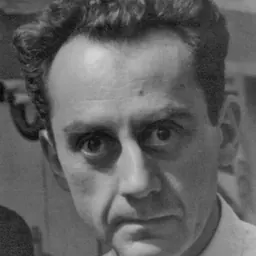
Then, in the early 1990s, Barros returns to Portugal definitively. It is in such a context that Barros joined this cultural center, when he settled there in 1963. He is used to walking past the clock of the tower of Saint-Germain-des-Prés, reports Jeannine Quintin, and thus knowing if it's time to go to the "bistro", where he likes to meet up with his friends Man Ray, Poliakoff, or even Marino Marini. As for its regular buyers, we find particularly the Pompidou family, described as enlightened amateurs, and whose name is now more linked to contemporary art than to politics. Finely torn paper and cardboard sometimes also appear in his works
Colors often vary around bluish grays and ashy whites. For Jean-Marie Dunoyer, it is the painting of "architectures in the process of demolition", in reference to post-war Paris, but also "interior landscapes, rigor, austerity". At the same time, Barros also practices a more colorful painting, showing dull reds, orange ochres, different shades of blue, and predominantly black and white shapes and textures. He thus oscillates between these two types of painting – one austere and quasi-geometric, and the other sensual, even luxuriant. Indeed, it is often said that his painting is motivated by emotions alone. According to Jean-Jacques Lévêque for example, the painter abandons himself "to the solicitations of the emotions", thus going beyond the problem of representation. Jean-Marie Dunoyer, for his part, wrote that Barros' painting is much more than a technical feat, that his painting became flesh, "a living flesh, in direct contact with the emotion it gave birth"
Influences and evolution Although we can perceive in his works the idiom of certain known currents (such as monochromy, or materiology), it is said of Barros' painting that it escapes the schools and the reigning theories, none of them being found as a "reductive finality". On the contrary, his painting is described as the result of a pleasure to paint, and a freedom of expression guided only by emotions. It is well known that Barros never paints upon request, nor according to the tastes of the public, but only when the need arises Galerie des jeunes, Paris, 1963 Alliance française, Lisbon, "Mon beau Paris", 1984 Galeria de arte do casino Estoril, Portugal, 1984 Alliance française, Lisbon, "Barros 85", 1985
Collective exhibitions Galeria national de arte, Lisbon, "Augusto Barros & Álvaro Pereira", 1963 Galerie Eva Eyquem, Paris, 1964 Institut de beauté Elizabeth Arden, Paris, 1964 Árvore Gallery, Porto (Portugal), 1965 Cultural Center of Brussels, Belgium, "8 Portuguese painters", 1967 Maison du Portugal, Paris, "Portuguese painters of Paris", 1967 Souza-Cardoso Gallery, Brussels, "The Portuguese painters", 1968 Salon Réalités Nouvelles No. 25, Paris, 1971 Salon Réalités Nouvelles No. 26, Paris, 1972 Municipal Theater of Esch-sur-Alzette, Luxembourg, 1973 Maison de la culture de Saint-Étienne, France, 1973 Galerie L.55, Paris, "Confrontations", 1973 Galeria São Francisco, Lisbon, "Diálogo 74", 1974 Salon Réalités nouvelles No. 27, Paris, 1974 , Paris, "Les Huns", 1978 Cultural Center of Brétigny-sur-Orge, France, "Peinture portugaise actuelle", 1978 Primeira Bienal de Arte, Vila Nova de Cerveira (Portugal), 1978 Exhibition Identidade cultural e massificação, 1978 First Art & Paper Biennial of Le Touquet, France, 1980 Carrefour de l'Europe, Nantes (France), "Avec les peintres portugais contemporains", 1981 Galerie d'art international, Paris, 1981 Zarathustra Galery, Milan, "Arte incontro", 1981 Ministry of Culture, Lisbon, "Artistas portugueses residentes no estrangeiro", 1982 Salon Réalités nouvelles No. 36, Paris, 1982 Commemorative exhibition of Portugal Day, Figueira da Foz, 1982 Alliance française, Lisbon, "Pintores portugueses de Paris", 1983 Galeria de arte do casino Estoril, Portugal, "25 anos ao serviço da arte e da cultura", 1983 Universidade Nova de Lisboa, Lisbon, 1984 Galeria Almada Negreiros, 1984 Galeria de Constância, Portugal, 1987 24th Olympiad for Contemporary Arts, Seoul (South Korea), 1988 Exhibition Exponor II, Porto (Portugal), 1989 Galeria de Constância, Portugal, 1989 Exhibition Exponor III, Porto (Portugal), 1990 Galeria triângulo 48, Lisbon, 1990 Galeria de arte do casino Estoril, Portugal, "Salão Pequeno Formato", 1990 Galeria de arte do casino Estoril, Portugal, "Salão de outono", 1990 Galeria de arte do casino Estoril, Portugal, "Salão de outono XII", 1991 Galeria de arte do casino Estoril, Portugal, "Augusto Barros & Edgardo Xavier", 1992 Galeria de arte do casino Estoril, Portugal, "Uma galeria com história", 1993 Galeria de arte do casino Estoril, Portugal, "Salão de outono XIII", 1994 Artes plásticas, Beja (Portugal), "Pintura e escultura", 1997
Notes and references
Appendices
Don’t just read it —
keep it.
Full-length biographies made to live with: read them, listen on the way to work, watch them tonight.
- E-book
- Audio
- Video
Instant download · yours to keep · every purchase keeps this site free
Important facts
People in Augusto Barros Ferreira's life
Named in this biography and alive at the same time


Related people
Same field, nearest in time




Contemporaries
People whose lives overlapped Augusto Barros Ferreira's


Frequently asked questions
Who was Augusto Barros Ferreira?
Portuguese abstractionist painter (1929-1998)
When was Augusto Barros Ferreira born?
Augusto Barros Ferreira was born on 7 August 1929 in Lisbon.
When did Augusto Barros Ferreira die?
Augusto Barros Ferreira died on 10 February 1998 in Lisbon.
What was Augusto Barros Ferreira's occupation?
Augusto Barros Ferreira was a painter.
What nationality was Augusto Barros Ferreira?
Augusto Barros Ferreira was Portuguese.
Sources & further reading
· Wikipedia: Augusto Barros Ferreira
Cite this page
APA: Biography.guide. (2026). Augusto Barros Ferreira. https://biography.guide/augusto-barros-ferreira/
MLA: "Augusto Barros Ferreira." Biography.guide, https://biography.guide/augusto-barros-ferreira/.
Chicago: "Augusto Barros Ferreira." Biography.guide. https://biography.guide/augusto-barros-ferreira/.
Data last updated: 2026-09-20 · Spot an error? Report a correction.
Page generated 2026-09-27 05:20 UTC