
Auguste Chapuis
French composer, choreographer and music educator
About Auguste Chapuis
Lived 1858 – 1933 (aged 75). Auguste Chapuis was a French composer, organist, music educator and music teacher.
Auguste Chapuis (; 25 April 1858 – 6 December 1933) was a 19th/20th century French composer, organist, and professor. He was a student with César Franck. The in the 20th arrondissement of Paris was named after him when he died in 1933.
He was awarded the Prix Rossini in 1886 for Les Jardins d'Armide on a libretto by the playwright Émile Moreau.
In 1894, he succeeded Adolphe Danhauser as head of the municipal of Paris.
Two scores were dedicated to him, one by Jacques Charlot, Chanson (1910), for piano, and the other one by Samuel Rousseau, 12 Pièces for organ.
Works (selection) Sept paroles du Christ, oratorio for soloists, choir, and orchestra, Notre-Dame-des-Champs Church, 1883, with Charlotte Jacquemont, a soprano student of Mr. Saint-Yves Bax, and Devineau, tenor, student of Crosti, and one hundred and fifty performers, conducted by Mr. Lucien Michelot, choirmaster. Les Jardins d'Armide, lyrical scene, or cantata (1886, libretto by Émile Moreau). Prix Rossini 2 Pièces pour violoncelle, avec piano (1890)*: Sérénade mélancolique; Badinage La source, three-part chorus a cappella on a poem by Théophile Gautier (1898) Solo de trompette en fa*, avec piano (1899) Enguerrande, lyrical drama in 4 acts and 5 tableaux, libretto by Victor Wilder after the poem by Émile Bergerat, created at the Opéra-Comique on 9 may 1892. Choudens 1892 Poèmes d'amour, ten songs on poems by 1895 Trimazô (Chanson de Mai). Poem by André Theuriet : P. Colin (Nîmes) 1895 Sérénade pour violon solo et 3 violons concertants, Durand et fils, Paris, 1903 Impressions sylvestres, 5 pieces for Cello & Piano (1906) Fantaisie concertante* for double bass and piano. Durand 1907 Si mes vers avaient des ailes* and Aime celui qui t'aime, et sois heureuse (1909, poems by Victor Hugo) Hymne à la beauté, poem by Stéphan Bordèse (1847-1919), for high voice, Durand & fils (Paris) 1909 En avril, dans les bois, Printemps triste, Mythologie (André Theuriet), 1909 Le poème du travail* (1911, words by Maurice Bouchor) for tenor solo, choir and orchestra (70 pages) L'Alouette (Theuriet), choir for 3 voices, 1911 Les deux ménétriers* (1912, poem by Jean Richepin), choir for 4 voices Piano trio* (1912) Méditation, for organ, 1912 in Maîtres contemporains de l’orgue, Vol.1 La Chanson du Charbonnier (1903) - song of the Charcoal-burner (poem by André Theuriet), choir for 4 voices and orchestra Violin Sonata* (1921) Les Demoiselles de St. Cyr, Opéra de Monte-Carlo, 19 April 1921 (composed much earlier) 2 Pièces pour hautbois et piano* (1922) Complainte de la Glu (poem by Jean Richepin), for voice and piano, 1922 Harpe éolienne* (1923); Carillon; David devant l'arche, in Fresque marine, Vol. 1, by Alexander Rider (harp) Choral pour contrebasse et piano* (1924) 3 Pièces pour flûte et piano* (1927): Pastorale; L'étoile du berger; Faunes et dryades dansent au clair de lune Vocalise-Étude Three pieces for piano: L'Aurore sur le lac; Dans la montagne; Rondes enfantines. Durand 1931 Ronde, score for 2 female voices or children song. Durand & Cie Tambourin, score for 2 female voices or children song. Durand & Cie Le Chêne abattu, choir for three equal voices. Score for chant. Durand & Cie Tercet, on a poem by A. Steenackers (Aline, Pierre Louÿs's wife?) Les caresses, ten songs on poems by Jean Richepin, Grus éditions, 1889 Quatre mélodies, poems by Henri de Régnier (on lieder.net)
'*' Free scores on imslp.org
Don’t just read it —
keep it.
Full-length biographies made to live with: read them, listen on the way to work, watch them tonight.
- E-book
- Audio
- Video
Instant download · yours to keep · every purchase keeps this site free
Important facts
People in Auguste Chapuis's life
Named in this biography and alive at the same time



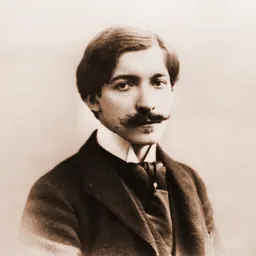
Related people
Same field, nearest in time
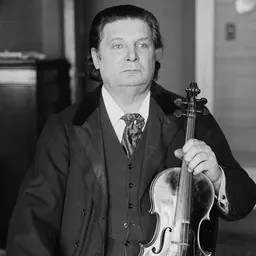

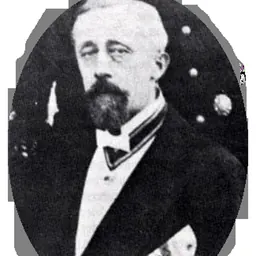

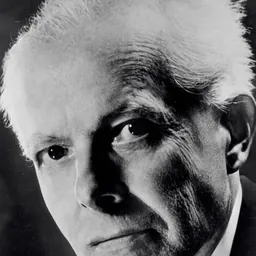
Contemporaries
People whose lives overlapped Auguste Chapuis's
Frequently asked questions
Who was Auguste Chapuis?
French composer, choreographer and music educator (1858-1933)
When was Auguste Chapuis born?
Auguste Chapuis was born on 20 April 1858 in Dampierre-sur-Salon.
When did Auguste Chapuis die?
Auguste Chapuis died on 6 December 1933 in Paris.
What was Auguste Chapuis's occupation?
Auguste Chapuis was a composer, organist, music educator and music teacher.
What nationality was Auguste Chapuis?
Auguste Chapuis was French.
Sources & further reading
Cite this page
APA: Biography.guide. (2026). Auguste Chapuis. https://biography.guide/auguste-chapuis/
MLA: "Auguste Chapuis." Biography.guide, https://biography.guide/auguste-chapuis/.
Chicago: "Auguste Chapuis." Biography.guide. https://biography.guide/auguste-chapuis/.
Data last updated: 2026-09-22 · Spot an error? Report a correction.
Page generated 2026-09-27 05:30 UTC