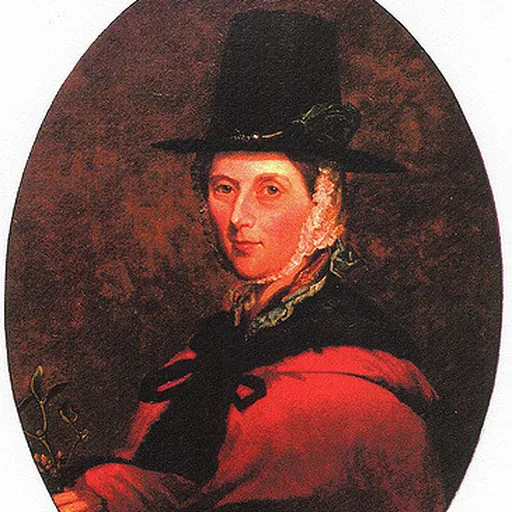
About Augusta Hall, Baroness Llanover
Lived 1802 – 1896 (aged 93). Augusta Hall, Baroness Llanover was a British journalist, writer and illustrator.
Augusta Hall, Baroness Llanover (21 March 1802 – 17 January 1896), born Augusta Waddington, was a Welsh heiress, who was best known as a patron of the Welsh arts. She was born near Abergavenny, in the historic county of Monmouthshire in South East Wales, the youngest daughter of Benjamin Waddington of Ty Uchaf, Llanover and his wife, Georgina Port. She became the heiress to the Llanover Estate in Goetre Fawr, where she and her five sisters were raised and educated by their mother. Their marriage joined the large South Wales estates of Llanover and Abercarn. The couple's homes in Rome and London were cultural hubs and their social circle was also interested in Celtic subjects and culture.
Lady Llanover was greatly influenced by the local bard, Thomas Price, whom she met at a local Eisteddfod in 1826. Carnhuanawc taught her the Welsh language; she took the bardic name "Gwenynen Gwent", ('the bee of Gwent'). She probably commissioned a series of watercolours of Welsh costumes which illustrate costumes worn by women in south Wales and Cardiganshire, 13 of which were reproduced as hand-coloured prints soon after 1834 (but were not published with the essay). These were little more than fashion prints for herself and friends to create dresses for themselves and their servants to be worn on special occasions, especially fancy dress balls. Although she was keen to see the women of Wales dressed in home-spun Welsh wool rather than the light cheap cottons which were becoming popular by the 1830s, there is very little evidence to show that she had any influence on the wearing of Welsh costume other than by her servants, family and friends, and there is no firm evidence to suggest that she influenced what was later adopted as the national costume of Wales. She did encourage the production of traditional stripes and checks in woollen cloth and offered prizes for good examples of these at Eisteddfodau, but there were few entrants, with the weaver of Gwenfrwd mill, on her own estate, taking many of the prizes.
Other achievements
In 1850, she helped found Y Gymraes ("The Welshwoman"), the first Welsh-language periodical for women.
Temperance movement Another main interest of hers was the temperance movement to which end she closed all the public houses on her estate, sometimes opening a modest temperance inn in their place, such as Y Seren Gobaith ('the Star of Hope') temperance inn, which replaced the Red Lion at Llanellen. She was an outspoken and lifelong critic of the evils of alcohol. Closely associated with her temperance work was religion in the form of militant Protestantism and she endowed two Calvinistic Methodist churches in the Abercarn area, with services conducted in the Welsh language, but a liturgy based on the Anglican Book of Common Prayer.
She outlived her husband by nearly thirty years, living well into her nineties. Only one of their daughters survived to adulthood; Augusta, who in 1846 married Arthur Jones (1818–1895) of Llanarth, of an old Roman Catholic family. Their eldest son, Ivor Herbert, 1st Baron Treowen, became a Liberal MP and a Major-General during the First World War.
Don’t just read it —
keep it.
Full-length biographies made to live with: read them, listen on the way to work, watch them tonight.
- E-book
- Audio
- Video
Instant download · yours to keep · every purchase keeps this site free
Important facts
People in Augusta Hall, Baroness Llanover's life
Named in this biography and alive at the same time

Related people
Same field, nearest in time

Contemporaries
People whose lives overlapped Augusta Hall, Baroness Llanover's





Frequently asked questions
Who was Augusta Hall, Baroness Llanover?
British noble (1802–1896)
When was Augusta Hall, Baroness Llanover born?
Augusta Hall, Baroness Llanover was born on 21 March 1802 in Abergavenny.
When did Augusta Hall, Baroness Llanover die?
Augusta Hall, Baroness Llanover died on 17 January 1896 in Llanover.
What was Augusta Hall, Baroness Llanover's occupation?
Augusta Hall, Baroness Llanover was a journalist, writer and illustrator.
What nationality was Augusta Hall, Baroness Llanover?
Augusta Hall, Baroness Llanover was British.
Sources & further reading
· Wikipedia: Augusta Hall, Baroness Llanover
· DBpedia: Augusta Hall, Baroness Llanover
Cite this page
APA: Biography.guide. (2026). Augusta Hall, Baroness Llanover. https://biography.guide/augusta-hall-baroness-llanover/
MLA: "Augusta Hall, Baroness Llanover." Biography.guide, https://biography.guide/augusta-hall-baroness-llanover/.
Chicago: "Augusta Hall, Baroness Llanover." Biography.guide. https://biography.guide/augusta-hall-baroness-llanover/.
Data last updated: 2026-09-21 · Spot an error? Report a correction.
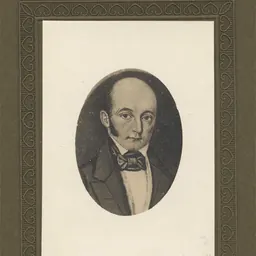
Portrait: Wikimedia Commons · author & licence
Page generated 2026-09-27 05:00 UTC