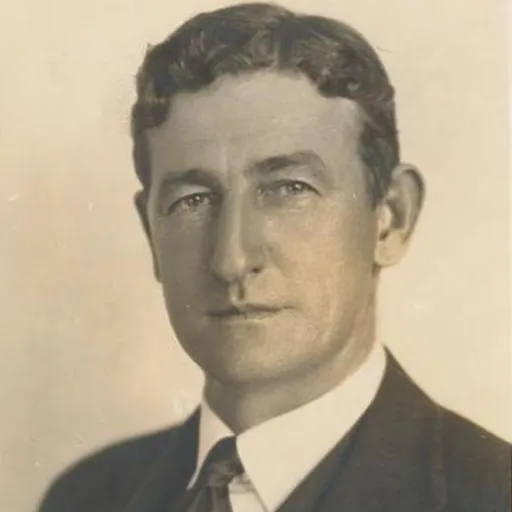
About Aubrey Abbott
Lived 1886 – 1975 (aged 88). Aubrey Abbott was an Australian politician, jackaroo, soldier, police officer and jackaroo (trainee).
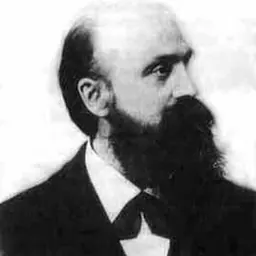
Charles Lydiard Aubrey Abbott (4 May 1886 – 30 April 1975) was an Australian politician and public servant. He served as administrator of the Northern Territory from 1937 to 1946, a period encompassing the bombing of Darwin and other Japanese air raids on the territory during World War II. Originally a grazier from New South Wales, he was a Country Party politician prior to his time in the Northern Territory and served as Minister for Home Territories in the Bruce–Page government from 1928 to 1929. He was a member of the House of Representatives from 1925 to 1929 and 1931 to 1937, representing the seat of Gwydir.
Early life and military service Abbott was born on 4 May 1886 in St Leonards, New South Wales. He was the son of Marion (née Lydiard) and Thomas Kingsmill Abbott. His father was a magistrate and his uncles William and Joseph Palmer Abbott had served in the New South Wales Legislative Assembly, while his cousins Joe Abbott and Mac Abbott later entered federal parliament.
Educated at The King's School, Sydney, Abbott left school at 14 to work as a jackeroo near Gunnedah; he also attempted to become an actor in Sydney and a stockman in Queensland. He joined the New South Wales Police Force where he worked as a confidential clerk at the police headquarters in Sydney.
While serving overseas he met and married Australian woman Hilda Gertrude Hartnett on 24 October 1916 in Westminster Cathedral in London, where he had been sent after falling ill in the trenches. He returned to World War I in 1917, and took part in the Egyptian Expeditionary Force advance to Damascus. He was wounded in 1918, and promoted to captain. He returned to Australia in 1920.
Member of Parliament
On his return to Australia Abbott bought a "Murrulla", a grazing property near Tamworth, New South Wales, this purchase was financed by his uncle William. Abbott became active in the Graziers' Association of New South Wales and the Northern New State League.
He made an unsuccessful attempt to enter the New South Wales Legislative Assembly in 1925 via the seat of Namoi, but defeated Lou Cunningham to win Gwydir for the Country Party at the federal elections of that year. He rose quickly through parliament and became Minister for Home Affairs in 1928, but was defeated at the 1929 elections.
Administrator of the Northern Territory Initial years No longer a member of parliament, Abbott became secretary to the Primary Producers' Advisory Council, and it has been suggested that he was an organiser of the paramilitary Old Guard. He was returned as the member for Gwydir in 1931 and remained in parliament until 1937, when he was appointed administrator of the Northern Territory; this also made him Commissioner of Police for the NT.
World War II Abbott was almost killed in the Japanese bombing attack on Darwin on 19 February 1942, which damaged Government House, Darwin where he and Hilda were living.
After the bombing there was a Commission of Inquiry, led by Charles Lowe, in which Abbott was criticised for lack of leadership. Abbott was denied counsel in this inquiry and felt that many were bias against him. He assisted in the evacuation of civil administration to The Residency in Alice Springs.
In 1943, Abbott wrote to Joseph Carrodus, secretary of the Department of the Interior, proposing that the federal government use compulsory acquisition to destroy Darwin's Chinatown and thereby reduce the territory's Chinese population. He referred to "the elimination of undesirable elements which Darwin has suffered from far too much in the past" and stated that he hoped to "entirely prevent the Chinese quarter forming again". He further observed that "if land is acquired from the former Chinese residents there is really no need for them to return as they have no other assets". The federal government subsequently passed the Darwin Lands Acquisition Act 1945 which compulsorily acquired of land owned by Chinese-Australians. The Territory's civilian population had mostly been evacuated during the war and the former Chinatown residents returned to find their homes and businesses reduced to rubble.
In August 1943 Abbott also sought help from the Commonwealth Government for improved housing options for 'part-Aboriginal' people, many of whom had grown up at The Bungalow, in Alice Springs. He sought budget allocation for the construction of 22 homes and the money was eventually made available with the houses being completed after the war; these became known as The Gap Cottages. Loutit was in opposition to this development and said that: "There are many cases of deserving white people who should receive consideration before the squandering of £6,600 on [Aboriginal people]."
Abbott did not return to Darwin, or Government House, until July 1945 and, on 26 May 1946, he left the NT on sick leave and was suspended the next day.
Later life In 1950 he published a book, Australia's Frontier Province, in which he surveyed the Northern Territory's development. He retired to Bowral and continued writing. He died on 30 April 1975 at Darlinghurst, and was given a state funeral. He was the last surviving member of Stanley Bruce's Cabinet.
Don’t just read it —
keep it.
Full-length biographies made to live with: read them, listen on the way to work, watch them tonight.
- E-book
- Audio
- Video
Instant download · yours to keep · every purchase keeps this site free
Important facts
Family & relationships
People in Aubrey Abbott's life
Named in this biography and alive at the same time


Related people
Same field, nearest in time





Contemporaries
People whose lives overlapped Aubrey Abbott's



Frequently asked questions
Who was Aubrey Abbott?
Australian politician
When was Aubrey Abbott born?
Aubrey Abbott was born on 4 May 1886 in St Leonards.
When did Aubrey Abbott die?
Aubrey Abbott died on 30 April 1975 in Darlinghurst.
What was Aubrey Abbott's occupation?
Aubrey Abbott was a politician, jackaroo, soldier, police officer and jackaroo (trainee).
What nationality was Aubrey Abbott?
Aubrey Abbott was Australian.
Sources & further reading
Cite this page
APA: Biography.guide. (2026). Aubrey Abbott. https://biography.guide/aubrey-abbott/
MLA: "Aubrey Abbott." Biography.guide, https://biography.guide/aubrey-abbott/.
Chicago: "Aubrey Abbott." Biography.guide. https://biography.guide/aubrey-abbott/.
Data last updated: 2026-09-21 · Spot an error? Report a correction.
Portrait: Wikimedia Commons · author & licence
Page generated 2026-09-27 04:59 UTC