
About Atsushi Nakajima
Lived 1909 – 1942 (aged 33). Atsushi Nakajima was a Japanese novelist, writer, teacher and translator.
was a Japanese author known for his unique style and self-introspective themes. His major works include "The Moon Over the Mountain" and "Light, Wind and Dreams" with the former being published in many Japanese textbooks.
During his life he wrote about twenty works, including unfinished works, typically inspired by Classical Chinese stories and his own life experiences.
In February 1914, Nakajima was sent to Koriyama in Nara Prefecture to join his father, Tabito, who had remarried. Tabito's work as a teacher required him to move often, bringing his family with him. In 1916, Nakajima enrolled in Koriyama Primary and Higher School, only to transfer in 1918 to Hamamatsu Primary School in Shizuoka Prefecture, as Tabito had taken up a teaching position at Hamamatsu Middle School.
In 1926, Nakajima graduated from Seoul Middle School and entered the literature program of the First Higher School in Tokyo. In November 1927, he began contributing short stories to the school's alumni magazine and joined the editorial staff of the magazine in 1929. He graduated from Tokyo First Higher School in 1930. He wrote his graduation thesis on the topic of Aestheticism. The thesis, titled "The Study of Aestheticism," traces the influences of modern Japanese literature to Edgar Allan Poe, Oscar Wilde and Charles Baudelaire. The thesis then also proceeds to analyze the works of Tanizaki Jun'ichirō, Mori Ōgai, Ueda Bin and Nagai Kafū. Nakajima's thesis was published in 1933. That same year, he entered graduate school at Tokyo University with the intention of studying the work of Mori Ōgai. He withdrew in 1934 to take on a teaching position and support his new family. The story was first published in the February 1942 issue of Bungakukai.
"The Moon Over the Mountain" tells the story of Yuan Can who recently had heard about a man-eating tiger roaming around his area. One day he encountered the tiger and the tiger started speaking to him. Yuan Can discovered that the tiger was his friend named Li Zheng (李徴), Li Zheng was smart and could qualify as a government official but his true ambition was to be a poet. Unfortunately, he failed and started working as a government official. While traveling for official business one day, Li Zheng claims that he went insane and transformed into a tiger. Li Zheng claims that this was because of the "cowardly pride" and "arrogant shame" he harbored within him which caused him to transform into the tiger. Li Zheng laments that as a tiger he could no longer become a famous poet, the two then parted ways.
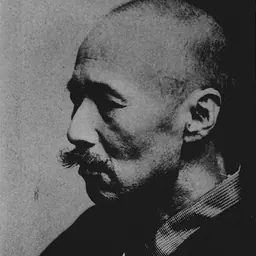
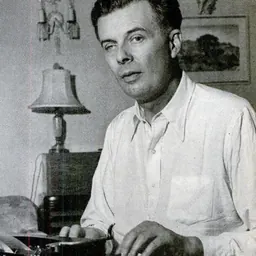
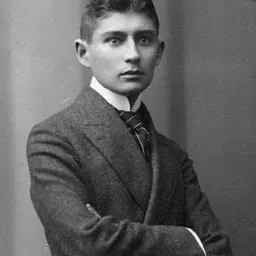
Teaching job In 1933, he accepted a teaching position at Yokohama Girls' Higher School, which was managed by a former pupil of Nakajima's father. During his time in the School, Nakajima was exposed to more of western literature, such as the works of Blaise Pascal, Anatole France and Robert Louis Stevenson. During this time he translated works by D. H. Lawrence, Aldous Huxley and Franz Kafka into Japanese, while continuing to write fiction.
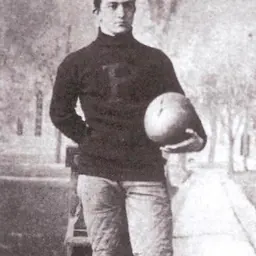
Micronesia and Palau In 1941, he resigned from his teaching job and joined the Japanese government working as an editor for a Japanese language textbook set to be published in Palau. He believed that the warmer climate in Palau would cure his asthma. Nakajima's choice to visit the southern seas may have been influenced by Robert Louis Stevenson's Vailima Letters, which described Stevenson's stay in Samoa. After some time in Palau, he took a boat to Micronesia on 15 September 1941 for the purpose of inspecting the schools in the region. He returned to Palau on 5 November 1941. During this part of his life, Nakajima kept a diary and recorded topics such as the native culture and practices.
In letters he wrote, Nakajima disagrees with the Japanese exploitation of the island natives. He wished that he could do more for the people of Palau and Micronesia other than teaching them. He wrote that he had not experienced any asthma attacks, but instead felt lethargic due to the tropical heat. The food in Micronesia supplied by the Japanese were also lacking. Because of this, he wished to quit his job as soon as possible. By the end of 1941, Nakajima had requested a transfer and returned to Japan in March 1942.
Final years In 1942, Nakajima contracted pneumonia after returning from Palau. While bedridden for two months, he published "Light, Wind and Dreams," a fictionalized biography of Robert Louis Stevenson. The story was critically acclaimed, even becoming a finalist for the Akutagawa Prize.
At this point he resigned from his job at the South Seas Agency and fully devoted himself to being a writer. However, this did not last long. His health greatly declined due to the asthma medication he had taken. He was immediately hospitalized. When he was hospitalized, no one expected him to die. His father, expecting his stay to be short, did not visit him in the hospital. After a night of asthma attacks, Nakajima died on the morning of 4 December 1942.
In popular culture A character based on Atsushi Nakajima is the main character of Bungo Stray Dogs, a manga and anime franchise in which characters are named after major literary figures. Nakajima's character works for the Armed Detective Agency and has a supernatural ability named after his short story "The Moon Over the Mountain," which allows him to transform into a tiger.
Nakajima also appears in the online game Bungo and Alchemist, an online collectible card game with characters based on literary figures.
Don’t just read it —
keep it.
Full-length biographies made to live with: read them, listen on the way to work, watch them tonight.
- E-book
- Audio
- Video
Instant download · yours to keep · every purchase keeps this site free
Important facts
People in Atsushi Nakajima's life
Named in this biography and alive at the same time


Related people
Same field, nearest in time
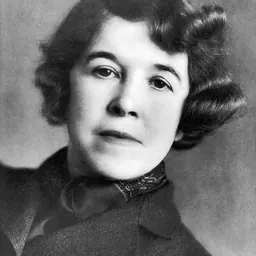
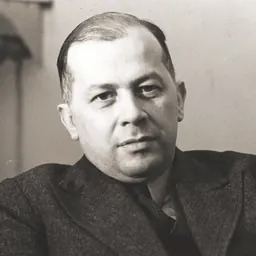




Contemporaries
People whose lives overlapped Atsushi Nakajima's
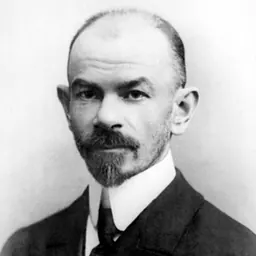



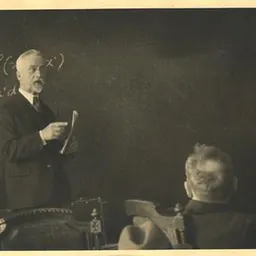
Frequently asked questions
Who was Atsushi Nakajima?
Japanese writer (1909–1942)
When was Atsushi Nakajima born?
Atsushi Nakajima was born on 5 May 1909 in Yotsuya-ku.
When did Atsushi Nakajima die?
Atsushi Nakajima died on 4 December 1942 in Setagaya.
What was Atsushi Nakajima's occupation?
Atsushi Nakajima was a novelist, writer, teacher and translator.
What nationality was Atsushi Nakajima?
Atsushi Nakajima was Japanese.
Sources & further reading
Cite this page
APA: Biography.guide. (2026). Atsushi Nakajima. https://biography.guide/atsushi-nakajima/
MLA: "Atsushi Nakajima." Biography.guide, https://biography.guide/atsushi-nakajima/.
Chicago: "Atsushi Nakajima." Biography.guide. https://biography.guide/atsushi-nakajima/.
Data last updated: 2026-09-20 · Spot an error? Report a correction.
Page generated 2026-09-27 05:17 UTC