
Aslam Khan
Pakistani brigadier
About Aslam Khan
Lived 1918 – 1994 (aged 75–76). Aslam Khan was a Pakistani.
Muhammad Aslam Khan (27 August 1918 – 12 October 1994) better known as Colonel Pasha, The Legend of Baltistan, and Laji, was a former one-star rank Pakistan Army officer, businessman, and founder of the Shangrila Resort. Notably, as the leader of 'D' Company, he led his troops during World War II in capturing Kennedy Peak (Myanmar), which the Americans had failed to conquer. For this achievement, he was awarded the Military Cross by Field Marshal Auchinleck.
Aslam was assigned a pivotal mission in 1947 by Gilgit's provisional government to defend and expand newly acquired territories. Stripped of his rank in the Pakistan Army with a promise of reinstatement upon success, Aslam joined the Pashtun tribal invasion led by Khurshid Anwar, becoming second-in-command. Following the accession of Jammu and Kashmir to India, Indian troops arrived on 27 October to counter the invasion. The 1st Sikh Regiment, commanded by Lt. Col. Dewan Ranjit Rai, was disrupted by Aslam Khan’s effective use of captured mortars, resulting in Col. Rai’s death. The regiment withdrew, and Indian forces eventually repelled the invaders by 7 November, securing the Kashmir Valley.
In the Gilgit Agency, the Gilgit Scouts, led by Major William Brown, rebelled on 1 November, detaining the governor and aligning with the Bunji garrison, leading to Pakistan's effective control of Gilgit by 16 November. Adopting the alias "Colonel Pasha", he arrived in Gilgit on 30 November with his brother, Major Anwar Khan, and Captain Azmat Ali. His immediate goals were to mobilize local personnel and establish a military base. Despite initial challenges, Pasha secured Major Ehsan Ali’s support and returned to GHQ on 3 December to request additional resources, receiving only four thousand rupees.
In the 1970s, Aslam Khan, now a timber businessman, was arrested in Muzaffarabad, falsely accused of theft and later imprisoned in a remote place in Gilgit Agency. The ordeal was orchestrated by Prime Minister Zulfikar Ali Bhutto, who thought Aslam was financing Asghar Khan's politics. Aslam's timber had been seized, essentially making him go out of business. Aslam was one of several siblings and family members of Asghar Khan who were harassed by Bhutto throughout his reign.
Early life Aslam Khan was born in Jammu on 27 August 1918 into an Afridi Pashtun family to Brigadier Rehmatullah Khan and his third wife Gulam Fatima. Aslam's father, Brigadier Rehmatullah of the Jammu and Kashmir State Forces, was instrumental in bringing Gilgit, Hunza and Skardu under the control of the Jammu and Kashmir (princely state).
Fareeda Begum died on 6 September 1989 and Aslam Khan is buried near her at the resort.
Military career Jammu Kashmir State Forces
Aslam Khan was commissioned into the Jammu and Kashmir State Forces in 1939 after passing out from the Indian Military Academy. He was part of the 4th Jammu and Kashmir Fateh Shibji infantry battalion and was deployed to Rattu for two years.
During World War II, Major Aslam captured the Kennedy Peak in October 1944, which the Americans had failed to capture. The victory celebrations were held jointly with the First Punjabis of the British Indian Army and Aslam Khan danced with Major Daler Singh Bajwa of the State Forces and Major Gul Rehman of First Punjabis.
Following the accession of Jammu and Kashmir to India, Indian troops were airlifted on 27 October to repel the invasion. The 1st Sikh regiment of the Indian Army, commanded by Lt. Col. Dewan Ranjit Rai, moved to Baramulla immediately upon landing. Aslam Khan's skillful use of captured mortars disrupted their initial defense, leading to the death of Col. Ranjit Rai at the hands of Aslam Khan's men. The 1st Sikhs subsequently withdrew to Patan, where they established a defensive position. The troops later killed Rajinder Singh (brigadier). As more Indian troops were flown in daily, they eventually counterattacked and pushed the tribal forces back beyond Uri by 7 November, securing the Kashmir Valley. The Muslim troops from the Bunji garrison, led by Mirza Hassan Khan, joined the rebellion, resulting in the elimination of non-Muslim personnel. On 16 November, Pakistan dispatched a Political Agent, Khan Mohammad Alam Khan, to assume control, bringing Gilgit under Pakistan's effective administration.
Adopting the nom-de-guerre Colonel Pasha, he arrived in Gilgit on 30 November 1947, accompanied by his younger brother, Major Anwar Khan, who was appointed Brigade Major for administering logistics, and Captain Azmat Ali, assigned as Deputy Quartermaster for general administration. Pasha’s initial objective was to raise an Azad force from local personnel, including members of the Gilgit Scouts. Despite challenges, such as the reluctance of Lieutenant Colonel Abdul Majeed Khan to cooperate, Major Ehsan Ali quickly aligned with Pasha’s objectives.
On 15 September 1949, Lt Col Aslam Khan succeeded James Wilson as Private Secretary to General Gracey, the Commander-in-Chief of the Pakistan Army.
In the book, Pakistan: Jinnah to the Present Day, R. C. Majumdar recalled that in the fall of 1957, the Pakistan army was deployed in Operation Close Door to combat smuggling, with civil magistrates trying the offenders. He had an argument with Brigadier Aslam Khan, who commanded 13th Baluch Jessore Garrison, when Aslam justified the operation's success by the quantity of materials seized by his soldiers.
On 7 August 1959, Brigadier Aslam Khan was appointed Chief of War Plans at Central Treaty Organization (CENTO) Headquarters in Ankara, succeeding Brigadier Gulzar Ahmed. Khan retired in 1962.
Later life and death
After retirement, Aslam Khan eschewed "politics", and worked for the development of tourism in Gilgit Baltistan. He founded the Shangrila Resort in Skardu, taking inspiration from James Hilton's novel Lost Horizon. It is now among the top tourist destinations in Pakistan and has been managed by his son Arif Aslam Khan since his death.
Awards and decorations
Military Cross (MC)(awarded for GALLANTRY)1944 Fakhr-e-Kashmir
(Honour of Kashmir)
1948Hilal-e-Jurat
(Crescent of Courage)
1949India General Service Medal
(North West Frontier 1937–39 Clasp)Burma Star 1939–1945Staff College, Quetta Student's Medal
1945Pakistan Medal (Pakistan Tamgha)
1947Tamgha-e-Diffa (Defence Medal)
First Kashmir War ClaspKashmir Commemoration Medal 1947-1949Queen Elizabeth II Coronation Medal 1953Tamgha-e-Qayam-e-Jamhuria (Republic Commemoration Medal)
1956
Don’t just read it —
keep it.
Full-length biographies made to live with: read them, listen on the way to work, watch them tonight.
- E-book
- Audio
- Video
Instant download · yours to keep · every purchase keeps this site free
Important facts
People in Aslam Khan's life
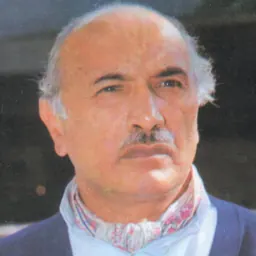
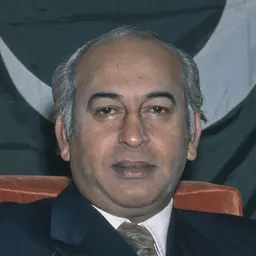
Named in this biography and alive at the same time





Contemporaries
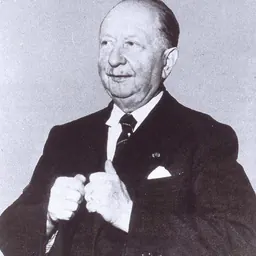
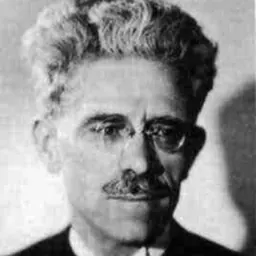
People whose lives overlapped Aslam Khan's


Frequently asked questions
Who was Aslam Khan?
Pakistani brigadier
When was Aslam Khan born?
Aslam Khan was born on 27 August 1918 in Jammu.
When did Aslam Khan die?
Aslam Khan died in 1994 in Skardu.
What nationality was Aslam Khan?
Aslam Khan was Pakistani.
Sources & further reading
· DBpedia: Aslam Khan (brigadier)
Cite this page
APA: Biography.guide. (2026). Aslam Khan. https://biography.guide/aslam-khan-1918/
MLA: "Aslam Khan." Biography.guide, https://biography.guide/aslam-khan-1918/.
Chicago: "Aslam Khan." Biography.guide. https://biography.guide/aslam-khan-1918/.
Data last updated: 2026-09-20 · Spot an error? Report a correction.
Page generated 2026-09-27 05:25 UTC