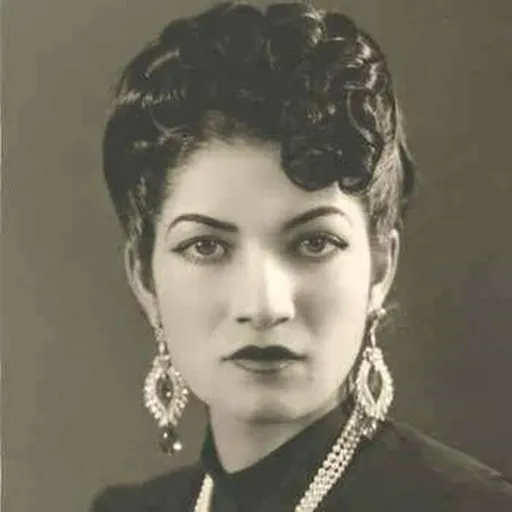
About Ashraf Pahlavi
Lived 1919 – 2016 (aged 96). Ashraf Pahlavi was an Iranian translator, diplomat, politician, writer, nurse and author.
Ashraf ol-Molouk Pahlavi She served her brother as a palace adviser and was a strong advocate for women's rights. Following the Iranian Revolution in 1979, she lived in exile in France, New York, Paris and Monte Carlo and remained outspoken against the Iranian Islamic Republic.
In 1932, she hosted the Second Eastern Women's Congress, which was arranged by the Jam'iyat-e Nesvan-e Vatankhah.
Ashraf Pahlavi was not permitted to attend university, and instead was married in 1937, at the age of 18, to Mirza Khan Ghavam, whose family was politically allied with her father. The Shah had originally opposed the operation and for a while resisted accepting it. In early 1953, she met with CIA agents who asked her to talk to her brother since she was the only one who was able to influence him. As historian Stephen Kinzer's book All the Shah's Men recounts, "Ashraf was enjoying life in French casinos and nightclubs when one of Kermit Roosevelt's best Iranian agents, Assadollah Rashidian, paid her a call. He found her reluctant, so the next day a delegation of American and British agents came to pose the invitation in stronger terms. The leader of the delegation, a senior British operative named Norman Darbyshire, had the foresight to bring a mink coat and a packet of cash. When Ashraf saw these emoluments, Darbyshire later recalled, "her eyes lit up and her resistance crumbled". By her own account, Pahlavi was offered a blank check if she agreed to return to Iran from her enforced exile in France, but refused the money and returned it of her own accord.
Some historians argue that the coup would have occurred with or without Ashraf Pahlavi's persuasion of her brother. In an International Journal of Middle East Studies article, writer Mark Gasiorowski states that the Shah "was not consulted about the decision to undertake the coup, about its manner of execution, or about the candidate chosen to replace Mosaddegh" and that the coup was instead largely executed by the United States and others looking to undermine Mosaddegh's leadership.
Political activities
Ashraf Pahlavi was a strong supporter of women's rights in Iran and the world during her brother's reign. In 1967, Pahlavi worked with the United Nations as the Iranian delegate to the Commission on Human Rights as well as the Economic and Social Council. In 1975, she was heavily involved with the International Women's Year, and addressed the United Nations. and was not a radical reformist. She cited "chronic apathy"
In her 1980 memoirs, Pahlavi acknowledges the poor conditions of women in Iran and expresses concern, as she writes, "the news of what was happening to Iran's women was extremely painful... [they] were segregated and relegated to second-class status... many were imprisoned or exiled".
Additionally, Pahlavi worked as an activist for human rights and equality. She was an advocate for the international spread of literacy, especially in Iran, where her brother Mohammad Reza Shah was a major proponent of the anti-illiteracy movement. She served as a member on the International Consultative Liaison Committee for Literacy.
After the 1979 Islamic Revolution, Ashraf Pahlavi asked David Rockefeller to support her brother Mohammad Reza's attempts to find asylum.
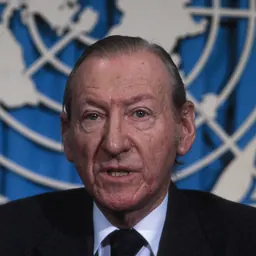
She also attacked U.S. President Jimmy Carter and the United Nations Secretary General Kurt Waldheim for not giving their support to her late brother, the Shah, during the beginnings of the revolution.
Character and finance Ashraf Pahlavi argued that she was "attacked for financial misconduct" because she was engaged "in the administration of various organizations". By her own account, she was of limited financial means when Mosaddegh sent her into exile in Paris. However, in later years she was said to have accumulated a large fortune. She attributed her wealth to increases in the value of lands that she had inherited from her father Reza Shah, and income from inherited businesses.
In 1979, The New York Times reported that a document dated 17 September 1978 from Ashraf's office requested a transfer of $708,000 from her Bank Melli account to her account at the Union Bank of Switzerland in Geneva under the code name 'SAIPA', which, in French, her preferred foreign language, stands for: S-on, A-ltesse, I-mperiale, P-rincesse, A-shraf. Perhaps this motivated her to be bold. In her memoirs she wrote:
Her brother, Mohammad Reza Shah, was her closest friend. In her memoirs, she remembers looking upon him with a sense of wonder as a child, writing, "long before we reached adulthood, his voice became the dominant one in my life."
Some sources mention a connection between her and drug trafficking; she said: "My detractors have accused me of being a smuggler, a spy, a Mafia associate (once even a drug dealer)". Member of the Consultative Committee of International Women's Year Conference, 1975 President of the Women's Organization of Iran, 1967–1979 Chairwoman of the Imperial Foundation for Social Services Honorary Fellow of Wadham College, Oxford Member of the International Consultative Liaison Committee for Literacy and Princess (Vala Gohari) Azadeh Pahlavi-Chafik (1951–2011).
Third marriage
Pahlavi married a third and final time on 5 June 1960 (at the Iranian Embassy in Paris) to Mehdi Bushehri (1916–?), who was the director of the Maison d'Iran (House of Iran), Paris. He was a nephew of Javad Bushehri, a politician. Pahlavi and Mehdi Bushehri had no children together, and were often separated while Pahlavi lived in exile in New York City
In a 1980 interview with The New York Times journalist Judy Lee Klemesrud, Pahlavi stated, "I have never been a good mother. Because of my way of life, I was not with my children very much". which she sold before moving to Park Avenue, in New York City (Beekman Place 29 and 31), Paris and in Juan-les-Pins (35 Bd Edouard Baudoin),
Princess Ashraf Pahlavi died on 7 January 2016 in Monte Carlo at the age of 96. Her death was announced by her nephew and the imperial family's head, Reza Pahlavi on his Facebook page.
Robert F. Armao, an adviser, said the cause was "old age". Armao related that Princess Ashraf died in her sleep at home in Europe, but declined to name the country, citing concern for the safety of her family.
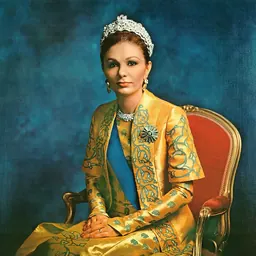
Her funeral took place on 14 January 2016 in the Cimetière de Monaco in Monaco, attended by members of the Pahlavi family, including Empress Farah Pahlavi. She left behind one surviving child (two other children had already died before her) and four grandchildren.
At the time of her death, she was the oldest living member of her family.
Before the 1979 revolution, Pahlavi translated several books from French into Persian, including books on nursing and child care.
Don’t just read it —
keep it.
Full-length biographies made to live with: read them, listen on the way to work, watch them tonight.
- E-book
- Audio
- Video
Instant download · yours to keep · every purchase keeps this site free
Important facts
Family & relationships
People in Ashraf Pahlavi's life
Named in this biography and alive at the same time





Related people
Same field, nearest in time





Contemporaries
People whose lives overlapped Ashraf Pahlavi's






Frequently asked questions
Who was Ashraf Pahlavi?
Iranian royal (1919–2016)
When was Ashraf Pahlavi born?
Ashraf Pahlavi was born on 26 October 1919 in Tehran.
When did Ashraf Pahlavi die?
Ashraf Pahlavi died on 7 January 2016 in Monaco.
What was Ashraf Pahlavi's occupation?
Ashraf Pahlavi was a translator, diplomat, politician, writer, nurse and author.
What nationality was Ashraf Pahlavi?
Ashraf Pahlavi was Iranian.
Sources & further reading
Cite this page
APA: Biography.guide. (2026). Ashraf Pahlavi. https://biography.guide/ashraf-pahlavi/
MLA: "Ashraf Pahlavi." Biography.guide, https://biography.guide/ashraf-pahlavi/.
Chicago: "Ashraf Pahlavi." Biography.guide. https://biography.guide/ashraf-pahlavi/.
Data last updated: 2026-09-21 · Spot an error? Report a correction.
Portrait: Wikimedia Commons · author & licence
Page generated 2026-09-27 05:00 UTC