
About Ashot Nadanian
Born 1972. Ashot Nadanian is an Armenian and Russian chess player.
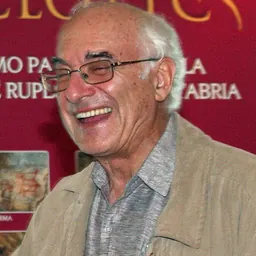
Ashot Nadanian (sometimes transliterated as Nadanyan; ; born 19 September 1972) is an Armenian chess International Master, chess theoretician and chess coach.
His highest achievements have been in opening theory and coaching. Two opening variations are named after him: the Nadanian Variation in the Grünfeld Defence and the Nadanian Attack in the Queen's Pawn Opening. He began coaching at the age of 22 and has brought up three grandmasters. He has coached the national teams of Kuwait and Singapore and was awarded the titles Honoured Coach of Armenia in 1998 and FIDE Senior Trainer in 2017. Since 2011, he has been a permanent second of Levon Aronian.
Although a strong player who competed in the 1996 Chess Olympiad and narrowly failed to qualify for the 1999 FIDE World Chess Championship, he has never fulfilled his potential. According to Valery Chekhov, Nadanian "possesses enormous chess potential, but he was not able to find enough time to work professionally on his chess." Levon Aronian said that due to the situation in Armenia, Nadanian "was not able to display even one-tenth of his playing talent."
Due to his imaginative attacking style, Nadanian has been described as a "chess artist", a "brilliant eccentric", the "Armenian Tal" and "Kasparov's half-brother". The sixth chapter of Tibor Karolyi's 2009 book Genius in the Background is devoted to Nadanian.
Early years Nadanian was born on 19 September 1972 in Baku, Azerbaijan SSR, which then was part of the Soviet Union, to Sergei and Irina, both hairdressers. He was taught to play chess by his father when he was seven. His early coach was Rafael Sarkisov, who took him on as a pupil at Spartak in Baku. In his article The Voiceless Old Man Nadanian recollects, that when he was nine or ten, there were almost no chess tournaments in which young players could play with seniors, and therefore he often went to the park near his house to play chess with older chess lovers. He remembers that in one of these park-battles he played against a mysterious, silent stranger who turned out to be the highly respected chess champion Vladimir Makogonov. In 1986 and 1987 Nadanian won the under-sixteen Azerbaijani championship. With the beginning of the First Nagorno-Karabakh War in 1988, his family was forced to leave Baku and flee to Armenia. 1988 and 1989, in the Armenian Chess Championships of 1997, 1998 and 1999 (7th–8th places), in the 32nd Chess Olympiad in Yerevan 1996, in the 13th European Chess Club Cup 1997, in the Zonal tournament in Panormo 1998, where he shared 7th–11th places out of 72 participants, in the European Individual Chess Championships of 2000 and 2014 and in the FIDE World Rapid and Blitz Championships 2013 in Khanty-Mansiysk. In 2014, playing board 4, he helped his team BKMA Yerevan to a silver medal in the Armenian Team Chess Championship.
His other performances:
Częstochowa Open, Poland, 1992: 1st–2nd; Tbilisi Open, Georgia, 1996: 1st; Pasanauri Open, Georgia, 1997: 1st–2nd; New York City Open Championship (Tournament B), United States, 1998: 4th–7th; Aeroflot Open (Tournament A), Moscow, Russia, 2002: 35th; Estrin Memorial, Moscow, Russia, 2002: 5th; Aeroflot Open (Tournament B), Moscow, Russia, 2004: 5th–15th; Goldberg Memorial, Moscow, Russia, 2004: 2nd–3rd; IGB Dato Arthur Tan Malaysia Open, Kuala Lumpur, Malaysia, 2006: 6th–10th; ASEAN Masters Circuit GMB, Tarakan, Indonesia, 2008: 2nd–3rd; IGB Dato Arthur Tan Malaysia Open, Kuala Lumpur, Malaysia, 2008: 3rd–7th; Korea Open chess tournament, Seoul, South Korea, 2008: 6th–10th; Singapore Rapid Chess Championship, Singapore, 2010: 2nd; Yerevan City Chess Championship, Armenia, 2011: 2nd–4th; Karen Asrian Memorial, Jermuk, Armenia, 2011: 7th–13th; Andranik Margaryan Memorial, Yerevan, Armenia, 2012: 2nd–4th; Armenian Rapid Chess Championship, Yerevan, Armenia, 2012: 7th–10th; Batumi Municipality Cup, Batumi, Georgia, 2016: 5th–8th; Armenian Rapid Chess Championship, Yerevan, Armenia, 2017: 6th–11th.
Playing strength and style Nadanian reached his best Elo rating in July 1997 with 2475 Elo points. His best single performance was at Moscow Aeroflot Open, 2002, where he scored five of nine possible points (56%), exceeding his first grandmaster norm by half a point. His second norm came at Moscow 2004, where he scored eight points out of eleven with a performance rating of 2630. His United States Chess Federation (USCF) rating, based on nine games from 1998 New York Open, is 2655.
Nadanian has an imaginative and adventurous style of playing, and even his mistakes, according to Tibor Karolyi, "contain elements of creativity". He likes to create fresh, atypical positions straight from the opening, often employing bizarre maneuvers to achieve his goals. Uncommon chess openings have always been a part of his repertoire (e.g. Sokolsky Opening, Budapest Gambit).
Kingpin magazine called him "a brilliant eccentric". Tibor Karolyi devoted a chapter to him in his 2009 book Genius in the Background and jokingly called him "Kasparov's Half-Brother", as Kasparov and Nadanian were both coached by Alexander Shakarov, and there were similarities in their playing styles. In particular, Karolyi emphasizes their ability to implement effective ideas on the edge of the board, attributing this to the influence of their common chess "father". As an example of flank pawn advances versus a solid centre, John L. Watson in his 2003 book Chess Strategy in Action brings attention to the game Nadanian – Ponomariov, Kyiv 1997 and calls it "almost satire on rule-breaking", as nine of White's first thirteen moves have been pawn moves and only one of those has been with a central pawn, yet Black's position was extremely difficult.
The 2005 World Cup winner Levon Aronian said of Nadanian: "His passion for beauty, his devotion to the romantic chess school has always been inspiring." Grandmaster Valery Chekhov noted that "along with his positive qualities like very subtle understanding of dynamic positions, very good sense of initiative and quick thinking, Ashot’s play has a few negative facets like weak opening repertoire, bad defence, and the psychological element of the game as well."
Mark Dvoretsky in his book Chess Lessons: Solving Problems & Avoiding Mistakes wrote: "Ashot Nadanian is a multi-talented man, and I have read his book Moyi Shakmaty (My Chess) with great pleasure. He is an interesting player, and an informative and objective commentator, and his writing style is "savory". While demonstrating his best games and unexpected and spectacular ideas he has carried over the board, Nadanian never tries to convince us that all his novelties are impeccably correct and supplies his readers with the results of an objective analysis."
Chess theoretician
Nadanian has contributed analysis to many chess publications throughout the world including the Chess Informant, New In Chess Yearbook, Europe Échecs, 64, Kaissiber and Szachy Chess. He was a columnist for the Chessville.com website and has also written for ChessBase and the Armenian Chess Academy website.
According to Russian grandmaster Igor Zaitsev, Nadanian is "one of the most profound opening researchers".
Chess coach and second After Nadanian graduated from the Armenian State Institute of Physical Culture in 1994, he became a chess trainer. Among his students are Grandmasters Gabriel Sargissian, Varuzhan Akobian and Davit G. Petrosian.
From December 1999 until August 2001, Nadanian worked as the National Team Coach of Kuwait. Between 2005 and 2010, he was the National Coach of Singapore Men's Team. There he also coached Daniel Fernandez, who later became a grandmaster.
In 2007, Nadanian received the title of FIDE Trainer. In 2017, he was awarded the title of FIDE Senior Trainer (FST), the highest chess trainer title.
At the "Full English Breakfast" website (thefeb.com, podcast #7 Part 1), Levon Aronian refers to Nadanian as his friend and second. Unable to accompany Aronian to the 2011 Wijk aan Zee tournament, they maintained daily contact online. During the entire month of February 2011, Nadanian, together with a team of five grandmasters—Wang Hao, Movsesian, Sargissian, Pashikian and Melkumyan—held training camp in Tsaghkadzor, helping Aronian to prepare for the Candidates Tournament of the World Chess Championship 2012 cycle. At the 2011 Crestbook KC-Conference Aronian noted: "Lots of players are involved in my team, but Ashot Nadanian is absolutely irreplaceable. Besides the work he does himself he manages the whole process, while also planning training sessions." During the Tata Steel Chess Tournament 2012 in Wijk aan Zee Aronian referred to Nadanian as his permanent assistant.
Nadanian once said in an interview that one of the joyful events of his life was the ending of the Turin Olympiad in 2006, when his student Sargissian became Olympic champion with the Armenian team and his other student Akobian won bronze with the U.S. team. At the next Olympiad in Dresden the story repeated itself: Sargissian won team gold medal and Akobian won team bronze. is chess composition. His first puzzle appeared in 1986 and since that time he has composed about fifty studies and puzzles, of which he considers only ten or twelve to be good. He is particularly attracted by the problems where, in a final position, White wins with a king and knights only. Whilst two knights cannot force checkmate against a lone king, they can do so in some exceptional cases when the defender has pawns or other pieces. This idea is most clearly embodied in the highly original Nadanian's problem with seven knights (see diagram). In December 2009, ChessBase published three of Nadanian's puzzles on "knights theme", calling him "a hippophile chess composer".
A chess book collector, Nadanian has a private library of more than a thousand volumes.
Family Nadanian lives in Yerevan. He married Evelina Zakharian since 1999, and they have a daughter Kiti (born 2004 in Moscow) and a son Vigen (born 2010 in Singapore). It was annotated by Tibor Karolyi in his Genius in the Background book (2009) and by Lubomir Kavalek in The Washington Post on 4 January 2010: + Nadanian vs. Konstantin Sakaev, 2001
In 2012, the US National Master Frederick Rhine submitted this game to Chessgames.com and wrote: "A glorious combination! At the end, Black is up two pieces and has a boatload of pieces clustered around his king. White has only two pieces participating in the attack. However, Black's pieces are stepping on each other's toes and he is shockingly helpless against the back-rank mate 18.Qh8, e.g. 17...Bxh6 (going three pieces up) 18.Qh8#. Note that Black would be winning if almost any of his kingside pieces was on a different square."
Karolyi proclaims, "A particularly striking example to showcase Ashot's brilliant attacking play."
Wu Shaobin vs. Nadanian, Singapore 2006 The following game was played between the former member of China's Olympiad team GM Wu Shaobin (White) and Nadanian (Black) at Singapore 2006: + Wu Shaobin vs. Nadanian, 2006
Others Viktor Bologan vs. Nadanian, Aeroflot Open (Moscow 2002), Sicilian Defense: Paulsen–Basman Defense (B40), 0–1 Nadanian vs. Boris Grachev, European Individual Championships (Yerevan 2014), Sicilian Defense: Paulsen Variation (B46), 1–0 Anton Korobov vs. Nadanian, 8th Asrian Memorial (Yerevan 2015), Bogo-Indian Defense, Grünfeld Variation (E11), 0–1
Books
Don’t just read it —
keep it.
Full-length biographies made to live with: read them, listen on the way to work, watch them tonight.
- E-book
- Audio
- Video
Instant download · yours to keep · every purchase keeps this site free
Important facts
People in Ashot Nadanian's life
Named in this biography and alive at the same time





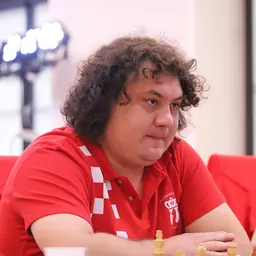
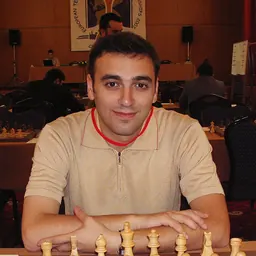
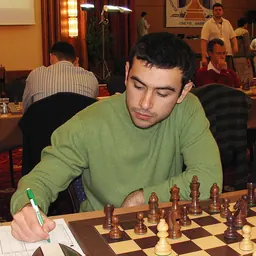
Related people
Same field, nearest in time


Contemporaries
People whose lives overlapped Ashot Nadanian's

Frequently asked questions
Who is Ashot Nadanian?
chess player
When was Ashot Nadanian born?
Ashot Nadanian was born on 19 September 1972 in Baku.
What is Ashot Nadanian's occupation?
Ashot Nadanian is a chess player.
What nationality is Ashot Nadanian?
Ashot Nadanian is Armenian and Russian.
Sources & further reading
Cite this page
APA: Biography.guide. (2026). Ashot Nadanian. https://biography.guide/ashot-nadanian/
MLA: "Ashot Nadanian." Biography.guide, https://biography.guide/ashot-nadanian/.
Chicago: "Ashot Nadanian." Biography.guide. https://biography.guide/ashot-nadanian/.
Data last updated: 2026-09-20 · Spot an error? Report a correction.
Page generated 2026-09-27 05:25 UTC