
About Ashfaq Parvez Kayani
Born 1952. Ashfaq Parvez Kayani is a Pakistani politician.
Ashfaq Parvez Kayani (Urdu: ; born 20 April 1952), is a retired four-star general of the Pakistan Army who served as the eighth chief of army staff, being appointed on 29 November 2007 after his predecessor Pervez Musharraf retired from his military service and remained in the office until 29 November 2013.
Initially appointed as Vice Chief of Army Staff (VCOAS) under then-President Pervez Musharraf on 8 October 2007, he formally took over the command of the army when President Pervez Musharraf retired from his military service on 29 November 2007. In addition, General Kayani served as the Director-General of the Inter-Services Intelligence (ISI) and as director of the Directorate-General of Military Operations (DGMO), overseeing major war efforts in the war on terror. On 24 July 2010, Kayani's tenure was extended for three more years by Prime Minister Yousaf Raza Gillani to continue the war efforts against the insurgent outfits.
Forbes named him the world's 34th most powerful person in 2011 and the world's 28th most powerful person in 2012.
Academia and professorship After the war, Ashfaq continued to resume his studies and became more involved with his studies after joining the Command and Staff College in Quetta. After his graduation, Kayani departed to the United States on deputation and educated at the United States Army Command and General Staff College at Fort Leavenworth and the United States Army Infantry School at Fort Benning.
During his long military career, Ashfaq has been on the faculty of School of Infantry and Tactics, also in Quetta. He was awarded Hilal-e-Imtiaz, the civilian medal, for his achievement.
Intelligence career
Directorship of Inter-Services Intelligence In October 2004, Lieutenant-General Ashfaq Kayani was appointed as the director general of Directorate of Inter-Services Intelligence (ISI), in place of General Ehsan-ul-Haq, who was promoted as the Chairman of the Joint Chiefs of Staff Committee.
Kayani was also present at the March 2007 meeting that took place between Musharraf and Chief Justice Iftikhar Muhammad Chaudhry, when the former military ruler informed the top judge that he was suspended. Accounts of that meeting narrated that Kayani was the only one among Musharraf's aides who did not speak a word.
Chief of Army Staff In October 2007, Kayani's promotion papers for the appointment to the four-star rank was approved by the President Musharraf, and appointed him as the Vice Chief of Army Staff (VCOAS). At the time of the promotion, Kayani ultimately superseded the senior-most army general, Lt-Gen. Khalid Kidwai, who was on an extension for one year. On 28 November 2007, Kayani succeeded Musharraf as chief of army staff after Musharraf's retirement.
General Kayani is noted as the second four-star army general who held the directorship of the ISI but later then went on to become the Chief of Army Staff. The first appointment of ISI director being appointed to four-star appointment was in 1999 when General Ziauddin Butt was the first army general who was appointed as army chief after his brief tenure as ISI director.
It was during General Kayani's tenure that Pakistan turned the tide in its war against terror. Gen Kayani is also credited with developing response to Indian cold start doctrine, which the Army validated by conducting Azm e Nau exercises.
War against terror General Kayani has been credited with having played a major role in turning the tide in favour of Pakistan in its armed conflict against Islamist militant groups active in North-West Pakistan. Before Kayani's tenure, under the command and administration of President General Pervez Musharraf, Pakistan had lost nearly 30% of its North-West Frontier Province and 100% of the FATA in the hands of Taliban and its allies. Under the Peverz Musharaf, the situation in FATA further complicated with the emergence of Tehreek-Taliban Pakistan (TTP). Local Pakistani jihadi fighters that have previously fought Soviets, with support from Central Asian militant groups, Arab fighters of al-Qaeda, in 2007 formed TTP. The TTP, beside FATA, managed to capture four settle districts of North-Western Frontier Province (modern day Khyber-Pakhtunkhwa). The districts such as Buner, Dir, Shangla and Swat fell out of writ of Government of Pakistan by 2007 as militants flashed into mainland of Khyber-Pakhtunkhwa further expanding their influence beyond peripheries of FATA.
Moreover, Musharraf decision to undertake Lal-Masjid Operation increased number of suicide attacks from 10 in 2006 to 61 in 2007. The deteriorated law and order situation saw assassination of former prime minister Benazir Bhutto in 2007 which was also claimed by the TTP.
Pakistan with the exit of Pervez Musharraf got a fresh civil-military setup under the President Asif Zardari-led government of PPP in 2008. Pakistan Army also witnessed a change of guard. Its new COAS Ashfaq Pervez Kayani decided to take on TTP and its Islamist allies.
In to order contain the militants General Kayani launched series of military campaigns to recapture areas fallen in the hands of militants from 2007 to 2013 beginning with Operation Sherdil, beside successfully taking ongoing campaigns of Armed Forces launched under the command of General Musharaf. The campaign that was launched by Kayani ended with success of Operation Zarb-e-Azb in late 2016. Pakistan Army under the Kayani Doctrine was able to capture six tribal agencies and four settled districts of Khyber-Pakhtunkhwa including Swat and South Waziristan, which were two strongholds of TTP. Thus, due to the Kayani's aggressive war doctrines Pakistan re-established its writ almost whole of the North-West and FATA exempting North-Waziristan and pockets of Khyber that were cleared from the militants by the Kayani's successors.
Led to the short-lived 2009 ceasefire Sharia implemented in Swat Ceasefire ended in the decisive Second Battle of Swat.Operation ZalzalaJanuary–May 2008Spinkai, South WaziristanPakistani victory
Following the operation, the Tehrik-i-Taliban Pakistan (TTP) offered a truce and peace negotiations resulting in a suspension of violence. In spite of the victory in the operation, on 21 May 2008 Pakistan signed a peace agreement with the Tehrik-i-Taliban Pakistan (TTP).
Pakistan Army gained control of strategic town of Bara on the outskirts of Peshawar. The Peshawar was secured from the threat of militant takeover.
Bajaur fell back under Government control Militant fled across border into Kunar Afghanistan Enduring peace in BajaurOperation Black Thunderstorm26 April – 14 June 2009 Swat Buner Lower Dir ShanglaDecisive Pakistani victory
Districts returned to Pakistani control High ranking TTP leadership taken as POW TTP's control confined to four agencies of FATA, namely, North Waziristan, Kurram, Khyber and Orakzai. Mainland Khyber-Pakhtunkhwa secured.
Sub-Operation of Black Thunderstorm specifically targeted to flush out militants from Swat Swat returned to government control Multiple Tehrik-i-Taliban Pakistan commanders captured or killed
The military occupied the town of Kaniguram, a stronghold of former Russians fighters and Uzbeks led by the Islamic Movement of Uzbekistan. Senior Taliban, Uzbek, Russian, and Al-Qaeda leadership abandoned their posts and escaped to neighboring Afghanistan On December 12, 2009, the military took the control of the entire South Waziristan into the government control. Pakistani forces established government writ in South Waziristan till Afghanistan-Pakistan border.
NATO supply lines across Torkham border secured Trade route between Afghanistan-Pakistan secured on National Highway 5.Operation Khwakh Ba De ShamSeptember 2009 – 21 January 2011 Kurram Agency Orakzai AgencyPakistani victory
100% Orakzai and 90% of Kurram returned to Pakistani control Militants fled to white mountains of Afghanistan Pakistan border
Mohmand Agency fell back into the government control Leadership of TTP fled to Afghanistan Failure to kill or capture Ayman al-Zawahiri
Militants flushed out from white mountains of Koh-e-Sufaid on Afghanistan–Pakistan border in Kurram Agency. Thall–Parachinar transit route secured at Kharlachi border. Militants fled across Afghanistan–Pakistan border Kurram Agency effectively secured from militant attacks originating from Koh-e-Sufaid range. Gains of Orakzai and Kurram offensive consolidated
Militants flushed out from Tirah Valley Headquarters of Lashkar-e-Islam destroyed TTP and LeI leadership fled across Afghanistan Militants continued to pose threat to Khyber Agency from across the border.
Withdrawal of military secondment from civilian institutions In January 2008 General Kayani passed a directive which ordered military officers not to maintain contacts with politicians. It was further made public on 13 February 2008 that General Kayani ordered the withdrawal of military officers from all of Pakistan's government civil departments. It was an action that reversed the policies of his predecessor, President Musharraf. It was welcomed by President Musharraf's critics, who have long demanded that the military distance itself from politics. The Pakistani media reported that the army officers would be withdrawn from 23 wide-ranging civil departments, including the National Highway Authority, National Accountability Bureau, Ministry of Education, and Water and Power Development Authority.
General elections in 2008 On 7 March 2008 General Kayani confirmed that Pakistan's armed forces would stay out of politics and support the new government. He told a gathering of military commanders in the garrison city of Rawalpindi that "the army fully stands behind the democratic process and is committed to playing its constitutional role". The comments made were after the results of the 2008 Pakistani general election where the Pakistan Peoples Party won the election and began forming a coalition government who were opposed to President Pervez Musharraf.
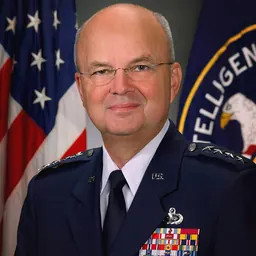
Perceptions of Kayani as COAS When he became COAS, several top-level US officials visited General Kayani in succession to make up their own minds about him. Most, including the then CIA chief Michael Hayden, National Intelligence Director Mike McConnell and former CENTCOM-commander Admiral William J. Fallon came away confident that Kayani "knows what he's doing."
Kayani's first move as army chief was to visit the front lines in the Federally Administered Tribal Areas (FATA). He launched several successful operations against the TTP and its affiliates. All major kinetic operations, except the operation in North Waziristan, were conducted under command of Gen Kayani. He used to frequently visit the frontlines and was always easily accessible.
War in Afghanistan and the United States Gen. Kayani and Gen. Stanley A. McChrystal (Commander of NATO ISAF and US Forces Afghanistan) during 29th Tripartite Commission meeting. About the Afghan war, Kayani is reported to have said, "the Pakistani people believe that the real aim of U.S. [war] strategy is to denuclearize Pakistan." 24 April 2013, John Kerry bids farewell to Gen. Kayani in Brussels, Belgium.
In January 2011, and after, there was criticism of General Kayani's handling of the Raymond Davis saga. Davis, a CIA contractor, was hastily tried and acquitted of murder charges in exchange for blood money paid to relatives of the victims, after which he was sent out of Pakistan within a matter of hours. Knowing the dynamics of the Pakistani state and the nature of this particular case, it was impossible for Davis to be released and deported from Pakistan without the knowledge and co-operation of Pakistan's Army and the Inter-Services Intelligence (ISI).
The day after Davis' release, over 40 people were killed in the Datta Khel airstrike in North Waziristan in the FATA, in a drone strike by a US Predator aircraft. The target appeared to be a compound operated by Hafiz Gul Bahadur, a Tehrik-i-Taliban leader. The dead included local tribal leaders. The strike, intended to further the local war effort, instead added to the unpopularity of drone strikes and added to the anti-American sentiment in Pakistan. Kayani conducted a rare press conference in which he condemned the drone strike (even persuading the Pakistani government to summon American Ambassador to Pakistan, Cameron Munter, and lodge a "protest in the strongest possible terms") and labelled it "intolerable". In 2011, after delivering a long lecture at the National Defence University, one staff officer reportedly got up and challenged his policy of co-operation with the United States. The officer asked, "If they don't trust us, how can we trust them?" according to one professor who was briefed on the session.
Retirement
In 2013, General Kayani was in the race for the chairmanship of joint chiefs of staff committee along with Admiral Asif Sandila and Air Chief Marshal Tahir Rafiq; though he was shortlisted for the appointment, on 6 October 2013, General Kayani announced that he would be retiring, his due date of retirement in November, ending speculation that he might get another extension or would be appointed as Chairman Joint Chief of staff Committee.
His retirement was confirmed when Prime Minister Nawaz Sharif approved then-Lieutenant General Raheel Sharif as chief of army staff and Lieutenant General Rashid Mehmood as Chairman Joint chiefs on 27 November 2013.
Awards and decorations
Nishan-e-Imtiaz (Military)
(Order of Excellence)Hilal-e-Imtiaz (Civilian)
(Crescent of Excellence)
(2004)Hilal-e-Imtiaz (Military)
(Crescent of Excellence)Tamgha-e-Diffa (General Service Medal)
Siachen Glacier ClaspSitara-e-Harb 1971 War (War Star 1971)Tamgha-e-Jang 1971 War (War Medal 1971)Tamgha-e-Baqa (Nuclear Test Medal)
1998Tamgha-e-Istaqlal Pakistan (Escalation with India Medal)
Wiladat-e-Quaid-e-Azam
(100th Birth Anniversary of
Muhammad Ali Jinnah)
1976Hijri Tamgha (Hijri Medal)
1979Jamhuriat Tamgha (Democracy Medal)
1988Qarardad-e-Pakistan Tamgha (Resolution Day
Golden Jubilee Medal)
1990Tamgha-e-Salgirah Pakistan (Independence Day
Golden Jubilee Medal)
1997Command & Staff College Quetta
Instructor's MedalTurkish Legion of Merit (Turkey)Order of King Abdul Aziz (Saudi Arabia)The Legion of Merit (Degree of Commander)
(United States)
2009Legion of Honour
(France)
2009Order of Military Merit (Spain)
2011Order Of Glory (Tajikistan) 2013
Foreign decorations Foreign AwardsTurkish Legion of Merit Order of King Abdul Aziz (Class I)The Legion of Merit (Degree of Commander) Légion d'honneurOrder of Military Merit Order of Glory (Tajikistan)
Don’t just read it —
keep it.
Full-length biographies made to live with: read them, listen on the way to work, watch them tonight.
- E-book
- Audio
- Video
Instant download · yours to keep · every purchase keeps this site free
Important facts
People in Ashfaq Parvez Kayani's life
Named in this biography and alive at the same time





Related people
Same field, nearest in time



Contemporaries
People whose lives overlapped Ashfaq Parvez Kayani's



Frequently asked questions
Who is Ashfaq Parvez Kayani?
Pakistani general
When was Ashfaq Parvez Kayani born?
Ashfaq Parvez Kayani was born on 20 April 1952 in Jhelum.
What is Ashfaq Parvez Kayani's occupation?
Ashfaq Parvez Kayani is a politician.
What nationality is Ashfaq Parvez Kayani?
Ashfaq Parvez Kayani is Pakistani.
Sources & further reading
· Wikipedia: Ashfaq Parvez Kayani
· DBpedia: Ashfaq Parvez Kayani
Cite this page
APA: Biography.guide. (2026). Ashfaq Parvez Kayani. https://biography.guide/ashfaq-parvez-kayani/
MLA: "Ashfaq Parvez Kayani." Biography.guide, https://biography.guide/ashfaq-parvez-kayani/.
Chicago: "Ashfaq Parvez Kayani." Biography.guide. https://biography.guide/ashfaq-parvez-kayani/.
Data last updated: 2026-09-20 · Spot an error? Report a correction.
Page generated 2026-09-27 05:32 UTC