
About Asahel Nettleton
Lived 1783 – 1844 (aged 61). Asahel Nettleton was an American theologian, writer, christian minister and parson.
Asahel Nettleton (April 21, 1783 – May 16, 1844) was an American theologian and Evangelist from Connecticut who was highly influential during the Second Great Awakening. The number of people converted to Christianity as a result of his ministry was estimated by one biographer at 30,000. He participated in the New Lebanon Conference in 1827, during which he and Lyman Beecher opposed the teachings of Charles Grandison Finney.
Early years Nettleton was born 1783 into a farming family in Connecticut. During his early years, he occasionally experienced religious impressions. "One evening while standing alone in a field, he watched the sun go down. The approaching night reminded him that his own life would some day fade into the darkness of the world beyond. He suddenly realized that he, like all other people, would die." These impressions were only temporary.
In the autumn of 1800 Nettleton came under powerful conviction of sin. This conviction deepened as he began to read the writings and sermons of Jonathan Edwards, but yet he remained unconverted. It was in 1801 that a revival came to North Killingworth, and by December of that year, 32 new converts were added to the Church; by March 1802 "the congregation had been swelled by ninety-one professions." Among them was Nettleton, who, becoming "exceedingly interested" in mission societies, soon had "a strong desire to become a missionary to the heathen."
He attended Yale College from 1805 until his graduation in 1809 and was ordained to the ministry in 1811.
Career
Nettleton led many Congregationalist revivals in New England in the first decade of his ministry. Operating in contrast to many modern evangelists, he would often move into a community for several weeks or months and study the spiritual condition of the people before attempting any revival work. His preaching was said to be largely doctrinal but always practical. Nettleton often filled the pulpits of churches where there was no pastor present. This allowed him to engage in pastoral care for the people. This practice is typically absent in modern evangelists' ministries. He also refused to preach in any community where he had not been invited. He witnessed early in ministry the problems that can result from a pastor who feels as though he is competing with an evangelist. He also would sometimes refuse to preach in a church if he believed the request was not sincere. He rejected the idea that he was the cause of any revival and shunned those who looked to him rather than God to bring revival to their community.
During these early days of his career, in 1813, he is believed to have written the music for the gospel song eventually to be called "I'm a Soldier Bound for Glory" (music by Asahel Nettleton 1813, words by William R. Phillips 1922), a hymn in the Songbook of the Salvation Army.
Beginning in 1821, and frequently for the remainder of his life, health problems limited Nettleton's travels and ministry. During one of those periods he compiled and edited "Village Hymns for Social Worship," a popular hymnal in New England for many decades.
In 1826, he became alarmed by the "new measures" being employed by many Presbyterian ministers in western New York state, especially by Charles Grandison Finney. Nettleton's theology was distinctly Reformed. He believed that salvation was a work of God alone and therefore rejected Finney's practice of giving altar calls during church services and revival meetings. The introduction of the altar call, Nettleton believed, exemplified a denial of the doctrines of original sin and total depravity.
Legacy
Nettleton mentored many young ministers, including James Brainerd Taylor (1801–1829), the Connecticut-born Second Great Awakening evangelist and primary founder of Princeton University's Philadelphian Society of Nassau Hall (1825–1930, spiritual parent of the Princeton Christian Fellowship).
Although the means and theology of Charles Grandison Finney were to have a greater impact on the history of American evangelism, Bennet Tyler wrote of the effects of revivals of which Nettleton was the instrument: (1) Re-established Calvinism. Calvinism seen as thoroughly evangelical. (2) Impact on society: revivals had a good name. (3) “Fruits of these revivals were permanent. They were not temporary excitements. . .”; “there were but few apostasies.”
Another historian has written of the effects of the Second Great Awakening as a whole (although not specifically of Nettleton): "Could Thomas Paine, the free-thinking pamphleteer of the American and French Revolutions, have visited Broadway in 1865, he would have been amazed to find that the nation conceived in rational liberty was 'in the grip of' the power of evangelical faith. The emancipating glory of the great awakenings had made Christian liberty, Christian equality and Christian fraternity the passion of the land. The treasured gospel…passed into the hands of the baptized many. Common grace, not common sense, was the keynote of the age… Religious doctrines which Paine, in his book The Age of Reason, had discarded as the “tattered vestment” of the past, became the wedding garment of many."
Don’t just read it —
keep it.
Full-length biographies made to live with: read them, listen on the way to work, watch them tonight.
- E-book
- Audio
- Video
Instant download · yours to keep · every purchase keeps this site free
Important facts
People in Asahel Nettleton's life
Named in this biography and alive at the same time
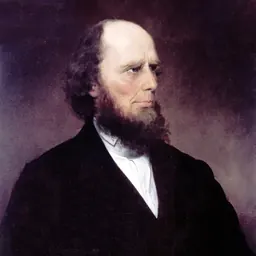
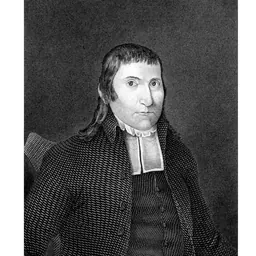


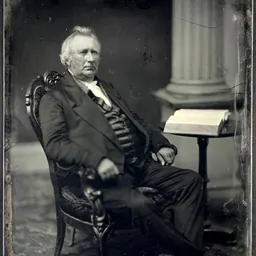

Related people
Same field, nearest in time
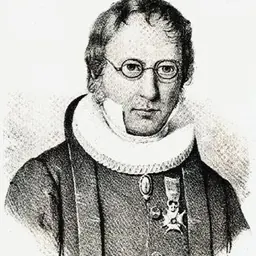




Contemporaries
People whose lives overlapped Asahel Nettleton's

Frequently asked questions
Who was Asahel Nettleton?
American theologian (1783-1844)
When was Asahel Nettleton born?
Asahel Nettleton was born on 21 April 1783 in Connecticut.
When did Asahel Nettleton die?
Asahel Nettleton died on 16 May 1844 in Windsor.
What was Asahel Nettleton's occupation?
Asahel Nettleton was a theologian, writer, christian minister and parson.
What nationality was Asahel Nettleton?
Asahel Nettleton was American.
Sources & further reading
Cite this page
APA: Biography.guide. (2026). Asahel Nettleton. https://biography.guide/asahel-nettleton/
MLA: "Asahel Nettleton." Biography.guide, https://biography.guide/asahel-nettleton/.
Chicago: "Asahel Nettleton." Biography.guide. https://biography.guide/asahel-nettleton/.
Data last updated: 2026-09-20 · Spot an error? Report a correction.
Page generated 2026-09-27 05:33 UTC