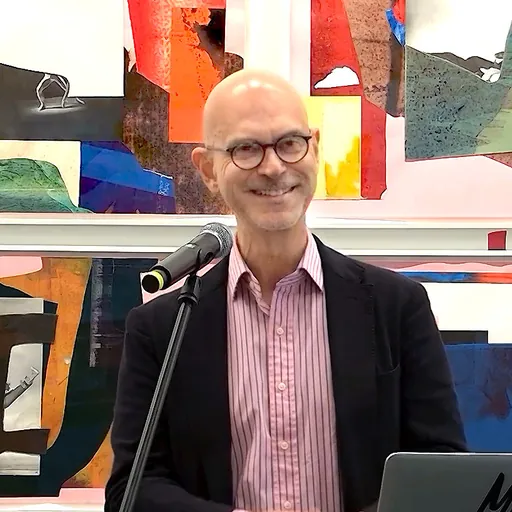
About Arturo Herrera
Born 1959. Arturo Herrera is a Venezuelan painter, sculptor, draftsperson, photographer, collagist and artist.
Arturo Herrera, Untitled, mixed media and collage on paper, 50,4 x 39,6 cm, 2020. Arturo Herrera (b. 1959) is a Venezuelan-born, Berlin-based visual artist known for wide-ranging work that is rooted in the practice of collage. His colorful, often rhythmic art intertwines bits of pop iconography, gestural marks, and nonrepresentational shapes using pictorial strategies of fragmentation, repetition, effacement, and dislocation. The resulting imagery often balances between abstraction and figuration (often barely legible), detached from inherent narratives yet vaguely familiar. Critics suggest that this ambiguity engages memory, fantasy and a viewer's unconscious private interpretive schemes, evoking a multiplicity of references and readings. In 2020, Art in America writer Ara H. Merjian described Herrera's practice—which includes works on paper, paintings, reliefs, sculpture, public art and books—as "chameleonic as [it] is consistent," one that "breathes life into modernist collage, exploring the tensions between exactitude and spontaneity, placement and displacement." Whitney Museum, Castello di Rivoli Museum of Contemporary Art, Centre d'Art Contemporain Genève, Kunsthalle Bielefeld, Hammer Museum, and MoMA PS1. He has been recognized with Guggenheim and DAAD (German Academic Exchange Service) fellowships the Metropolitan Museum of Art, Tate, Museum of Contemporary Art, Los Angeles and Museo Reina Sofia (Madrid).
Education and career Herrera was born in 1959 in Caracas, Venezuela and came to the US in 1978. He studied art at the University of Tulsa, producing paintings that mixed abstraction and representation and earning a BFA in 1982. After graduating, he traveled in Europe before moving to New York, where he began collecting coloring books, comics and illustrated fairy tales as "encyclopedias" of imagery that he cut into scraps of biomorphic forms to be collaged. and surveys at the Drawing Center, MoMA PS1 and Walker Art Center. In 1997, he relocated to New York. The Aldrich Contemporary Art Museum (2007), Haus Am Waldsee (2010), Tate Modern (2016), and Ruby City (2022), among others. Thomas Dane (London), and Carlier I Gebauer (Berlin). He has lived in Berlin since 2003.
Work and reception Herrera has produced a diverse body of work in terms of medium and materials, but is best known for his mixed-media collages and works on paper, felt sculptures and site-specific wall paintings. Art historian Carolyn Christov-Bakargiev has characterized Herrera's method as reaching back through 1980s appropriation art and 1950s–1960s Pop art to the earlier 20th-century languages of surrealism, lyrical abstraction and cubist collage.
In later series—among them the "Keep in Touch" (2004), "Boy and Dwarf" (2006–7), "Trigger" (2009) and "An Evening with C.W." (2012)—Herrera borrowed more widely from the legacies of abstraction and modern dance, superimposing shapes, squiggles and dense color fields that recalled work by John Baldessari, Brice Marden, Robert Motherwell and Jackson Pollock onto cartoon and other found imagery. The seventy-five large, closely hung "Boy and Dwarf" collages presented a dialectical experience of containment and exploration, suggesting both portals and a tangled "forest" of painted, sprayed, stenciled and pasted-on color. Each was based on a central, human-sized cartoon character whose image was largely obliterated by layers of decorative wallpaper, screenprinting and gestural painting; they were derived from two children's book images which generated twenty abstract line drawings by Herrera that he further altered by chance and systematic processes. In the decade that followed, he presented them in exhibitions of diverse works that played off one another and against conventional expectations with humor, biomorphic suggestion and an off-balance conceptualism. His exhibition at the Renaissance Society (1998) was characteristic. It featured two vibrant wall paintings, a textured curving slab of particleboard painted white to match the wall, a floor sculpture of twisting hose-like strands, and relief-like plaster heads of Jiminy Cricket and Pluto mounted through walls so their interior cavities and exteriors were exposed. They include Adam (Linda Pace Foundation, 2013); Come again (Gladstone Gallery, 2015); Half-Time (Tate Modern, 2016); and the 6,500--square-foot, outdoor wrap-around work, Wall Painting for Austin (2022).
Arturo Herrera, Each Other, wool felt, 213 x 111 cm, 2002. Linda Pace Foundation Collection. Herrera's large felt sculptures—first produced in 1998—suggested tactile, emblems of "heroic" Abstract Expressionist paintings with incised shapes resembling drips and splatters, while simultaneously deflating that movement with a pinned, slightly sagging appearance implying a fall from grace. In more cryptic felt works, large, solid forms obscured gestural areas, evoking themes of concealment and absence (At Your Side, 2001). Art Institute of Chicago, Blanton Museum of Art, Carnegie Museum of Art, Colección Patricia Phelps de Cisneros (Caracas), Hammer Museum, Metropolitan Museum of Art, Museum of Contemporary Art, Los Angeles, National Gallery of Canada, Norton Museum of Art, Pérez Art Museum Miami, San Francisco Museum of Modern Art, Staatliche Museen zu Berlin, Tate, and Whitney Museum,
Herrera has been awarded fellowships from the John S. Guggenheim Foundation (2005), Artpace (1998) He has received grants from the Foundation for Contemporary Arts (2005), Elizabeth Foundation for the Arts (1999), Pollock-Krasner Foundation (1998), Louis Comfort Tiffany Foundation (1997), Marie Walsh Sharpe Art Foundation (1997), Art Matters (1996) and the Chicago Department of Cultural Affairs (1995).
Don’t just read it —
keep it.
Full-length biographies made to live with: read them, listen on the way to work, watch them tonight.
- E-book
- Audio
- Video
Instant download · yours to keep · every purchase keeps this site free
Important facts
People in Arturo Herrera's life
Named in this biography and alive at the same time


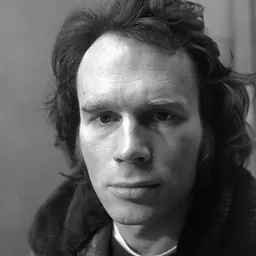





Related people
Same field, nearest in time
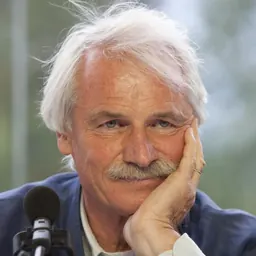


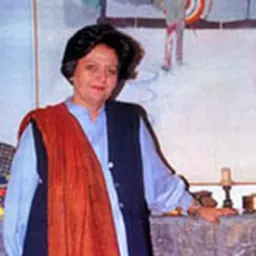
Contemporaries
People whose lives overlapped Arturo Herrera's



Frequently asked questions
Who is Arturo Herrera?
Venezuelan artist (born 1959)
When was Arturo Herrera born?
Arturo Herrera was born in 1959 in Caracas.
What is Arturo Herrera's occupation?
Arturo Herrera is a painter, sculptor, draftsperson, photographer, collagist and artist.
What nationality is Arturo Herrera?
Arturo Herrera is Venezuelan.
Sources & further reading
· DBpedia: Arturo Herrera (artist)
Cite this page
APA: Biography.guide. (2026). Arturo Herrera. https://biography.guide/arturo-herrera/
MLA: "Arturo Herrera." Biography.guide, https://biography.guide/arturo-herrera/.
Chicago: "Arturo Herrera." Biography.guide. https://biography.guide/arturo-herrera/.
Data last updated: 2026-09-21 · Spot an error? Report a correction.
Portrait: Wikimedia Commons · author & licence
Page generated 2026-09-27 04:59 UTC