
About Arthur William Wakefield
Lived 1876 – 1949 (aged 72). Arthur William Wakefield was a physician.
Arthur William Wakefield, MA, MBBCh, MD (Cantab), MRCS, MRCP (13 April 1876 – 22 February 1949) was an English physician, explorer, and mountaineer. He is most famous for serving as the physician and climber during the 1922 British Mount Everest Expedition and was awarded an Olympic Gold Medal by Pierre de Coubertin for his achievements in mountaineering (Alpinism) in 1924 as part of the team.
Early life
Arthur Wakefield was the son of William Henry Wakefield (1825-1893), President of the Wakefield Bank in Kendal. He was educated at Sedbergh School where he was Captain of the football team and then Trinity College, Cambridge where he got a half-Blue in cycling, rowed head of the river, and boxed at middleweight against Oxford. Unlike both of his nephews, Sir Wavell Wakefield and Roger Cuthbert Wakefield, who went on to play professional rugby, Arthur Wakefield graduated with a Master of Arts (M.A.)
He chose to study medicine and in 1904 he took his M.R.C.P. – M.R.C.S. (London). As a resident at the Royal London Hospital, he won the heavy-weight boxing championships of the United Hospitals, before becoming captain of their swim team in 1906. In 1904, Wakefield set his first fell walking record covering 11 fells in 19 hours and 53 minutes, reaching a height of 16,000 feet over 64 miles. He improved upon this in 1905 covering 21 fells in 22 hours and 7 minutes, reaching a height of over . That record stood until 1920.
War years
Arthur Wakefield was one of the first Sharpshooters, joining the 70 Company, 18 Battalion, Imperial Yeomanry during the Second Boer War. This Battalion, designated as "Sharpshooters", was raised on 7 March 1900 by the Earl of Dunraven. Each volunteer had to prove their skill with a rifle and their horsemanship. The battalion was formally inspected by the Prince of Wales outside Chelsea Barracks on 29 March 1900. Wakefield arrived in South Africa in April 1900 and travelled to Rhodesia (now Zimbabwe) as part of a force intending to threaten the Boer Republics from the North. His battalion later entered the Orange Free State dealing with what would become a guerrilla war. In 1905, he took his MBBCh, and in 1909, his MD (Cantab).
Still in the early days of World War I, Wakefield requested a transfer on 17 August 1915 to the Royal Army Medical Corps (RAMC) where he was attached to the 29th Casualty Clearing Station during the Battle of the Somme. The National Army Museum called the 1916 Somme offensive one of the largest and bloodiest battles, with 57,000 casualties on 1 July, the opening day of the attack.
On 23 Jan 1917, Wakefield passed the required examination and was promoted to Captain. He transferred to the Canadian Army Medical Corp (CAMC), and began serving on a series of hospital ships, beginning with HMHS Letitia. This ship ran aground and sank on 17 September 1917, during which Wakefield was commended for exceptional service in transferring the wounded. The CAMC staff previously allocated to HMHS Letitia proceeded to take over the hospital on HMHS Araguyaya.
In February 1918, Wakefield left the hospital ships, joining the No. 2 Canadian Stationary Canadian hospital in France. In March 1918, Wakefield was brought to the notice of the Secretary of State for War for valuable services rendered. After the war, Wakefield became a surgeon to the Canadian Pacific Railway. This expedition included George Mallory, Henry Morshead, Geoffrey Bruce, and Howard Somervell. Wakefield reached the North Col to attend to his fellow climbers, who achieved a height record in mountaineering. Wakefield's diary from the 1922 Everest expedition is held by his family.
This expedition included George Mallory, Henry Morshead, Geoffrey Bruce, and Howard Somervell. Wakefield reached the North Col to attend to his fellow climbers, who achieved a height record in mountaineering. On 5 February 1924, at the closing ceremony of the inaugural Winter Olympics, hosted in Chamonix, France, Pierre de Coubertin presented 13 gold medals for alpinism in recognition of the achievements of the 1922 British Mount Everest expedition members. The medals were accepted by Lt Col Edward Strutt, deputy leader of the expedition. Wakefield later served as President of the Fell & Rock Climbing Club from 1923–25 and became the Club's first life member.
Decorations
Queen's South Africa Medal with four clasps The 1914-15 Star The British War Medal Victory Medal (United Kingdom)
Don’t just read it —
keep it.
Full-length biographies made to live with: read them, listen on the way to work, watch them tonight.
- E-book
- Audio
- Video
Instant download · yours to keep · every purchase keeps this site free
Important facts
People in Arthur William Wakefield's life
Named in this biography and alive at the same time
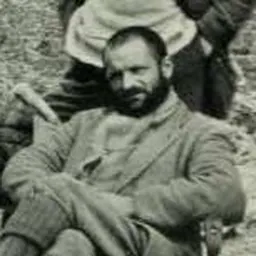

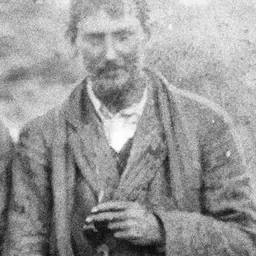

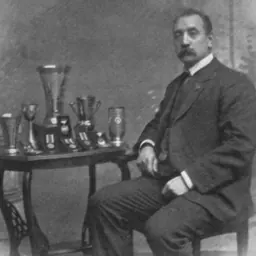


Related people
Same field, nearest in time

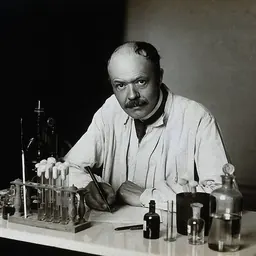



Contemporaries
People whose lives overlapped Arthur William Wakefield's
Frequently asked questions
Who was Arthur William Wakefield?
British alpinist (1876-1949)
When was Arthur William Wakefield born?
Arthur William Wakefield was born on 13 April 1876.
When did Arthur William Wakefield die?
Arthur William Wakefield died on 23 February 1949.
What was Arthur William Wakefield's occupation?
Arthur William Wakefield was a physician.
Sources & further reading
· Wikipedia: Arthur William Wakefield
· DBpedia: Arthur Wakefield (physician)
Cite this page
APA: Biography.guide. (2026). Arthur William Wakefield. https://biography.guide/arthur-william-wakefield/
MLA: "Arthur William Wakefield." Biography.guide, https://biography.guide/arthur-william-wakefield/.
Chicago: "Arthur William Wakefield." Biography.guide. https://biography.guide/arthur-william-wakefield/.
Data last updated: 2026-09-20 · Spot an error? Report a correction.
Page generated 2026-09-27 05:26 UTC