
Arthur von Oettingen
Baltic German physicist and music theorist
About Arthur von Oettingen
Lived 1836 – 1920 (aged 84). Arthur von Oettingen was a German and Russian physicist, musicologist, music theorist, professor, meteorologist and astronomer, known for Millioctave.
Arthur Joachim von Oettingen ( – 5 September 1920) was a Baltic German physicist and music theorist. He was the brother of theologian Alexander von Oettingen (1827–1905) and ophthalmologist Georg von Oettingen (1824–1916).
Biography He studied astronomy and physics at the Imperial University of Dorpat, and furthered his education of physics in Paris in the laboratories of Antoine César Becquerel (1788–1878) and Henri Victor Régnault (1810–1878), and afterwards at Berlin in the laboratories of Heinrich Gustav Magnus (1802–1870), Johann Christian Poggendorff (1796–1877) and Heinrich Wilhelm Dove (1803–1879).
In 1868 he became a professor at Dorpat, where he founded a meteorological observatory. In 1893 he moved to the University of Leipzig, where he remained until 1919 as a teacher and honorary professor. In 1898 and 1904 he published the third and fourth volumes of Poggendorff's Biographisch-Literarisches Handwörterbuch der exakten Naturwissenschaften.
Oettingen was a primary advocate of a theory of acoustical relationships known as "harmonic dualism". This concept was later expanded and elaborated on by musicologist Hugo Riemann (1849–1919). Oettingen is also credited for introducing a measurement of musical interval known as the millioctave. He later created a musical instrument, the Orthotonophonium - a pump organ using 72 notes per octave, to further advocate harmonic dualism.
Selected works Harmoniesystem in dualer Entwicklung, Dorpat 1866. Meteorologische Beobachtungen angestellt in Dorpat im Jahre ..., Dorpat 1868–1877. Über den mathematischen Unterricht in der Schule, Dorpat 1873. Elemente des geometrisch-perspektivischen Zeichnens, Leipzig 1901.
Don’t just read it —
keep it.
Full-length biographies made to live with: read them, listen on the way to work, watch them tonight.
- E-book
- Audio
- Video
Instant download · yours to keep · every purchase keeps this site free
Important facts
People in Arthur von Oettingen's life
Named in this biography and alive at the same time

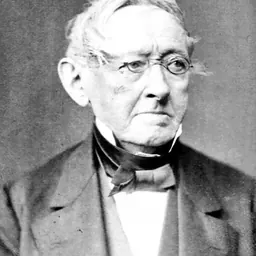
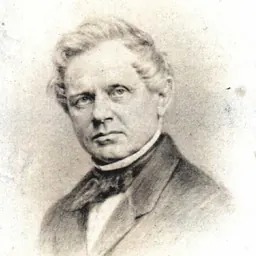
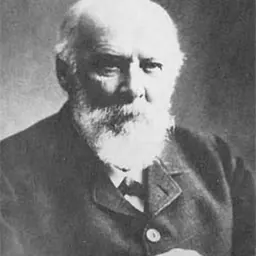
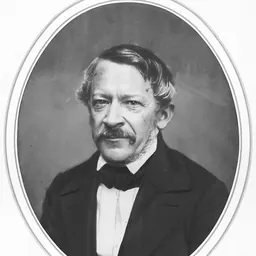
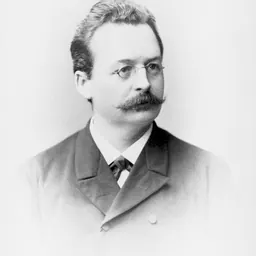
Related people
Same field, nearest in time



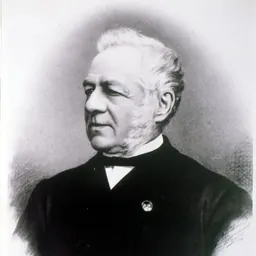
Contemporaries
People whose lives overlapped Arthur von Oettingen's





Frequently asked questions
Who was Arthur von Oettingen?
Baltic German physicist and music theorist (1836–1920)
When was Arthur von Oettingen born?
Arthur von Oettingen was born on 28 March 1836 in Tartu.
When did Arthur von Oettingen die?
Arthur von Oettingen died on 5 September 1920 in Bensheim.
What was Arthur von Oettingen's occupation?
Arthur von Oettingen was a physicist, musicologist, music theorist, professor, meteorologist and astronomer.
What was Arthur von Oettingen known for?
Arthur von Oettingen was known for Millioctave.
What nationality was Arthur von Oettingen?
Arthur von Oettingen was German and Russian.
Sources & further reading
· Wikipedia: Arthur von Oettingen
· DBpedia: Arthur von Oettingen
Cite this page
APA: Biography.guide. (2026). Arthur von Oettingen. https://biography.guide/arthur-von-oettingen/
MLA: "Arthur von Oettingen." Biography.guide, https://biography.guide/arthur-von-oettingen/.
Chicago: "Arthur von Oettingen." Biography.guide. https://biography.guide/arthur-von-oettingen/.
Data last updated: 2026-09-20 · Spot an error? Report a correction.
Page generated 2026-09-27 05:20 UTC