
About Arthur Reade
Lived 1902 – 1971 (aged 68–69). Arthur Reade was a British barrister and military officer.
Arthur Reade in the mountains of Crete in 1943. 4 miles from the nearest village of Kares that sits 2,000 feet below
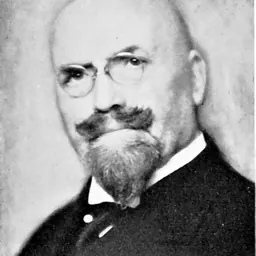
Arthur Essex Edgeworth Reade (22 January 1902 – 12 December 1971) was a British barrister, Special Operations Executive officer and labour movement activist, whose affiliations ranged from Trotskyism to the National Labour Organisation. He is the father of Assyriologist Julian Reade, Illustrator Patrick Reade and son of merchant banker Essex Reade and Author Sheelah Ruggles-Brise
Early life Born in the Piccadilly area of London to Essex Reade and Sheelah Maud Emily Chichester, Reade was educated at Gibbs Preparatory School, Stonehouse Preparatory School, and Eton College, where his politics were influenced by the Earl De La Warr. In 1919/20, he attended the University of Strasbourg, then briefly became a journalist, working for the Daily Mail. He returned to the UK, studying history at Worcester College, Oxford, where he was active in the Labour Club and the Socialist Society, and edited The New Oxford journal.
Political career In 1921, Reade joined the Communist Party of Great Britain (CPGB), and he launched The Free Oxford, an influential communist journal. Contributors to Free Oxford included Edward Carpenter, Louis Golding, A. E. Coppard, Edgell Rickword and Richard Hughes. Reade received widespread sympathy in the press, but was not readmitted, and focused on journalism, especially for the Workers' Weekly and Labour Monthly, working closely with Rajani Palme Dutt. In 1924, he became business manager of the Labour Monthly, and also served on the London District Committee of the CPGB.
In November 1942 he was sent on a mission with fellow SOE agent with Xan Fielding to blow up HMS York which was lying partly submerged in Suda Bay before the Germans could relaunch it. The mission was considered suicidal and he was only supplied with faulty explosives, so the mission was aborted, and he was extracted in May 1943. Reade was sent back to England, but cleared of any errors, and instead promoted to major.
For his wartime service Reade was appointed to the Distinguished Service Order and awarded the Military Cross. In January 1947 he was admitted as a Serving Brother of the Order of St John.
Post-war career After the war, Reade worked in Germany translating the German Penal Code into English and once that was finished he worked for the War Crimes Commission in Germany, concentrating on war crimes committed in Northeast Europe. In 1950, he then became a resident magistrate in Kenya, moving to Cyprus in 1953 where he was the island's only English- and Greek-speaking lawyer. He retired in 1963, moving to Jersey, and died eight years later.
Don’t just read it —
keep it.
Full-length biographies made to live with: read them, listen on the way to work, watch them tonight.
- E-book
- Audio
- Video
Instant download · yours to keep · every purchase keeps this site free
Important facts
People in Arthur Reade's life
Named in this biography and alive at the same time





Related people
Same field, nearest in time



Contemporaries
People whose lives overlapped Arthur Reade's


Frequently asked questions
Who was Arthur Reade?
British SOE agent, Barrister and labour activist
When was Arthur Reade born?
Arthur Reade was born in 1902.
When did Arthur Reade die?
Arthur Reade died on 12 December 1971.
What was Arthur Reade's occupation?
Arthur Reade was a barrister and military officer.
What nationality was Arthur Reade?
Arthur Reade was British.
Sources & further reading
Cite this page
APA: Biography.guide. (2026). Arthur Reade. https://biography.guide/arthur-reade/
MLA: "Arthur Reade." Biography.guide, https://biography.guide/arthur-reade/.
Chicago: "Arthur Reade." Biography.guide. https://biography.guide/arthur-reade/.
Data last updated: 2026-09-20 · Spot an error? Report a correction.
Page generated 2026-09-27 05:28 UTC