
About Arthur Melbourne-Cooper
Lived 1874 – 1961 (aged 87). Arthur Melbourne-Cooper was a British filmmaker, cinematographer, animator, film director, screenwriter and director.
Arthur Melbourne Cooper (15 April 1874 – 28 November 1961) was a British photographer and early filmmaker best known for his pioneering work in stop-motion animation. He produced over three hundred films between 1896 and 1915, of which an estimated 36 were all or in part animated. These include Dreams of Toyland and according to some sources Dolly’s Toys (1901), as well as Matches: An Appeal (date disputed), which Dutch independent researcher Tjitte de Vries has claimed may have been the first animated film to be shown in public.
Since his death, Cooper has become a controversial figure among film historians, with disputes arising over his professional relationship with film pioneer Birt Acres; seven films known as the GRG-Series, which archives such as the BFI's currently credit to Brighton-based filmmaker George Albert Smith; and the re-dating of the aforementioned Matches: An Appeal, which archives such as the BFI's currently date to 1914. and in response to the book on Cooper published in 2009 by de Vries.
Biography
Early life and career
Born in St Albans, Cooper was the son of a local photographer Thomas M. Cooper, who educated him from very early on in his profession. By the age of 16, he was working as an assistant at his father's shop on New London Road, St Albans. He claimed to have gone to work for film pioneer Birt Acres in 1892, at the age of 18; this claim has however been disputed as Acres himself was working for Elliot and Sons up until 1895 and is felt unlikely to have hired an assistant before this time.
By 1908 Cooper had established the Alpha Production Works in St Albans.
Alpha Picture House On 27 July 1908, Cooper opened Hertfordshire's first permanent cinema, the Alpha Picture House, on London Road. The building designed by Percival Blow contained a restaurant, swimming pool and hairdressing salon as well as the 800 seat cinema, which has been described as the first cinema as we know them today. The cinema failed inspection following the passing of the 1910 Cinematograph Act, and was sold through liquidation to George Arthur Dawson the following year. The cinema continued to run as the Poly until 1926 and was destroyed by fire the following year. A new cinema was built on the London Road site, which continued in operation until the 1990s.
In February 1909, he visited Paris where he had been once or twice before on business, but this time to represent his Alpha Trading Company at the first international film congress, the Congrès International des Éditeurs du Film, in order to secure the rights of film producers. In the same year, encouraged by the success of his new cinema in St Albans, he opened a second Picture Palace in Letchworth. This was not a success in a town populated by church-going people who disliked the moving pictures. Two fires in the cinema got Cooper into serious financial difficulties.
Kinema Industries Ltd After twelve years, Cooper folded up his businesses in St Albans and, with his wife and young children, he moved to Manor Park, Lee. During the day he made here a series of surprising puppet animation pictures for Butcher's Empire Films, which had its studios at the back of his garden. One of his most beautiful animation films was Cinderella (1912), which was distributed in hand-coloured versions. In the evenings Cooper, for a while, became manager of a new cinema in Harrow, paying his debts in St Albans.
With his assets of the Alpha Trading Company and capital of a semi-retired officer, Andrew Heron, Cooper established Heron Films Ltd., a company which set out to produce longer films, comedies and dramas, with the theatrical company of Mark Melford, a well-known actor in those days. Cooper also established Kinema Industries Ltd, for which he made several documentaries and newsreels, among which the notorious The Suffragette Derby of 1913 at Epsom, in which suffragette Emily Davison can be seen being trampled to death by the King's racing horse. It was filmed by Cooper with his camera at the finish and his brother Hubert at Tattenham Corner.
Both companies were wound up at the outbreak of the First World War when Andrew Heron reported himself for active service. Cooper became munition inspector in Luton, while the family lived nearby in Dunstable.
After the First World War, Cooper and his family moved to Blackpool where he became manager of Animads, a subdivision of Langford's Advertising Agency Ltd. He made a number of animated advertisements films. Among them: Cadbury's chocolates, Paddy Whiskey, Swiss Rolls, and Clean Milk Campaign.
Later life and death Melbourne-Cooper retired in 1940 and moved to Coton, Cambridgeshire, where he died in 1961; he is buried in the cemetery of St Peter's Church, alongside his wife, who died in 1962.
Legacy In 1955, Audrey Wadowska, the daughter of Cooper, attended an exhibition on film history in London, where she saw stills from a series of films credited to Brighton-based film pioneer George Albert Smith, which she claimed contained members of her family and must therefore have been filmed by her father. Wadowska's campaigning, championed by Dutch researcher Tjitte de Vries, has resulted in the films being re-attributed to Cooper by New York's Museum of Modern Art Film Archive, but other archives, including the BFI National Film and Television Archive, have not done the same. and instead dates production to 1899; the significance of this is that it would predate any other known use of stop-motion animation techniques.
Filmography Date Title Credited as Notes Cinematographer Producer Writer Director 1901 Dolly’s Toys trick film. 1902 Village Church Scene Actuality. 1904 The Enchanted Toymaker Fiction. 1905 Macnab's Visit to London a.k.a. MacNab's Visit to London Comedy featuring Melbourne-Cooper. 1906 Motor Pirates Crime chase film. 1907 Irish Wives and English Husbands Film featuring Kate O'Connor. 1907 London to Killarney Phantom ride on the train across Ireland. 1908 Animated Matches Trick film featuring animated matches. 1908 (Disputed date listed as 1907 in some sources.) 1908 Grandpa's Pension Day Drama featuring an old man getting drunk, jailed and bailed. 1908 In the Land of Nod Trick film mixing live action and animation. 1909 Animated drama. 190? Policeman Beaten Comedy. 1910 (Disputed date listed as c.1905 in some sources.) 1911 Road Hogs in Toyland Animated comedy. 1912 Documentary assisted by The Racing Pigeon magazine. 1912 Documentary inside Henry Howell & Co. 1912 Animated film. 1914 (Disputed date listed as 1899 in some sources.) 1914 (Disputed date listed as 1899 in some sources.) 1914 (Disputed date listed as 1899 in some sources.)
Don’t just read it —
keep it.
Full-length biographies made to live with: read them, listen on the way to work, watch them tonight.
- E-book
- Audio
- Video
Instant download · yours to keep · every purchase keeps this site free
Important facts
People in Arthur Melbourne-Cooper's life
Named in this biography and alive at the same time
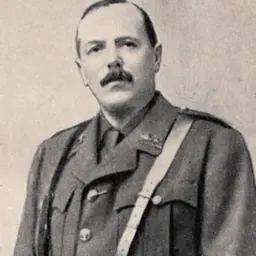
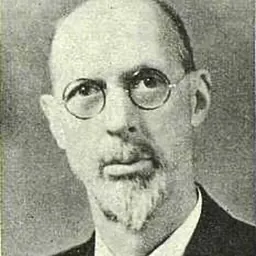
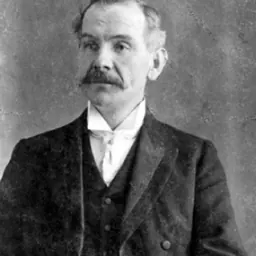





Related people
Same field, nearest in time

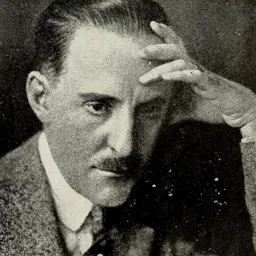

Contemporaries
People whose lives overlapped Arthur Melbourne-Cooper's

Frequently asked questions
Who was Arthur Melbourne-Cooper?
British filmmaker (1874–1961)
When was Arthur Melbourne-Cooper born?
Arthur Melbourne-Cooper was born on 15 April 1874 in St Albans.
When did Arthur Melbourne-Cooper die?
Arthur Melbourne-Cooper died on 28 November 1961 in Coton.
What was Arthur Melbourne-Cooper's occupation?
Arthur Melbourne-Cooper was a filmmaker, cinematographer, animator, film director, screenwriter and director.
What nationality was Arthur Melbourne-Cooper?
Arthur Melbourne-Cooper was British.
Sources & further reading
· Wikipedia: Arthur Melbourne-Cooper
· DBpedia: Arthur Melbourne-Cooper
Cite this page
APA: Biography.guide. (2026). Arthur Melbourne-Cooper. https://biography.guide/arthur-melbourne-cooper/
MLA: "Arthur Melbourne-Cooper." Biography.guide, https://biography.guide/arthur-melbourne-cooper/.
Chicago: "Arthur Melbourne-Cooper." Biography.guide. https://biography.guide/arthur-melbourne-cooper/.
Data last updated: 2026-09-20 · Spot an error? Report a correction.
Page generated 2026-09-27 05:28 UTC