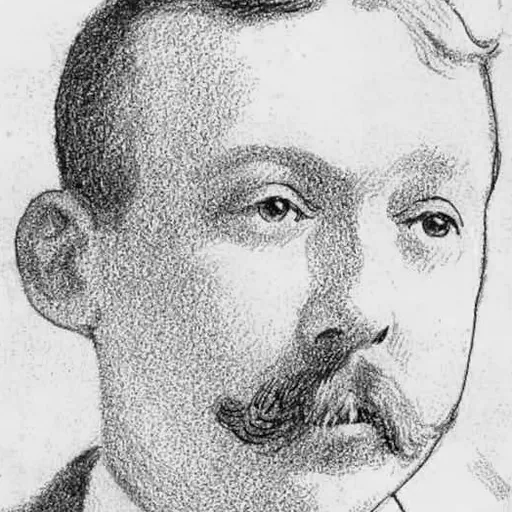
About Arthur Irwin
Lived 1858 – 1921 (aged 63). Arthur Irwin was a Canadian baseball player.
Arthur Albert Irwin (February 14, 1858 – July 16, 1921), nicknamed "Doc", "Sandy", "Cutrate" or "Foxy",
Baseball career
Playing days Irwin's major league career began when the Ruby Legs moved into the National League (NL) in 1880. He led the league in assists in his rookie season,
Irwin moved on to the recently formed Philadelphia Phillies in 1886 where he was named team captain during spring training. Tragedy struck the Philadelphia squad in 1888 when pitcher Charlie Ferguson developed typhoid fever, dying at Irwin's home.
During the 1889 season, Irwin went to the Washington Nationals for his first opportunity as player-manager, although the team folded at the end of the season. He next played for the Boston Reds in the Players' League in 1890. That same year, Irwin coached the baseball team at Dartmouth College. While Irwin served as a player-manager for Boston in 1890, he was able to focus on the managerial role for the team in 1891. That year the team signed his brother, John Irwin, on May 21. Newspapers brought accusations of nepotism and criticized John's mediocre play. John Irwin was released by Boston on July 16, and his major league playing career was over by the next month.
Early non-playing roles Irwin coached at the University of Pennsylvania between 1893 and 1895, and managed the Philadelphia major league club during those last two seasons.
In 1894, he angered Penn supporters when a talented first baseman named Goeckle nearly signed with Irwin's major league team just prior to a series of collegiate championship games. Nonetheless, by 1895, Irwin's coaching role at Penn included the selection of players and other duties that traditionally fell to the team captain. Irwin left Philadelphia in 1896 to manage the New York Giants. Relieved of his duties after one season in New York, he was subsequently recruited to manage in Milwaukee. However, he returned to coach the minor league team in his native Toronto instead.
Irwin coached Toronto during 1897 and 1898. He faced arrest on a libel charge in 1898, which stemmed from comments made by Irwin about the actions of the Philadelphia ownership during his time there. Though Irwin turned himself in, it appears that he was never arrested. In 1898, Irwin traded some of his best players to the Washington major league team. The moves were seen as particularly suspect when Irwin was named the Washington manager shortly thereafter. He returned for a subsequent term as Penn's coach in 1900, but he left in 1902. In August 1902, Irwin was signed as an NL umpire for the remainder of that season. Irwin, who had previously only filled in for one three-day umpiring stretch in 1881, umpired his first NL game on August 7, 1902. His last umpiring appearance came with the end of the 1902 season on October 3. In fifty games as an umpire, Irwin ejected nine players, including future Hall of Fame inductees Roger Bresnahan and Fred Clarke. Irwin, who had retained partial ownership of the Toronto club, then returned to manage that team for a couple of seasons. Even after entering baseball scouting, Irwin briefly managed the 1908 Washington club in the short-lived Union Professional League. The league was plagued by financial problems—including the inability to pay players at times—and it folded less than two months after play began. He was rehired to the Penn coaching staff in 1908.
Scouting
In the summer of 1907, Irwin became a scout for the New York Highlanders. In 1909, New York manager George Stallings rented an apartment overlooking Hilltop Park and sent Irwin up to steal signs from the opposing team. Using a system of binoculars and mirrors, Irwin read the signs and flashed them back to Stallings so they could be relayed to the batter. By 1912, almost the entire Highlanders roster had been scouted by Irwin. In a newspaper interview covering his scouting career, Irwin asserted that he preferred signing young prospects over expensive stars. "The chances are better with a young player, for by getting him early you can gradually break him into the style of play the team is using", he said. The poor relationship between Irwin and New York manager Frank Chance was a factor in the manager's 1914 resignation after two years of a three-year contract. The New York Times said that Chance "did not think it was possible to collect so many mediocre players on one major league club." Irwin remained with the Highlanders until Farrell sold the team to Jacob Ruppert and T.L. Huston. Upon the sale of the team, Irwin and several other Highlanders personnel submitted their resignations.
Later coaching career Irwin became part-owner of the Lewiston Cupids in 1915 and managed that club in the final season of the original New England League. The 1915 Cupids featured 16-year-old Cuban pitcher Oscar Tuero, who won 17 games in his third professional season. The team did not win the pennant that year, but the race came down to the final days of the season. Irwin and Christy Mathewson were considered for a coaching position at Harvard College that year, but former Highlanders catcher and professional scout Fred Mitchell was ultimately selected. In 1916, Irwin publicly accused Philadelphia's Connie Mack of underhanded dealings in obtaining third baseman Jim Ritter from Baltimore. He said that Mack convinced the New England League's Baltimore club to draft Ritter so that Mack could later obtain him cheaply. Mack was outraged at the accusations and immediately severed all connections with the player. Ritter never appeared in a major league game.
Irwin managed the Rochester Hustlers between 1918 and 1920. Rochester was not successful under Irwin; the 1920 Hustlers finished with 45 wins and 106 losses. Cray L. Remington of the Rochester Evening Journal later wrote, "Local fans used to pan Arthur Irwin in the old days when Arthur was as innocent of wrong as the little sparrows on the limbs. Arthur's job was to win ball games minus talent. He couldn't do it." While managing the Eastern League's Hartford Senators in 1921 against a New York semi-pro team, Irwin noticed the play of Lou Gehrig and convinced him to sign his first professional contract with Hartford. Gehrig had already committed to play at Columbia University and professional experience would affect his collegiate eligibility, so he began playing for Hartford using assumed names like Lou Lewis. However, Columbia found out about Gehrig's play and the slugger was forced to sit out of college baseball for a year.
Sports innovations
While playing with Providence in 1883, Irwin broke the third and fourth fingers of his left hand. Not wanting to miss any games, he obtained an oversized buckskin driving glove, padded it and sewed the third and fourth fingers together to allow space for bandages. He used the glove even after his fingers healed. John Montgomery Ward of New York soon took the field with a similar glove. By the following season, almost every professional player was using the "Irwin glove." Prior to 1884, use of gloves was limited to first basemen and catchers. In 1882, Irwin committed a league-high 78 errors in 84 games. He committed 66 errors in 98 games the following year. Over his next two seasons with the glove, Irwin committed 98 errors in 163 games.
Irwin organized and was president of the American League of Professional Football (ALPF) for its lone season in 1894. The organization represented the first American professional soccer league. Teams in the league were named after their MLB counterparts in the same cities. Some of the active baseball managers served as coaches for the soccer teams, and fans were sometimes enticed by the rumor of MLB players who might participate in the league. Irwin was also involved in an attempt to popularize roller polo. The large scoreboard featured a miniature representation of a football field, and the ball moved along the board to report each play. By 1915, Irwin's scoreboards were featured at each end of the field for the Army-Navy game at the Polo Grounds.
Other influence Irwin owned athletic facilities in Atlantic City, New Jersey, and negotiated with baseball officials about bringing organized baseball there in 1900. Irwin opened a motor-paced bicycle racing track in the city in July 1902. His focus on the bicycle track enterprise had been a factor in his resignation from the Penn coaching staff in 1902.
Death On June 21, 1921, Irwin gave up his managerial role with the Hartford club in the Eastern League due to health concerns. He was experiencing abdominal trouble and severe nervous attacks. Irwin was diagnosed with stomach cancer; he had lost 60 pounds in two weeks. While in the hospital, he was told that he only had a few days to live. While traveling from New York City to Boston on the vessel Calvin Austin, Irwin was lost overboard in an apparent suicide on July 16. Shortly after his death, a theory emerged that Irwin had been robbed for $5,000 and then murdered aboard the ship. This theory was discounted when it was learned from family members that Irwin had taken only $35 on the trip.
During the investigation into Irwin's disappearance and death, two widows emerged; one lived in Boston and the other lived in New York. He first married Elizabeth, the woman in Boston, in 1883. Though neither woman knew of the other, Irwin's New York son Harold learned about an unknown brother while he was visiting his father in the hospital just before Irwin's death.
In 1989, Irwin was posthumously inducted into the Canadian Baseball Hall of Fame.
Don’t just read it —
keep it.
Full-length biographies made to live with: read them, listen on the way to work, watch them tonight.
- E-book
- Audio
- Video
Instant download · yours to keep · every purchase keeps this site free
Important facts
People in Arthur Irwin's life
Named in this biography and alive at the same time



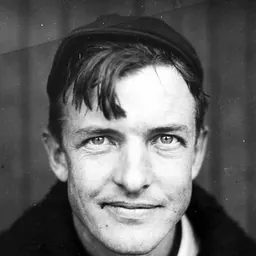
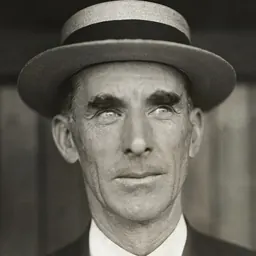
Related people
Same field, nearest in time
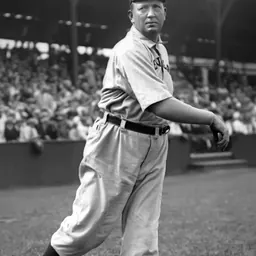


Contemporaries
People whose lives overlapped Arthur Irwin's


Frequently asked questions
Who was Arthur Irwin?
Canadian-American baseball player and manager (1858-1921)
When was Arthur Irwin born?
Arthur Irwin was born on 14 February 1858 in Toronto.
When did Arthur Irwin die?
Arthur Irwin died on 16 July 1921 in Atlantic Ocean.
What was Arthur Irwin's occupation?
Arthur Irwin was a baseball player.
What nationality was Arthur Irwin?
Arthur Irwin was Canadian.
Sources & further reading
Cite this page
APA: Biography.guide. (2026). Arthur Irwin. https://biography.guide/arthur-irwin-baseball-player/
MLA: "Arthur Irwin." Biography.guide, https://biography.guide/arthur-irwin-baseball-player/.
Chicago: "Arthur Irwin." Biography.guide. https://biography.guide/arthur-irwin-baseball-player/.
Data last updated: 2026-09-24 · Spot an error? Report a correction.
Portrait: Wikimedia Commons · author & licence
Page generated 2026-09-27 05:09 UTC