
About Arthur Galston
Lived 1920 – 2008 (aged 88). Arthur Galston was an American botanist and life scientist.
Arthur W. Galston (April 21, 1920 – June 15, 2008) was an American plant physiologist and bioethicist. As a plant biologist, Galston studied plant hormones and the effects of light on plant development, particularly phototropism. He identified riboflavin and other flavins as what are called phototropins, photoreceptor proteins for phototropism (the bending of plants toward light), challenging the prevailing view that carotenoids were responsible.
As a graduate student in 1943, Galston studied the use of 2,3,5-triiodobenzoic acid (TIBA) to encourage the flowering of soybeans and noted that high levels had a defoliant effect. The British and U.S. military later developed TIBA into Agent Orange which was employed extensively in Malaya and Vietnam. Galston became a bioethicist, and spoke out against such uses of science. As chairman of Yale's botany department, Galston's ethical objections led President Nixon to end the use of Agent Orange.
Early life and education Galston was the youngest child of Hyman and Freda Galston. He grew up in a Jewish family in the Brooklyn borough of New York City, impoverished during the Great Depression. turned down an acceptance to Cornell Veterinary School, and earned a B.S. in botany from Cornell instead in 1940. His research focused on finding a chemical means to make soybeans flower and fruit earlier, so that they could mature before the end of the growing season. He discovered that 2,3,5-triiodobenzoic acid (TIBA) would speed up the flowering of soybeans. He also noted that in higher concentrations it would defoliate the soybeans
Wartime service During World War II, the Imperial Japanese Army captured most of the world's rubber plantations in British Malaya, causing a natural rubber shortage for the Allied armies. Natural rubber came from the rubber tree, Hevea brasiliensis, a native of South America that was commercially grown in Southeast Asia. The United States government established a research program to develop synthetic rubber, and also encouraged research into botanical alternatives. Guayule, whose sap could be used to produce latex, was considered a possible substitute for rubber. Galston was recommended to James F. Bonner by H. E. Carter, and spent a year working with Bonner at Caltech in Pasadena, California, to develop rubber tires from guayule.
Plant biology After a year as an instructor at Yale University in 1946–1947, Galston returned to the California Institute of Technology to work with James Bonner as a senior research fellow. While at Caltech, Galston made an important discovery. He identified riboflavin as a photoreceptor involved in the bending of plants toward light. This overturned a commonly held belief that carotene was the photoreceptor involved in phototropism. photobiology, plant hormones, protoplasts and polyamines.
At Yale, increasing amounts of Galston's time were spent in administrative roles. He served as chair of the Departments of Botany and Biology, the university-wide Course of Study Committee, and the Committee on Teaching and Learning. He was also director of the Biological Sciences Division. Following mandatory retirement from the biology department in 1990, he became the Eaton Professor Emeritus in the Department of Molecular, Cellular and Developmental Biology as well as professor emeritus in the School of Forestry & Environmental Studies. He continued to lecture and write after his retirement, in his second career as a bioethicist. He was president of the Botanical Society of America and of the American Society of Plant Physiologists (1962-1963).
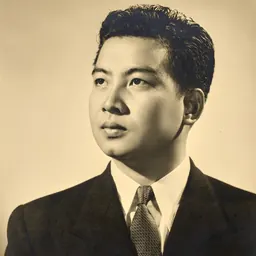
I used to think that one could avoid involvement in the antisocial consequences of science simply by not working on any project that might be turned to evil or destructive ends. I have learned that things are not all that simple, and that almost any scientific finding can be perverted or twisted under appropriate societal pressures. In my view, the only recourse for a scientist concerned about the social consequences of his work is to remain involved with it to the end. His responsibility to society does not cease with publication of a definitive scientific paper. Rather, if his discovery is translated into some impact on the world outside the laboratory, he will, in most instances, want to follow through to see that it is used for constructive rather than anti-human purposes.... Science is now too potent in transforming our world to permit random fallout of the social consequences of scientific discoveries. Some scrutiny and regulation are required, and I believe that scientists must play an important role in any bodies devised to carry out such tasks. The research conducted by the Department of Defense led to the discovery that Agent Orange caused birth defects in laboratory rats. In 1971, he met Zhou Enlai, then Prime Minister, as well as King Norodom Sihanouk of Cambodia, who then resided in Shanghai. Galston's experiences on visits to China led him to write Daily life in People's China (1973).
Galston taught bioethics to Yale undergraduates from 1977 to 2004. In 2003-2004 his introductory bioethics course attracted 460 students, making it one of the most popular courses in Yale College.
Galston also co-founded the National Senior Conservation Corps (Grey is Green), a non-profit organization dedicated to helping older Americans to create positive environmental change and lead more sustainable lives.
In 1966, Galston successfully nominated Duke Ellington to receive an honorary doctorate from Yale. The Duke received the honor in 1967, but Galston was unable to attend, and did not meet him until 1972.
Arthur Galston died of congestive heart failure
Family In 1942, Galston married Dale Judith Kuntz, whom he had met at Cornell University. Their son William Arthur Galston became a political scientist. He was an advisor to U.S. President Bill Clinton and is a senior fellow at the Brookings Institution. Their daughter, Beth Galston, is an environmental sculptor who often uses plants as source material.
Awards and honors Guggenheim fellow in Sweden, France, and England, awarded 1946, claimed 1950-51 Fulbright fellow in Australia, 1960-61 National Science Foundation fellow in England, 1967-68 Phi Beta Kappa national visiting scholar, 1972-73 award from New York Academy of Sciences, 1979 LL.D., Iona College, 1980 Recognized as a Pioneer Member of the American Society of Plant Biologists.
Books
, reprinted 1959. , reprinted 1964, 1968 (as The green plant), 1980, 1990, 1994, 1998. reprinted as
Don’t just read it —
keep it.
Full-length biographies made to live with: read them, listen on the way to work, watch them tonight.
- E-book
- Audio
- Video
Instant download · yours to keep · every purchase keeps this site free
Important facts
Family & relationships
People in Arthur Galston's life
Named in this biography and alive at the same time




Related people
Same field, nearest in time


Contemporaries
People whose lives overlapped Arthur Galston's



Frequently asked questions
Who was Arthur Galston?
American botanist & bioethicist (1920-2008)
When was Arthur Galston born?
Arthur Galston was born on 21 April 1920 in Brooklyn.
When did Arthur Galston die?
Arthur Galston died on 15 June 2008 in Hamden.
What was Arthur Galston's occupation?
Arthur Galston was a botanist and life scientist.
What nationality was Arthur Galston?
Arthur Galston was American.
Sources & further reading
Cite this page
APA: Biography.guide. (2026). Arthur Galston. https://biography.guide/arthur-galston/
MLA: "Arthur Galston." Biography.guide, https://biography.guide/arthur-galston/.
Chicago: "Arthur Galston." Biography.guide. https://biography.guide/arthur-galston/.
Data last updated: 2026-09-20 · Spot an error? Report a correction.
Page generated 2026-09-27 05:21 UTC