
About Arthur Fell
Lived 1850 – 1934 (aged 84). Arthur Fell was a British and New Zealand politician.
Sir Arthur Fell (7 August 1850 – 29 December 1934) was an English solicitor and Conservative Party politician. After a notorious legal case in 1906 where a biased judge dismissed an election petition against him, Fell sat in the House of Commons from 1906 to 1922 for Great Yarmouth. He was noted as an opponent of free trade and as a persistent advocate of a Channel Tunnel.
Early life Fell was born in the city of Nelson, New Zealand, the fourth son of Alfred Fell and brother of Charles Fell, mayor of Nelson. He was educated at St John's College, Oxford, where he graduated in 1871 with a B.A. degree. He qualified as a solicitor in 1874, becoming a partner in the firm of Hare and Fell, agents to the Treasury Solicitor.
Career Fell moved from law into business, becoming involved in a range of companies including three of which he was chairman: the African City Properties Trust, the Siberian Syndicate and the Spassky Copper Mine. He travelled in Europe and in the British Dominions. where the sitting Conservative Member of Parliament (MP) Sir John Colomb was retiring and had recommended Fell to the Yarmouth Conservatives. At the general election in 1906, Fell won the seat with a majority of 236 votes (3% of the total).
An election petition was lodged against the result by the defeated Liberal Party candidate Martin White, alleging a range of illegal practices including bribery and treating of voters by Fell and his agents. The judges found that there had been systematic treating of voters on Fell's behalf, with a series of meetings in public houses, including one in Yarmouth Town Hall on 19 October 1905 which was described as an "orgy"; had give some fifteen people a small amount of money, usually a shilling or a half-crown.
The Times newspaper described the decision as a "curious conclusion". After an outburst in court in Liverpool, where he claimed the right to hold and express his political opinions, The motion, which had been signed by 347 MPs, was moved by South Donegal MP J. G. Swift MacNeill, who attacked Grantham to repeated cheers in the House. Baker, he pointed out, was a boatman whose wife was being sued for non-payment of her milk bill; and Grantham had described Colomb as "my fear friend". a manufacturer from Manchester. with a slightly increased majority of 461 votes (5.4%), with a majority of 373 votes over Platt. and returned for a fourth and final time at the 1918 general election, as a Coalition Conservative and stood down from the Commons at the 1922 general election, having announced his retirement in early 1920.
In Parliament
In Parliament, Fell was a noted protectionist, and an outspoken critics of free trade who published a series of pamphlets both on trade and on food supplies in wartime, including The Fallacy of Free Trade, The Failure of Free Trade and John Bull's Balance Sheet. and by February 1914 he was the chairman of the House of Commons Channel Tunnel Committee, an all-party parliamentary group (with 100 members in 1914) which he chaired until 1922. The tunnel's advocates included the Duke of Argyll, Lord Glantawe, Joynson-Hicks, Will Crooks, Hamar Greenwood, Sir William Bull and Arthur Conan Doyle. Asquith responded that the idea had been considered back in 1883 by a committee of both Houses of Parliament, who had recommended against a tunnel, and a long series of bills brought to Parliament since then had failed. and that if a review reported in favour of a tunnel the coalition government would support it.
On 13 June 1918, Fell presented another paper to the RSA. In London and the Channel Tunnel he argued that a railway connection to other major countries was essential if London was to retain its place as a world city, and that leaving London cut off from continental Europe by "a stormy sea" would condemn it to isolation. when Lloyd George told them that the government no longer had a political objection to a tunnel, but that its final position awaited a report on the military issues from the General Staff He noted that the major change over the years was that France was now an ally rather than an enemy, but that it was still necessary to consider the risk of an enemy seizing the tunnel and mounting a surprise attack. In July 1921, the Annual General Meeting of the Channel Tunnel Company Limited was told by its chairman Baron Emile d'Erlanger that despite all the hard work of Fell and his committee, the company had "not yet received any intimation that the government was prepared to entertain the question seriously".
In March 1922, Fell gave notice on behalf of the Committee of his intention to move a motion in the Commons calling on the government to give permission for the resumption of work on the tunnel, experimental tunneling having begun two years earlier. However, Parliament was dissolved in October for the general election and Fell retired from the Commons. He was made an honorary member of the Committee, and Sir William Bull was elected to succeed him as chairman.
The following summer, the Channel Tunnel Company's AGM was told that in December 1922 the new prime minister Bonar Law had responded to a question from Viscount Curzon by saying "no decision has yet been taken, and I am not at present prepared to consider this question".
In retirement, Fell continued to promote the cause of the tunnel, writing to The Times in 1924 to lament that while the French Channel Tunnel Company had been given the legal power to construct a tunnel, and the engineers said it could be built, the British Company had no power to start work in Kent.
Personal life Fell lived in Wimbledon for many years, at Lauriston House on Wimbledon Common. Fell supported the preservation of the Common, and opposed efforts to build on the course of the Royal Wimbledon Golf Course. Sir Anthony Fell (1914–1998) was the MP for Great Yarmouth from 1951 to 1966. of which he left £50 to M.G. Bertin, the Secretary of the French Channel Tunnel Association "as a token of my esteem and appreciation of his untiring efforts to promote good fellowship between France and England, and to carry into effect the Channel Tunnel, the construction of which Marechal Foch declared might have prevented the War and in any case shortened its duration by half".
Don’t just read it —
keep it.
Full-length biographies made to live with: read them, listen on the way to work, watch them tonight.
- E-book
- Audio
- Video
Instant download · yours to keep · every purchase keeps this site free
Important facts
Family & relationships
People in Arthur Fell's life
Named in this biography and alive at the same time


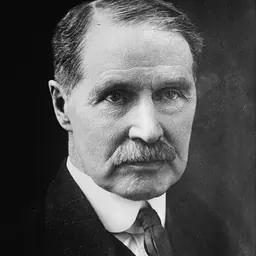

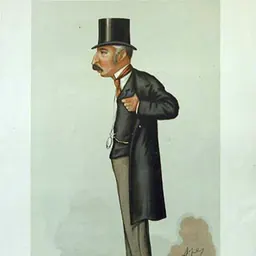
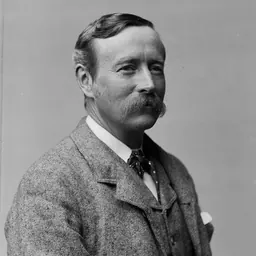
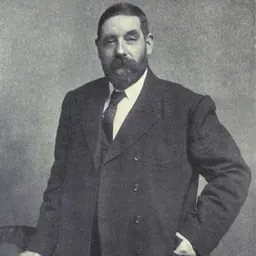
Related people
Same field, nearest in time





Contemporaries
People whose lives overlapped Arthur Fell's


Frequently asked questions
Who was Arthur Fell?
English solicitor and Conservative Party politician (1850-1934)
When was Arthur Fell born?
Arthur Fell was born on 7 August 1850 in Nelson.
When did Arthur Fell die?
Arthur Fell died on 29 December 1934 in Wimbledon.
What was Arthur Fell's occupation?
Arthur Fell was a politician.
What nationality was Arthur Fell?
Arthur Fell was British and New Zealand.
Sources & further reading
Cite this page
APA: Biography.guide. (2026). Arthur Fell. https://biography.guide/arthur-fell/
MLA: "Arthur Fell." Biography.guide, https://biography.guide/arthur-fell/.
Chicago: "Arthur Fell." Biography.guide. https://biography.guide/arthur-fell/.
Data last updated: 2026-09-20 · Spot an error? Report a correction.
Page generated 2026-09-27 05:30 UTC