
About Arthur Ewert
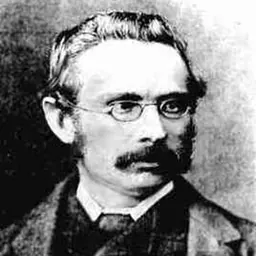
Lived 1890 – 1959 (aged 68). Arthur Ewert was a German politician.
Arthur Ernest Ewert (13 November 1890 – 3 July 1959) was a German communist political activist and functionary of the Communist International (Comintern). Ewert is best remembered as an official Comintern representative to the United States, China, Argentina, and Brazil during the late 1920s and 1930s. After being subjected to torture and sentenced to 13 years in prison for his political activity in Brazil, Ewert lost his sanity. He was granted amnesty in May 1945 and ultimately returned to East Germany, where he lived out the rest of his life in a series of medical facilities.
Early life and education Arthur Ernest Ewert was born November 13, 1890, in the town of Heinrichswalde, East Prussia (now called Slavsk). He was the son of a poor peasant family. Largely self-educated, Ewert completed only a primary school education in a one-room rural schoolhouse.
Anxious to escape the drudgery of rural life, at the age of 14 Ewert accepted a position as an apprentice in an uncle's saddle-making factory in the urban center of Berlin. Earning low wages to perform difficult and sometimes dangerous work in the steel plant proved to be a radicalizing experience for Ewert. Influenced by his older sister, Minna, who was an activist in the social democratic youth movement, Ewert himself joined the Social Democratic Party of Germany (SDP) in 1908 at the age of 18.
In addition to socialist politics, Ewert's sister introduced him to a friend from work, the Polish-born Elise Saborovsky Ewert, known to her friends as "Szabo", who was herself a committed Marxist. The pair began living together and would remain a couple for 25 years. Instead the couple chose to disappear into the political underground, where they were aided by Canadian Marxist opponents of the war. During this period the couple used the party pseudonyms "Gustav" and "Elsie" and procured false identity documents under the names "Arthur Brown" and "Annie Bancourt" to better avoid law enforcement officers.
Following the Russian Revolution of November 1917, Canadian authorities increased their scrutiny of domestic radicals and Ewert and Szabowski became persons of interest. An informer tipped off the authorities that the pair would be in Toronto for a party meeting on March 23, 1919, and plainclothes detectives picked up their trail from the gathering to a boarding house, where arrest and search warrants were served. According to the police communist propaganda and several handguns were found in the couple's room during the search. The couple reunited in Berlin where they resumed their lives together anew. To support himself he went to work in Berlin as a laborer at the giant electrical corporation AEG (Allgemeine Elektricitäts-Gesellschaft), becoming one of the leading KPD activists among that company's workers. Ewert was involved in this activity as a leading member of the loosely organized Greater Berlin Revolutionary Action Committee, established to organize urban workers into fighting groups to do battle with similar bands of ultranationalist demobilized soldiers.
The leadership of Soviet Russia placed supreme importance on an early communist revolution in Germany to provide material support for the revolution in their own revolution backwards peasant nation. Substantial funds were funneled into Germany to support the organizing and propaganda efforts of the German communist movement. From 1920 onwards German-speaking veterans of the Soviet revolution and Russian Civil War were employed to establish paramilitary "military-political organizations" throughout Germany in preparation for armed insurrection.
The leadership of the KPD was divided over the advisability of such preparations for armed struggle, with Hungarian Comintern plenipotentiaries Bela Kun and József Pogány dispatched to Germany early in 1921 in an effort to win support for the strategy from faltering party chiefs. These preparations for a planned insurrection were ultimately short-circuited by events in Soviet Russia, including the March 1 Kronstadt uprising in which Baltic sailors took up arms against the Soviet regime, prompting more than two weeks of violent and bloody conflict between these revolutionary forces.
In need of a diversion, the Communist International (Comintern) pushed forward with its plans for German insurrection in events which were later to be known as the March Action. On March 22, 1921, Communist paramilitary units exploded bombs and attacked police stations and government buildings throughout Central Germany in an attempt to spark the overthrow of the Ebert government.
In April 1921 the KPD leadership dispatched Arthur Ewert to the city of Halle to attempt to rebuild the party organization there following its destruction in the March Action. The state was unable to produce evidence that Ewert was involved in fomenting armed insurrection, however, and he was subsequently released.
Political career
Political rise Ewert was elected to the governing National Committee (Zentrale) and its Politburo by the 8th Congress of the KPD in January 1923. Ewert was also elected as a KPD delegate to the 3rd Enlarged Plenum of Executive Committee of the Communist International (ECCI) in 1923. Ewert was initially assigned to work in the Comintern's Balkan Commission, dealing with political affairs of the various Communist Parties of that region. This charge was echoed by Joseph Stalin's right-hand man, Vyacheslav Molotov, who singled out Ewert by name among those "conciliators" who lent de facto political support to the more moderate political line of Bukharin and his co-thinkers inside the All-Union Communist Party (bolsheviks).
Ewert managed to salvage his political career by engaging in public self-criticism at the 12th Congress of the KPD, held in June 1929, followed by publication of an article entitled "The Bankruptcy of the Conciliators" in the official party newspaper. Of primary concern to the Comintern was obtaining an independent assessment of the solidity of the hold over the party apparatus by the faction headed by Earl Browder and William Z. Foster, which had recently assumed control from deposed party leader Jay Lovestone.
In the fall of 1930, Ewert was formally assigned to the Comintern's Latin American department and he traveled with his common-law wife Szabo to Buenos Aires, Argentina to take over affairs of the Comintern office there. The posting was not a desirable one, but was rather a form of banishment of the ideologically suspect Ewert from the decision-making centers of the Communist Party of Germany and the Comintern.
Ewert worked closely with Comintern representative August Guralsky to win popular expelled Brazilian political leader Luís Carlos Prestes to the communist cause, regarded as a top priority task.
In 1932, Ewert and his wife were dispatched as Comintern representatives to the Chinese Communist Party, where they would stay until recalled to Moscow in 1934. Despite the viciousness of the interrogation, neither Ewert nor Szabo betrayed their confidences under duress. Szabo was ultimately deported to Nazi Germany in September 1936, where she was incarcerated and would later die at the Ravensbrück concentration camp in 1939.
Ewert underwent protracted interrogation, during which time he lost his sanity. He was finally brought to trial in May 1937, where he was convicted and sentenced to 13 years and four months in prison.
Later years and death In May 1945, Ewert was granted an amnesty from prison. He returned by ship to the Soviet zone of control in East Germany in August 1947 but the mental problems which followed his torture and imprisonment proved insurmountable and he was forced to be hospitalized in a sanatorium for the rest of his life.
Ewert died on July 3, 1959, in Eberswalde, East Germany.
In 1981 the government of the German Democratic Republic issued a postage stamp in Ewert's honor.
Footnotes
Don’t just read it —
keep it.
Full-length biographies made to live with: read them, listen on the way to work, watch them tonight.
- E-book
- Audio
- Video
Instant download · yours to keep · every purchase keeps this site free
Important facts
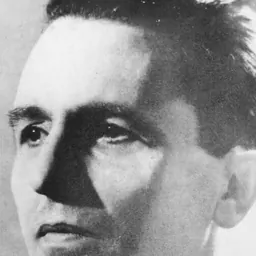
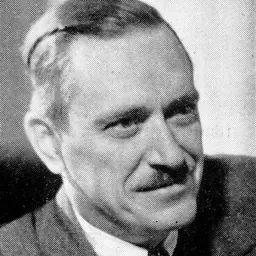
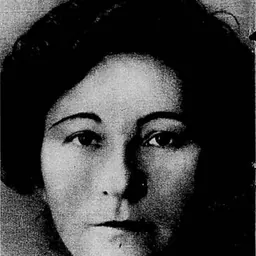
People in Arthur Ewert's life
Named in this biography and alive at the same time



Related people
Same field, nearest in time




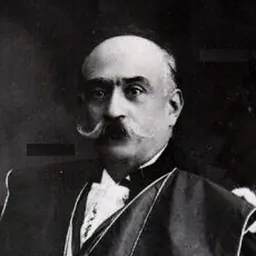
Contemporaries
People whose lives overlapped Arthur Ewert's


Frequently asked questions
Who was Arthur Ewert?
German communist political activist (1890–1959)
When was Arthur Ewert born?
Arthur Ewert was born on 13 November 1890 in Slavsk.
When did Arthur Ewert die?
Arthur Ewert died on 3 July 1959 in Barnim Plateau.
What was Arthur Ewert's occupation?
Arthur Ewert was a politician.
What nationality was Arthur Ewert?
Arthur Ewert was German.
Sources & further reading
Cite this page
APA: Biography.guide. (2026). Arthur Ewert. https://biography.guide/arthur-ewert/
MLA: "Arthur Ewert." Biography.guide, https://biography.guide/arthur-ewert/.
Chicago: "Arthur Ewert." Biography.guide. https://biography.guide/arthur-ewert/.
Data last updated: 2026-09-20 · Spot an error? Report a correction.
Page generated 2026-09-27 05:29 UTC