
About Arthur Cumming
Lived 1817 – 1893 (aged 75). Arthur Cumming was a naval officer.
Admiral Sir Arthur Cumming (6 May 1817 – 17 February 1893) was an officer of the Royal Navy.
He was born in Nancy, France to Sir Henry John Cumming, a general in the British Army and received naval education at the Royal Naval College in Portsmouth. Cumming served as a midshipman in the Mediterranean and North America before being promoted to lieutenant in 1840 for his actions in the Syrian War. He remained with the Mediterranean Fleet until appointed to HMS Frolic, a sloop stationed in South America. Whilst detached from Frolic and in command of a small pinnace on 6 September 1843 Cumming and seven men boarded a Portuguese slave ship, subdued her 27-man crew and brought her back to Rio de Janeiro. He had expected to be promoted for his efforts, but was overlooked and resented the decision for the rest of his life. Cumming spent some time in the Navy's Experimental Squadron before being promoted commander on 9 November 1846.
Cumming's first command was HMS Rattler, stationed off West Africa, during which he captured another slave ship. He saw active service against the Russians during the Crimean War, captaining the frigate HMS Gorgon and being promoted to post-captain on 19 April 1854. Subsequently, Cumming was transferred to HMS Conflict and, in company with HMS Amphion, was able to capture the Baltic Sea port of Libau without firing a shot. Towards the end of the war he took command of the ironclad floating battery HMS Glatton but arrived in the Black Sea after the peace had been agreed. He returned to the UK in time for Glatton to take part in Queen Victoria's 1856 Fleet Review. Cumming was appointed captain of the frigate HMS Emerald on 14 May 1859 and remained with the ship until the end of her Royal Navy career on 7 November 1863. Emerald served in the Channel Fleet, the Baltic Sea and Admiralty propeller trials. She also made several trips to the Americas including "one of the quickest passages on record" to Bermuda in 1860. After her decommissioning Cumming was appointed a Companion of the Order of the Bath, served aboard HMS Victory and Duke of Wellington and in the Packet Service.
Cumming achieved flag rank on 27 February 1870 when he was promoted to rear-admiral. He served for a while as a port admiral before becoming the Naval Commander-in-Chief of the East Indies in 1872, remaining there until 1875. Cumming continued to receive promotions, becoming vice-admiral in 1876 and admiral in 1880, but retired from the Navy in 1880. In retirement he lived at Foston Hall, near Derby. Cumming was appointed Knight Commander of the Order of the Bath as part of Queen Victoria's Golden Jubilee celebrations on 21 June 1887 and died in London on 17 February 1893.
Early life Arthur Cumming was born at Nancy in France on 6 May 1817, his father was General Sir Henry Cumming. Arthur was entered into the Royal Naval College at Portsmouth in January 1831, passing the course and being discharged on 8 August 1832. His first ship was the sloop HMS Rover on which he served in the Mediterranean (presumably as a midshipman), also serving on the Lisbon and North American Stations.
By early 1840, Cumming was stationed at HMS Excellent, a navy stone frigate in Portsmouth that housed the gunnery school.
Syrian War On 14 March 1840 Cumming was appointed mate on the frigate HMS Cyclops (commanded by Horatio Thomas Austin), part of Commodore Charles John Napier's squadron sent to intervene for Britain in the Syrian War, and reached the ship in April. Ali invaded Syria and took control of the Ottoman Fleet forcing young Sultan Abdülmecid I to request help from the European powers. Frolic was posted to South America and on 6 September 1843 Cumming was cruising off Santos, São Paulo, in command of the ship's pinnace, when he encountered the large brigantine Portuguese slaver Vincedora in company with two other slaving vessels. The British slave trade had been outlawed by the Slave Trade Act 1807 and the Royal Navy viewed all slavers as pirates, liable to be arrested and their ships confiscated. Cumming positioned the pinnace to cut off the Vincedora'''s retreat but the brigantine made to ram the boat. Cumming remained nominally with Frolic until 21 October 1843. in the East Indies until 27 March 1845. Cumming sailed on the first trial of 1845 that lasted from 15 July to 20 September and was supervised by Rear Admiral Hyde Parker. In 1853 Cumming married Adelaide Stuart with whom he had at least one child. The harbour contained eight Russian merchant vessels and was defended by a force of 4–500 soldiers with 2–3 cannon. The vessel was initially part of the Channel Fleet and as part of her duties visited Plymouth, Spithead, Torbay, Cork and Devonport. Emerald'' left Devonport on 18 February and arrived at Bermuda 19 days and 6 hours later, completing "one of the quickest passages on record" at the time. There he was involved in suppressing the slave trade around Zanzibar (see Kenya Army#History). He remained in the East Indies until March 1875 and was promoted to vice-admiral on 22 March 1876.
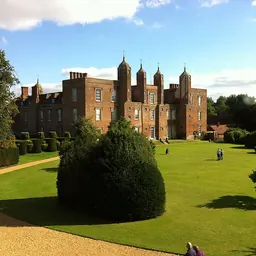
After retirement, he lived mainly at Foston Hall, near Derby.
In 1877, Cumming wrote to Vice-Admiral Beauchamp Seymour, 1st Baron Alcester, Commander-in-Chief of the Channel Squadron, and Lord Gillford, Lord Commissioner of the Admiralty, to recommend Loney for promotion. The thief had identified himself to the shop's owner, Mr Boxta, as "Admiral Sir Arthur Cumming" and presented a card in that name with Cumming's coat of arms printed on it. Having made a small purchase the thief requested that Boxta bring a large quantity of diamond rings, bracelets and a necklace to his rooms so that he could choose a present for his wife. Boxta was reassured by the high status neighbourhood and a pile of Bank of England notes that the thief showed him and allowed the thief to take the jewellery to an adjacent room from which he was able to escape. The thief was never caught.
Sir Arthur Cumming died in London on 17 February 1893. He was survived by his wife and is buried in Brookwood Cemetery, Surrey.
Don’t just read it —
keep it.
Full-length biographies made to live with: read them, listen on the way to work, watch them tonight.
- E-book
- Audio
- Video
Instant download · yours to keep · every purchase keeps this site free
Important facts
People in Arthur Cumming's life
Named in this biography and alive at the same time





Related people
Same field, nearest in time


Contemporaries
People whose lives overlapped Arthur Cumming's



Frequently asked questions
Who was Arthur Cumming?
British Royal Navy admiral (1817-1893)
When was Arthur Cumming born?
Arthur Cumming was born on 6 May 1817 in Nancy.
When did Arthur Cumming die?
Arthur Cumming died on 17 February 1893 in London.
What was Arthur Cumming's occupation?
Arthur Cumming was a naval officer.
Sources & further reading
· DBpedia: Arthur Cumming (Royal Navy officer)
Cite this page
APA: Biography.guide. (2026). Arthur Cumming. https://biography.guide/arthur-cumming/
MLA: "Arthur Cumming." Biography.guide, https://biography.guide/arthur-cumming/.
Chicago: "Arthur Cumming." Biography.guide. https://biography.guide/arthur-cumming/.
Data last updated: 2026-09-20 · Spot an error? Report a correction.
Page generated 2026-09-27 05:33 UTC