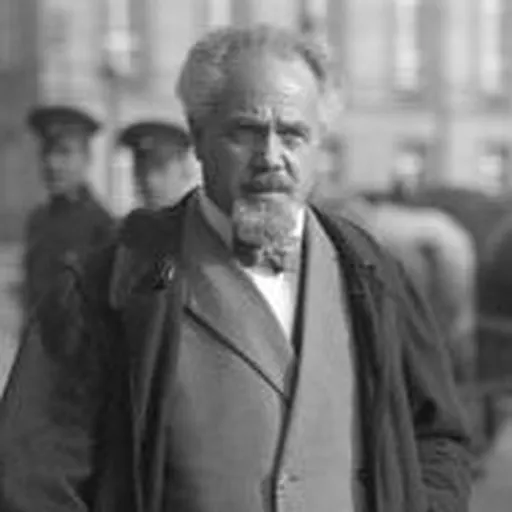
About Arthur Crispien
Lived 1875 – 1946 (aged 71). Arthur Crispien was a German politician, journalist, peace activist, writer and editing staff.
Arthur Crispien (4 November 1875 – 29 November 1946) was a German Social Democratic politician.
He was co-chairman and member of the Reichstag for the Independent Social Democratic Party of Germany, USPD, from 1920 - 1922. He was co-chairman and member of the Reichstag for the Social Democratic Party of Germany, SPD, from 1922 to 1933.
Biography
Crispien was born in Königsberg (modern Kaliningrad, Russia) to August and Franziska Crispien. He worked as a house and stage painter in Königsberg and joined the Social Democratic Party of Germany (SPD) in 1894. He worked for a Health insurance fund and became the editor of the Königsberger Volkszeitung (1904–1906), the Danzig Volkswacht (1906–1912) and the Schwäbische Tagwacht in Stuttgart (1912–1914). In 1906 to 1912 Crispien was the regional Chairman of the SPD in West Prussia.
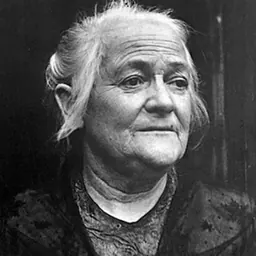
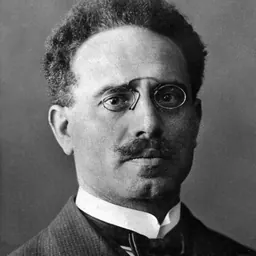
In 1909 he was sent to the SPD party school in Berlin where he became one of Rosa Luxemburg's students. They developed a close friendship that lasted until her death in 1919. He was sent in 1912 to Stuttgart to become editor-in-chief of the party paper Schwäbischen Tagwacht. He became part of the innermost circle of the SPD's left wing, which was then called the Gruppe Internationale, the International Group, but which later became the Spartacus League, and which was led by Rosa Luxemburg, Karl Liebknecht and Clara Zetkin. During that period he was seen as Spartacus' representative in Stuttgart.
At the outbreak of World War I he opposed the Burgfriedenspolitik of the SPD on voting for German war credits and was dismissed from the Schwäbische Tagwacht. He illegally published the newspaper Der Sozialdemokrat (The Social Democrat) and was imprisoned for some months. He was conscripted in the German Army in 1916. He was sent to the Western Front but managed to desert.
In 1917, the SPD split and the USPD, the Independent Social Democratic Party of Germany, was formed by people from the left wing of the SPD. The remaining SPD took during this time the party designation MSPD, the Majority Social Democratic Party of Germany. Despite his closeness to above all Rosa Luxemburg, he began to take steps away from the Spartacists. In November 1918, Wilhelm II, the last German emperor abdicated and revolution broke out in the streets. When the Communist Party of Germany, KPD, was formed in December 1918 by Luxemburg and Liebknecht, Crispien remained in the USPD bloc. After the revolution, Crispien became a member of the Provisional Württemberg Government as Vice-President in 1918 and was Minister of the Interior in the Provisional State Government under Wilhelm Blos until 10 January 1919. After an attempted coup by the Spartacists, which was approved by the USPD, he was dismissed from the government. On 12 January 1919 he was elected to the Württemberg state parliament, but resigned in April 1919 after being elected party co-chairman and member of the Executive Committee of the USPD together with Hugo Haase in early March. The Weimar era saw him elected a Member of the Reichstag in 1920 and as Foreign Policy Spokesman for the USPD. He successfully co-led the USPD in the 1920 parliamentary election when the party received 18% of the vote and became the second largest party.
In 1920, he led a delegation of the USPD to the 2nd World Congress of the Communist International but refused to accept Lenin's conditions for participation in the Comintern. From 1921 Crispien was a member of the executive board of the International Working Union of Socialist Parties.
In 1922, the USPD and MSPD were reunited and the SPD was re-formed. Crispien was a Member of Reichstag for the SPD from 1922 and co-led the party from 1922 to 1933. From 1923 he was a delegate to the Labour and Socialist International.
Crispien managed to flee the country and went into exile to Austria and later Switzerland, representing the Social Democratic Party in Exile. Crispien supported political and Jewish refugees from Nazi Germany and became a member of the Swiss Socialist Party. He was a delegate at the refugee conference of 1945 at Montreux.
Don’t just read it —
keep it.
Full-length biographies made to live with: read them, listen on the way to work, watch them tonight.
- E-book
- Audio
- Video
Instant download · yours to keep · every purchase keeps this site free
Important facts
People in Arthur Crispien's life
Named in this biography and alive at the same time


Related people
Same field, nearest in time





Contemporaries
People whose lives overlapped Arthur Crispien's


Frequently asked questions
Who was Arthur Crispien?
German politician (1875-1946)
When was Arthur Crispien born?
Arthur Crispien was born on 4 November 1875 in Königsberg.
When did Arthur Crispien die?
Arthur Crispien died on 29 November 1946 in Bern.
What was Arthur Crispien's occupation?
Arthur Crispien was a politician, journalist, peace activist, writer and editing staff.
What nationality was Arthur Crispien?
Arthur Crispien was German.
Sources & further reading
Cite this page
APA: Biography.guide. (2026). Arthur Crispien. https://biography.guide/arthur-crispien/
MLA: "Arthur Crispien." Biography.guide, https://biography.guide/arthur-crispien/.
Chicago: "Arthur Crispien." Biography.guide. https://biography.guide/arthur-crispien/.
Data last updated: 2026-09-22 · Spot an error? Report a correction.
Portrait: Wikimedia Commons · author & licence
Page generated 2026-09-27 05:04 UTC