
About Arthur Bryant
Lived 1899 – 1985 (aged 85). Arthur Bryant was a British historian and journalist.
Sir Arthur Wynne Morgan Bryant, (18 February 1899 – 22 January 1985) was an English historian, columnist for The Illustrated London News and man of affairs. His books included studies of Samuel Pepys, accounts of English eighteenth- and nineteenth-century history, and a life of George V. He moved in high government circles, where his works were influential, writing histories of three prime ministers: Winston Churchill, Clement Attlee, and Harold Wilson.
Bryant's historiography was often based on an English romantic exceptionalism drawn from his nostalgia for an idealised agrarian past. He hated modern commercial and financial capitalism, he emphasised duty over rights, and he equated democracy with the consent of "fools" and "knaves".
Whilst his scholarly reputation has declined somewhat since his death, he continues to be read and to be the subject of historical studies.
Early life Arthur Bryant was the son of Sir Francis Morgan Bryant, who was the chief clerk to the Prince of Wales, and wife, Margaret Edmunds. His father would later hold a number of offices in the royal secretariat, eventually becoming registrar of the Royal Victorian Order. Arthur grew up in a house bordering the Buckingham Palace gardens near the Royal Mews. There, he developed a feel for the trappings of traditional British protocol and a strong attachment to the history of England.
He attended school at Pelham House, Sandgate, and Harrow School where his younger brother the Rev. Philip Henry Bryant later became an assistant Master. Though he expected to join the British Army, he won in 1916 a scholarship to Pembroke College, Cambridge. Despite that, he joined the Royal Flying Corps and was commissioned as a second lieutenant in October 1917.
In 1919, he read Modern History at Queen's College, Oxford, obtaining distinction in the honours courses offered to ex-servicemen in 1920.
He regularly continued to produce pageants. These included the Wisbech and Hyde Park pageants, and the Naval Night Pageant in Greenwich, which was attended by the King, Queen, Prince of Wales, British Cabinet, and members of the World Economic Conference. For the quality of his work in this field, he was acclaimed "the English Reinhardt". Historian Richard Griffiths described the text in Patterns of Prejudice as "clearly pro-Nazi and antisemitic".
After the fall of France in 1940, Bryant's writing celebrated British patriotism. His English Saga, published at the end of that year, described England as "an island fortress...fighting a war of redemption, not only for Europe but for her own soul". Roberts says of his popular essays and books, "Bryant did a superb job in helping to stiffen the people's resolve by putting their sacrifices in historical context."
He married again, in 1941, to Anne Elaine Brooke, daughter of Bertram Willes Dayrell Brooke, one of the White Rajahs of Sarawak. His books during this decade dealt less prominently with the 17th century, and included a collection of Neville Chamberlain's speeches.
Final years The books he wrote during his later years included several volumes of broad English histories. They include Set in a Silver Sea (1984), Freedom's Own Island (1986, edited posthumously by John Kenyon), and a third volume. His second marriage dissolved in 1976. In his final years, he lived at Myles Place, Salisbury, Wiltshire.
Death Bryant died after a brief illness at the age of 85 at Salisbury in the county of Wiltshire on 22 January 1985. He was cremated, with his ashes being entombed in Salisbury Cathedral.
Works Bryant's total output was remarkable. He wrote over forty books overall, which collectively sold over two million copies. Most were published by William Collins, Sons and Co. Ltd. Roberts also claimed that Bryant remained in indirect contact with the Nazis in early 1940, after the outbreak of World War II, and that these ties had been requested by the Foreign Secretary.
Although professional historians were frequently negative about his best-sellers, Bryant's histories were explicitly praised by prime ministers Stanley Baldwin, Neville Chamberlain, Churchill, Attlee, Macmillan, Wilson, James Callaghan and Margaret Thatcher.
J. H. Plumb, one of Bryant's detractors, wrote:
Plumb's verdict is that Bryant killed off 'patrician history':
Plumb cites Trevelyan's possible heirs as C.V. Wedgwood and A. L. Rowse.
Another detractor is the British historian Andrew Roberts, who has said
Roberts's polemical essay, prompted by the opening of archive material on Bryant, has been followed (and rebutted) by Julia Stapleton's full academic study. Bryant's first biographer was Pamela Street, a neighbour of his in Salisbury, who on occasion had collaborated with Bryant in his historical works, and who was a daughter of farmer-author A. G. Street. Her book appeared during Bryant's lifetime.
Bryant was aware of the liabilities of writing fast-moving, grand, rather literary narratives. With more self-awareness than some scholars may give him, Bryant answered his critics to some extent when he wrote in 1962, In these days of specialized and cumulative scholarship, for one man to try to survey a nation's history in all its aspects is an act of great presumption. It involves problems of arrangement and writing so baffling that it is seldom attempted, and with reason, since, through compression and generalization on the one hand and the selection of misleading detail on the other, it can so easily lead to over-simplification and misrepresentation. I am very conscious of the imperfections of a work that seeks to cover a field of knowledge so much wider and deeper than any single mind can master. Yet, if my work has any virtue, it is that it attempts, however imperfectly, just this. For if the ordinary reader is to understand his country's past, someone must essay the task or the truth will go by default. Because of this I had thought of calling my book The Tower of Memory. Unless those responsible for a nation's policy--in a parliamentary democracy the electors--can climb that tower, they cannot see the road along which they have come or comprehend their continuing destiny (The Age of Chivalry, 14).
List of works Rupert Buxton. A Memoir (privately printed, Cambridge, 1925) The Spirit of Conservatism (Methuen & Co., 1929) King Charles II (Longmans, Green & Co., 1931) - revised (Collins, 1955) Macaulay (Peter Davies, 1932) - about Thomas Babington Macaulay, reprinted (Collins, 1979) Life of Samuel Pepys in three volumes: The Man in the Making (Cambridge University Press, 1933) The Years of Peril (Cambridge University Press, 1935) The Saviour of the Navy (Cambridge University Press, 1938) The Man and the Hour: Studies of Six Great Men of Our Time (Philip Allan, 1934) - Edward VII; Lenin; Briand; Pilsudski; Mussolini; Hitler The Letters, Speeches and Declarations of King Charles II (editor; Cassell, 1935) The England of Charles II (Longmans, Green & Co., 1935) - reprinted as Restoration England (Collins, 1960) Postman's Horn: Anthology of the Letters of Latter Seventeenth Century England (editor; Longmans, 1936) - revised (Van Thal, 1946) The American Ideal (Longmans, Green & Co., 1936) George V (Peter Davies, 1936) - George V Stanley Baldwin: A Tribute (Hamish Hamilton, 1937) - Stanley Baldwin The Search for Peace (1939), a collection of Neville Chamberlains' speeches up to the end of the Munich Crisis Unfinished Victory (Macmillan & Co., 1940) English Saga, 1840–1940 (Collins/Eyre & Spottiswoode, 1940) The Years of Endurance, 1793–1802 (Collins, 1942) Dunkirk (A Memorial) (Macmillan, 1943) - pamphlet Years of Victory, 1802–1812 (Collins, 1944) The Battle of Britain/The Few (Daily Sketch, 1944) - with Edward Shanks Historian's Holiday (Dropmore Press, 1946) - limited ed., reprinted (Collins, 1951) Trafalgar and Alamein (Withy Grove Press, 1948), with Edward Shanks and Field Marshal Montgomery of Alamein The Summer of Dunkirk/The Great Miracle (Daily Sketch, 1948) - with Edward Shanks The Age of Elegance, 1812–1822 (Collins, 1950) The Story of England: Makers of the Realm (Collins, 1953) The Turn of the Tide 1939–1943 (Collins, 1957) - Alanbrooke Diaries, vol. 1 Triumph in the West 1943–1946 (Collins, 1959) - Alanbrooke Diaries, vol. 2 Liquid History (Curwen Press, 1960) - "Fifty Years of the Port of London Authority" Jimmy, the Dog of My Life (Lutterworth Press, 1960) The Age of Chivalry (Collins, 1963) The Fire and the Rose (Collins, 1965) The Medieval Foundation (Collins, 1966) Protestant Island (Collins, 1967) - prequel to The Medieval Foundation The Lion and the Unicorn: A Historian's Testament (Collins, 1969) The Great Duke; or the Invincible General (Collins, 1971) - biography of the Duke of Wellington Jackets of Green (Collins, 1972) - study of the Rifle Brigade A Thousand Years of British Monarchy (Collins, 1975) Leeds Castle: A Brief History (1980) - Leeds Castle Foundation The Elizabethan Deliverance (Collins, 1980) Spirit of England (Collins, 1982) Set in a Silver Sea: A History of Britain and the British People (Collins, 1984) - vol. 1 Freedom's Own Island: A History of Britain and the British People (Collins, 1986) - vol. 2 Search for Justice: A History of Britain and the British People (Collins, 1990) - vol. 3
Don’t just read it —
keep it.
Full-length biographies made to live with: read them, listen on the way to work, watch them tonight.
- E-book
- Audio
- Video
Instant download · yours to keep · every purchase keeps this site free
Important facts
People in Arthur Bryant's life
Named in this biography and alive at the same time





Related people
Same field, nearest in time
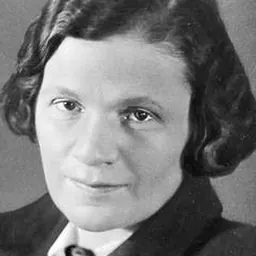
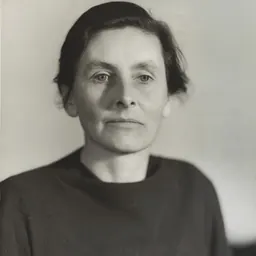
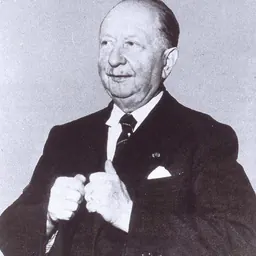
Contemporaries
People whose lives overlapped Arthur Bryant's

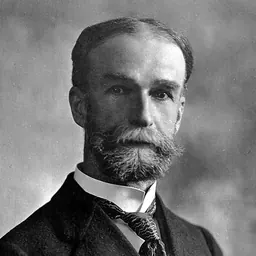

Frequently asked questions
Who was Arthur Bryant?
British historian and writer (1899-1985)
When was Arthur Bryant born?
Arthur Bryant was born on 18 February 1899 in Dersingham.
When did Arthur Bryant die?
Arthur Bryant died on 22 January 1985 in Wiltshire.
What was Arthur Bryant's occupation?
Arthur Bryant was a historian and journalist.
What nationality was Arthur Bryant?
Arthur Bryant was British.
Sources & further reading
Cite this page
APA: Biography.guide. (2026). Arthur Bryant. https://biography.guide/arthur-bryant/
MLA: "Arthur Bryant." Biography.guide, https://biography.guide/arthur-bryant/.
Chicago: "Arthur Bryant." Biography.guide. https://biography.guide/arthur-bryant/.
Data last updated: 2026-09-22 · Spot an error? Report a correction.
Page generated 2026-09-27 05:07 UTC